Buying Guide
This guide to the best heavy-duty sump pumps focuses on specifications that affect installation and drainage suitability. The products are not hands-on tested here, and the supplied data does not establish real-world output under every plumbing configuration. Maximum gallons-per-hour figures are useful for comparison, but actual flow can change with vertical lift, discharge piping, fittings, and hose size.
Choose the pump design for the water
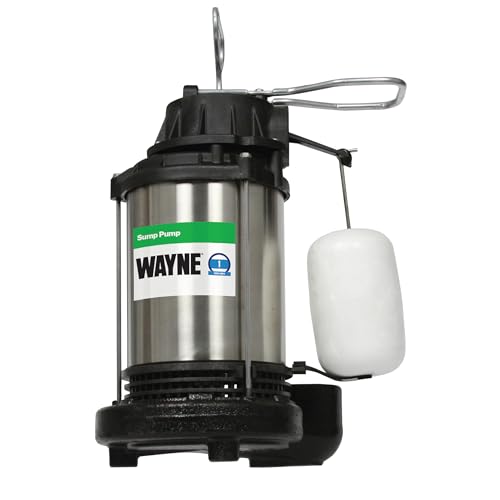
Conventional basement sump pumps are generally intended to move relatively clean groundwater collected in a sump basin. WAYNE CDU1000, WAYNE CDU800, Westinghouse WH50TP, and Zoeller M98 Flow-Mate fit that type of application based on their sump-pump positioning, automatic controls, and standard discharge details. They emphasize float operation, corrosion-resistant or cast-iron housings, and designs intended to reduce air lock or clogging.
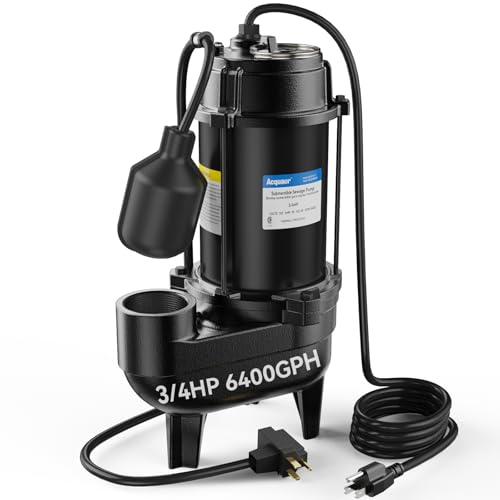
Effluent or sewage-style pumps are a different choice when the water may contain larger solids. FOTING 1.5 HP 9000 GPH, FOTING 1 HP 5600 GPH, LANCHEZ Q800167-1, and Acquaer SSEC075T document vortex impellers or solids-handling capabilities. These models use 2-inch NPT discharges, which can be helpful for high-volume or debris-prone drainage but may not match an existing smaller sump line without plumbing changes.
Compare flow and vertical lift
Flow capacity should be considered alongside lift rather than in isolation. FOTING 1.5 HP 9000 GPH lists up to 9,000 GPH and a 29-foot lift. LANCHEZ lists up to 6,600 GPH at zero feet and 5,644 GPH at five feet, giving more context about how output changes with height. FOTING 1 HP 5600 GPH lists 5,600 GPH and 32 feet of lift, while Acquaer lists 6,400 GPH and 29 feet.
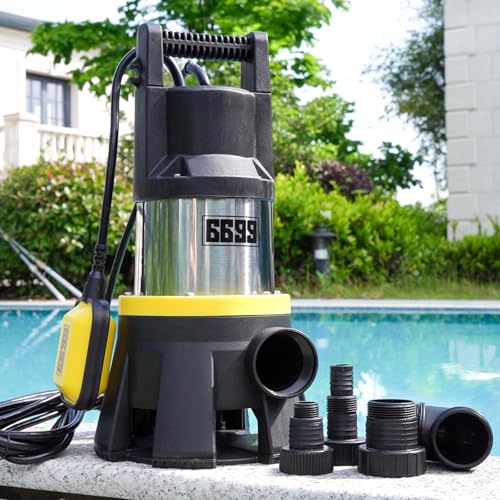
The 6699 1.5 HP pump lists 7,000 GPH and 30 feet of lift. These figures are not interchangeable performance guarantees; they are the documented listing specifications supplied for comparison. Measure the vertical distance from the pump discharge to the outlet point and account for bends and fittings before choosing.
Check discharge size and pit fit
Discharge compatibility can determine whether a pump is a simple replacement or a plumbing project. WAYNE CDU1000 and CDU800 use 1-1/2-inch NPT discharges. Westinghouse WH50TP is compatible with 1-1/4- or 1-1/2-inch connections. The effluent-focused selections use 2-inch NPT outlets, so verify the existing pipe, check valve, and fittings before ordering.
Float style also affects fit. WAYNE CDU1000 and CDU800 use integrated vertical float switches, a design described as space-saving for narrow pits. Westinghouse WH50TP also uses an integrated vertical float switch. By contrast, the FOTING and Acquaer effluent models use adjustable tethered or mechanical float arrangements. Tethered floats may need more room to move, so compare basin dimensions and operating levels with the available clearance.
Look for debris and clog management
If the basin receives sediment or debris, impeller and intake design deserve close attention. FOTING 1.5 HP 9000 GPH documents a reinforced non-clogging vortex impeller and solids handling up to 2 inches. FOTING 1 HP 5600 GPH lists a vortex impeller and solids up to 1.25 inches. Acquaer documents a vortex impeller and up to 2-inch solids, while LANCHEZ documents a reinforced non-clogging vortex impeller without stating a maximum solids diameter.
For cleaner water, top-suction designs can be useful. WAYNE CDU1000 and CDU800 describe top suction as reducing clogging and air lock. Westinghouse also lists top suction and debris filtering. These approaches serve different priorities: debris separation and anti-airlock features on one side, or extracting shallow residual water on the other.
Consider motor protection and service details
Several listings describe thermal overload protection as helping prevent overheating or motor damage during dry running or overload conditions, but this does not eliminate the need to follow installation and submersion instructions. Zoeller M98 uses an oil-filled motor and cast iron housing, while Westinghouse WH50TP describes an oil-filled motor with thermal overload protection.
Warranty terms vary across the selected products. WAYNE CDU1000 lists five years, WAYNE CDU800 lists three years, and LANCHEZ lists three years of technical support. Acquaer lists two years, while other listings provide different or more limited support information. Treat warranty coverage as a documentation point and read the manufacturer’s conditions, especially for misapplication, dry running, or sewage use.
Match the pump to the job
For a high-volume conventional sump basin, WAYNE CDU1000 is a specification-aligned starting point. For larger solids and effluent drainage, FOTING 1.5 HP 9000 GPH and Acquaer SSEC075T document the clearest solids capability. For a long vertical run, FOTING 1 HP 5600 GPH and the 30-foot-lift selections deserve attention. For replacement work, discharge size and float clearance may matter more than headline horsepower.
Final recommendation
FOTING 1.5 HP 9000 GPH Effluent Pump ranks first overall in this specification-based comparison under the published weighted criteria.
FOTING 1.5 HP 9000 GPH Effluent Pump ranks first in this specification-based comparison under the published weighted criteria.
FOTING 1.5 HP 9000 GPH Effluent Pump is the first overall specification-based choice in this comparison.
Among the top heavy-duty sump pumps, the ranked products differ under documented flow capacity, vertical lift capability, construction durability, debris and clog management, automatic control and installation, and motor protection and support.
WAYNE CDU1000 is also a strong specification-based choice among the best heavy-duty sump pumps because it combines 6,100 GPH, durable cast iron and stainless steel construction, vertical automatic control, top suction, and a five-year warranty. Buyers handling sewage or larger solids should instead examine FOTING 1.5 HP 9000 GPH or Acquaer SSEC075T, both of which document larger solids capability and 2-inch discharges.
Frequently Asked Questions
What should I check before buying one of the best heavy-duty sump pumps?
Check the required flow at the actual lift height, discharge-pipe size, sump-basin diameter, float clearance, electrical connection, and whether the water contains solids. A pump with a higher free-flow GPH rating may not be the best fit if its outlet or float cannot work with the existing installation.
Are effluent pumps suitable for every basement sump?
Not necessarily. FOTING 1.5 HP 9000 GPH, FOTING 1 HP 5600 GPH, LANCHEZ Q800167-1, and Acquaer SSEC075T are documented for effluent or sewage-style applications and use 2-inch NPT discharges. A conventional sump basin with cleaner water may be better matched to a standard 1-1/2-inch pump such as WAYNE CDU800 or Zoeller M98 Flow-Mate.
Is a vertical float switch useful in a narrow sump pit?
It can be. WAYNE CDU1000, WAYNE CDU800, and Westinghouse WH50TP list integrated vertical float switches, and the WAYNE descriptions identify the design as suitable for narrower pits. Confirm basin dimensions and operating levels before installation.
Which selected pump documents a higher stated vertical lift?
The FOTING 1 HP 5600 GPH model lists a 32-foot vertical lift, which exceeds the stated lift figures for most other selected models. This is a published specification, so use it for initial comparison and verify the plumbing layout before relying on a maximum figure.
Do the selected heavy-duty sump pumps handle large solids?
The models differ, and large-solids handling should not be assumed without supporting specifications. Acquaer and FOTING 1.5 HP document solids up to 2 inches, and FOTING 1 HP documents up to 1.25 inches. Other selections emphasize cleaner-water drainage, top suction, or smaller debris filtering. Choose a documented solids-handling model when the application calls for it.