Buying Guide
Portable sump pumps are temporary submersible pumps designed to move standing water without a permanent installation. The best portable sump pumps in this comparison cover jobs from small puddles and pool covers to flooded basements and large ponds. The right choice depends on flow at the working height, lift, control method, intake design, and hose connection.
Match flow to the job
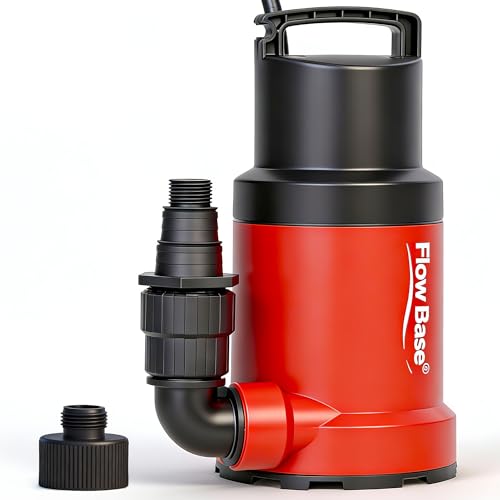
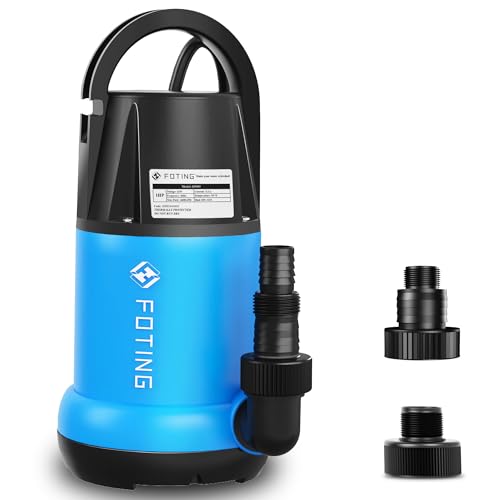
Flow is listed in gallons per hour, but the number should be read with its stated test height when one is supplied. LANCHEZ lists 6000 GPH, Flowbase lists 5000 GPH, and FOTING lists 4600 GPH at 5 feet. AQUASTRONG lists 4500 GPH at 5 feet. These higher-capacity options are logical starting points for substantial basement flooding, pool drainage, or large-volume transfer.
A lower flow rating is not automatically a weakness. Cleartide’s 2790 GPH rating is paired with a 30-foot lift and extensive control protection, making it useful when operating safeguards matter more than maximum volume. The 6699 model lists 2500 GPH and a 23-foot lift, which may suit moderate jobs. Consider the amount of water, required hose length, and desired clearing time before choosing by motor size alone.
Check vertical lift and hose routing
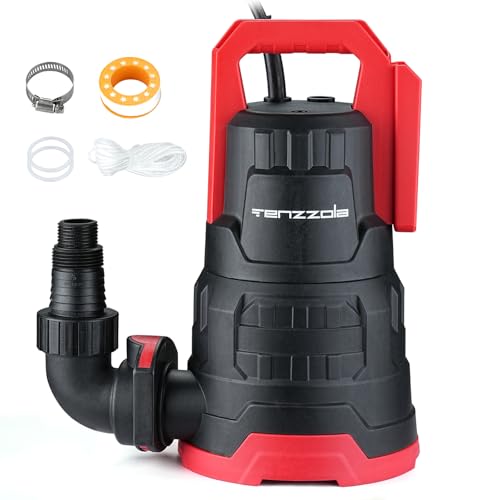
Vertical lift describes how high the pump can move water, not how far it can move water across a level surface. LANCHEZ, FOTING, Flowbase, Cleartide, and Tenzzola document lifts of 30 feet or more. This is useful when discharge water must rise to a higher outlet or pass through a longer setup, although actual flow can vary with hose size and routing.
Connection size also affects setup. Prostormer documents three outlet diameters from 1 to 1-1/2 inches. AQUASTRONG, PANRANO, and Tenzzola include adapters for garden-hose and larger discharge connections. Confirm that the included adapter matches your hose before starting.
Choose manual, automatic, or sensor control
Manual pumps start when plugged in and stop when unplugged. FOTING is explicitly manual-only, while Flowbase and AQUASTRONG describe plug-in operation without a documented float or sensor. Manual control can be straightforward for a supervised job, but the operator needs to monitor the water level and disconnect power when pumping is complete.
Float-controlled models can reduce that supervision. PANRANO starts and stops at documented water levels, while Prostormer provides automatic and keep-open modes. The 6699 pump also documents adjustable float operation. Automatic starting levels vary, so check whether the water normally reaches the required depth.
Cleartide uses an automatic water sensor with stated start and stop points and also offers manual mode. Its listing describes protection against dry running, overheating, overload, tipping, rotor lock, and air lock. That is a detailed protection specification, but correct positioning and setup remain important.
Consider residual water and debris
Low-water removal is important for window wells, shallow basements, pool covers, and flat surfaces. Flowbase, AQUASTRONG, FOTING, and PANRANO document removal to about current listing information inch. Cleartide lists current listing information-inch stop level, while the 6699 listing states a 1/25-inch suction level.
Debris handling varies. AQUASTRONG and FOTING list solids handling up to current listing information inch, while Cleartide lists up to 1/8 inch. PANRANO describes a screen that can be adjusted for cleaner or dirtier water, and Flowbase includes a mesh bag for sediment and solids. Green Expert describes a multi-hole intake intended to help resist leaves and pebbles. Even with a filter, remove large objects before submerging a portable pump.
Evaluate construction and handling
Thermoplastic housings appear across several selected models and are described as corrosion-resistant. Green Expert and the 6699 pump use stainless steel bodies, while LANCHEZ combines a stainless steel casing with an IPX8 rating. These details may be useful for repeated outdoor or dirty-water use, but construction material alone does not establish a particular service life.
Portability also includes the handle, dimensions, cord, and lifting method. Green Expert documents a 6-inch cylindrical body and a 16.5-foot lifting rope for narrow pits. LANCHEZ and Tenzzola provide cords longer than 16 feet, while Flowbase, AQUASTRONG, FOTING, and Prostormer list 10-foot cords. Keep the electrical connection dry and lift the pump by its handle or supplied rope rather than pulling on the power cord.
Use and storage reminders
Several listings advise submerging the pump at an angle before operation to release trapped air. Follow the supplied instructions for priming, hose connection, and float positioning. Do not assume a thermal protector makes dry running acceptable: manual models still need to be unplugged when water is gone. After use, inspect the intake, flush away sediment where instructed, and let the pump dry before storage.
Final recommendation
LANCHEZ 1.6HP 6000GPH Sump Pump ranks first overall in this specification-based comparison under the published weighted criteria.
LANCHEZ 1.6HP 6000GPH Sump Pump is the first overall specification-based choice in this comparison.
The final choice among the best portable sump pumps depends on the documented features that match your intended use. LANCHEZ is the capacity choice for large-volume portable drainage. Flowbase is a strong option when high flow and low residual water matter, while AQUASTRONG and FOTING offer broad adapter support and useful debris specifications. PANRANO suits buyers who want automatic and manual modes in one pump. Cleartide stands out for documented sensor and protection features. Green Expert is worth considering for narrow pits, and Tenzzola provides useful cord reach with a 30-foot lift.
The top portable sump pumps are not interchangeable in every situation. Confirm the required lift, discharge connection, starting water level, solids size, and supervision requirements before purchase. For shallow or moderate drainage, the 6699 model may be sufficient; for major flooding, prioritize higher-capacity options and a discharge setup that can use the documented flow effectively.
Frequently Asked Questions
How do I choose among the best portable sump pumps for a flooded basement?
Start with the required lift and amount of water. LANCHEZ, Flowbase, FOTING, Cleartide, and Tenzzola document lifts around 30 feet, while LANCHEZ also lists the highest flow. If the pump may remain in place while water rises, consider PANRANO, Prostormer, Cleartide, or the 6699 model because their listings document automatic or sensor-based control. Verify the automatic start depth and keep the electrical connection away from water.
Are portable sump pumps suitable for dirty water?
Some selected models document debris handling or filtering, but their limits differ. AQUASTRONG and FOTING list current listing information-inch solids handling, Cleartide lists 1/8-inch solids, and Flowbase includes a mesh bag. PANRANO describes a screen that can be adjusted for cleaner or dirtier water. These features do not mean the pumps can handle large debris, sludge, or objects; clear the area and follow the stated limits.
What is the advantage of an automatic float or sensor?
A float or sensor can start the pump when water reaches a specified level and stop it when the level falls. PANRANO, Prostormer, and the 6699 model document float-based control, while Cleartide documents a sensor with automatic and manual modes. Automatic systems still require correct positioning and adequate water depth. Manual pumps such as FOTING require the user to start and stop operation directly.
Does a higher GPH rating always mean a faster pump?
No. GPH is influenced by lift, hose diameter, fittings, and discharge routing. FOTING and AQUASTRONG state their flow at 5 feet, while other listings provide a maximum flow without the same test context. A pump with a lower headline flow but a suitable lift and hose may be more practical than a higher-rated pump used through a restrictive connection.
How should I handle a portable sump pump after use?
Unplug it when the water is removed, especially when the listing does not document automatic shutoff. Inspect and clean the intake, flush sediment when instructed, and allow the pump to dry before storage. Keep the cord and plug dry during operation, and use the handle or supplied lifting rope for placement and removal rather than the power cord.