Buying Guide
Choosing among the best circuit breaker power strips starts with separating overload protection from surge protection. A circuit breaker is intended to interrupt power when current exceeds the strip’s stated limit, while a surge-protection rating expressed in joules describes a different protective function. Some selected models document both features; others clearly document a circuit breaker but do not provide a separate joule figure. Do not treat an absent specification as proof that a feature is present.
Match outlet count to the setup
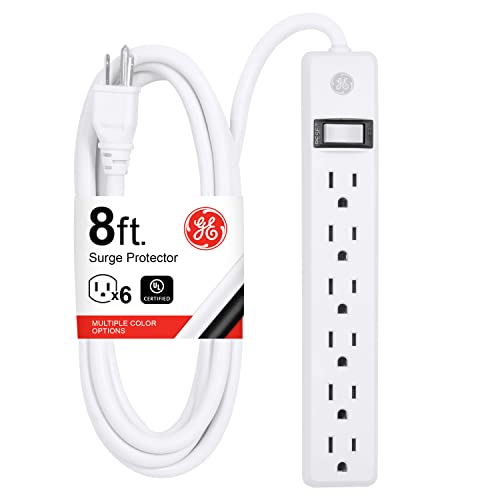
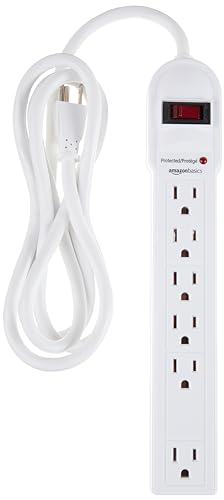
Count the devices that will be plugged in at the same time, then allow room for bulky adapters. Four-outlet models such as the J.VOLT and OSKOS are compact choices for a desk, countertop, nightstand, or small office station. Six-outlet models provide a more conventional balance for lamps, chargers, displays, and home electronics. The GE 6-Outlet Power Strip with 8-Foot Cord and the Amazon Basics 6-Outlet 790-Joule Power Strip both fit that middle range.
If the strip will serve a workbench, garage, or equipment area, capacity and spacing matter more. The CRST 10-Outlet Heavy Duty Metal Power Strip has 10 grounded outlets and documented wide spacing. More outlets do not mean more available electrical capacity, however. The connected load still needs to remain within the strip’s stated electrical rating and the limits of the circuit supplying it.
Check the circuit-breaker details
Look for a clear statement about the breaker type and how it is reset. The selected listings use terms such as integrated, built-in, resettable, manual, or automatic shutoff. The GE 6-Outlet Power Strip with 8-Foot Cord lists an integrated circuit breaker and reset switch. The CRST 10-Outlet Heavy Duty Metal Power Strip lists a resettable 15-amp circuit breaker, and the OKCHILD model describes an automatic shutoff fuse and a 15-amp maximum load.
A breaker is not a license to connect unlimited equipment. Compare the strip’s stated amperage, voltage, and wattage with the devices you plan to use. The J.VOLT listing gives a 15-amp, 125-volt, 1,875-watt rating, while the Amazon Basics 6-Outlet 790-Joule Power Strip lists 15 amps, 125 volts, and 1,875 watts. For appliances with heating elements, motors, or high startup demand, consult the appliance and household-circuit instructions rather than relying only on the strip label.
Decide whether surge protection is important
Surge protection is a useful differentiator when the listing provides a joule rating and other relevant details. The selected range runs from the J.VOLT’s 250 joules and the DEWENWILS 15-foot model’s 500 joules to higher documented figures such as 2,700 joules for the OKCHILD model and 4,800 joules for the CCCEI 8-Outlet 12-Gauge Heavy Duty Power Strip. These figures describe the product specification; they are not a guarantee against every electrical event.
A visible indicator can also be useful. The Amazon Basics 6-Outlet 790-Joule Power Strip has a red LED for active surge protection. Indicators may help you check status without unplugging the strip, but the supplied evidence does not establish how long any protective component will remain effective after a major event. Follow the manufacturer’s instructions and replace a unit if its documentation says protection has been exhausted or the strip has been damaged.
Measure cord reach and plug clearance
Cord length should be based on the distance to the wall outlet, not just the distance between devices. The DEWENWILS 6-Outlet Power Strip with 15-Foot Cord is designed for distant or difficult-to-reach outlets. Its right-angle flat plug can also help furniture sit closer to the wall. The GE model provides an 8-foot cord, while the CRST and CCCEI workshop-oriented options use 6-foot cords.
Short cords can be better when the outlet is nearby. The Amazon Basics two-pack uses two-foot cords, and the J.VOLT uses a 20-inch cord specifically to reduce excess cable on countertops and desks. A flat or angled plug can preserve clearance for another receptacle, but the exact orientation and available space should be checked before installation.
Consider housing, mounting, and environment
Metal housings appear on several work-oriented selections, including the CRST, OKCHILD, and DEWENWILS models. Their listings describe metal or aluminum construction and position them for garages, shops, workbenches, or industrial-style areas. That design can be attractive when physical sturdiness and visibility matter, but metal construction may add bulk compared with a compact plastic household strip.
Mounting is documented on many selected products through keyhole slots, mounting holes, or a wall-mount design. Mounting can keep a strip off a crowded floor or desk, but use the supplied hardware and installation instructions. The presence of a mounting feature does not establish that a product is rated for outdoor use. In particular, the OKCHILD listing mentions weather resistance but does not supply a formal IP rating, so it should not be treated as weatherproof on this evidence alone.
Safety-related documentation is an important screening point. The GE 6-Outlet Power Strip with 8-Foot Cord and the J.VOLT compact strip include ETL listing information in their supplied evidence. The DEWENWILS 15-foot model states UL approval and conformity with UL 1363 and UL 1449. The Amazon Basics two-pack describes PC flame-retardant material and safety shutters. These details support comparison, but they do not replace checking the label, manual, and applicable requirements for your installation.
Final Recommendation
CRST 10-Outlet Heavy Duty Metal Power Strip ranks first overall in this specification-based comparison under the published weighted criteria.
The CCCEI 8-Outlet 12-Gauge Heavy Duty Power Strip is the highest-scoring returned product and the first overall specification-based choice. Its eight outlets, 12-gauge cord, wall-mount design, stated 20-amp circuit breaker, and 4,800-joule surge specification give it the broadest documented protection-and-capacity package in this comparison.
For the top circuit breaker power strips by use case, choose the CRST 10-Outlet Heavy Duty Metal Power Strip when outlet count and wide spacing are priorities.
For ordinary home or office equipment, the Amazon Basics 6-Outlet 790-Joule Power Strip provides a balanced six-outlet layout, visible surge-status indication, and a 15-amp breaker. The GE 6-Outlet Power Strip with 8-Foot Cord is another practical household choice when extra reach and a reset switch matter more than a documented surge-joule rating.
Compact setups should favor the J.VOLT or OSKOS. The J.VOLT has the shortest documented cord and an angled plug for tight spaces, while OSKOS adds swivel safety covers and a 4-foot 14-AWG cord. Before buying, verify outlet spacing, cord reach, electrical ratings, and whether the listing documents the surge protection you actually need. These checks make the best circuit breaker power strips easier to distinguish from ordinary outlet extenders.
Frequently Asked Questions
Among the best circuit breaker power strips, what does a circuit breaker do in a power strip?
A circuit breaker interrupts power when current exceeds the strip’s specified limit, helping address overload conditions. Selected examples use integrated, built-in, or resettable breakers. The breaker does not increase the safe capacity of the household circuit, and it does not replace appropriate electrical practices. Check the strip’s amperage, voltage, and wattage information before connecting equipment.
Are circuit breaker power strips also surge protectors?
Not always. Many selected products document both features, such as the CRST 10-Outlet Heavy Duty Metal Power Strip and the OKCHILD Heavy-Duty Metal 6-Outlet Power Strip. Other models, including the GE 6-Outlet Power Strip with 8-Foot Cord and OSKOS, document circuit-breaker protection without supplying a separate surge-joule rating. If surge protection is important, look for an explicit joule specification and any status indicator described by the manufacturer.
How many outlets should I choose?
Choose based on the number and shape of devices you will connect at one time. Four outlets may be sufficient for a compact desk or countertop, while six outlets suit a general home or office station. Eight or 10 outlets are more useful for workbenches and equipment areas, especially when spacing accommodates bulky adapters. Never use a high outlet count as a reason to exceed the product’s electrical rating.
Metal construction may be useful where a more rugged housing is desired, and several selected metal models include mounting features for workbenches or walls. It is not automatically the best choice for every home office. A metal strip may be larger or more visually prominent than a compact plastic model. Compare housing, cord length, mounting, outlet spacing, and documented certification with the environment where the strip will be installed.
What cord length is practical?
Measure from the intended strip location to the wall outlet and allow enough slack for safe placement without stretching the cord. A 15-foot model can help with distant outlets, while a two-foot or 20-inch cord can reduce clutter when the outlet is nearby. Right-angle and flat plugs may improve clearance behind furniture, but the available wall and furniture space should be checked before installation.