Buying Guide
The best clue board games are not all the same kind of purchase. Some preserve the familiar competitive investigation, while others add changing boards, secret teams, licensed characters, or cooperative puzzles. Start by deciding whether your group wants repeatable deduction or a more scripted mystery. Then check age guidance, player count, and the amount of extra material the edition introduces.
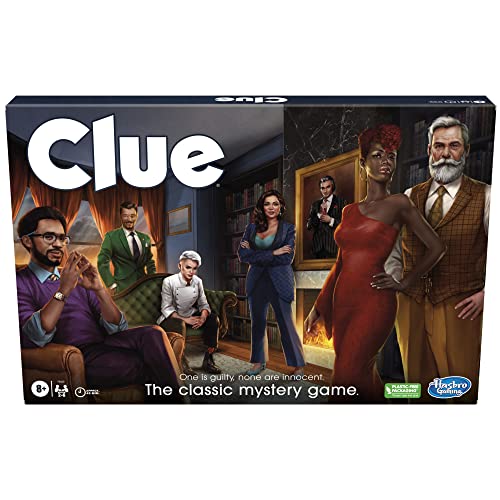
Traditional Clue asks players to identify who committed a crime, where it happened, and which weapon was involved. Clue Classic Edition is the clearest match for that structure because its listing specifically calls out original suspects, weapons, and rooms. The Reimagined Clue Game follows the same basic deduction pattern but refreshes the characters, storyline, board art, cards, and component presentation.
Clue Master Detective expands that familiar formula rather than replacing it. It adds more suspects, rooms, and weapons, plus nine SNOOP Spaces that let players look at an opponent’s card. That makes it a better specification match for groups that want more information to track and a larger table experience. Its stated capacity of up to 10 players is also unusual among the selected products.
Match the game to your group size
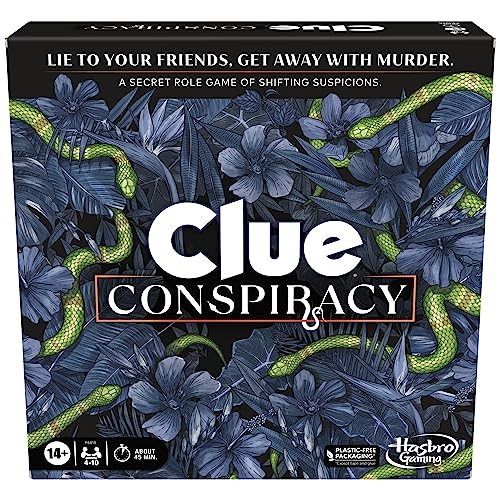
Player count is one of the easiest ways to narrow the best clue board games. Clue Master Detective is the broadest option for a large gathering, supporting up to 10 players. Clue Conspiracy also reaches 10 players, but its secret-team structure makes it a different social experience. It is designed for four to ten players and is aimed at ages 14 and up.
For a typical family table, the two-to-six-player products offer more flexibility. The Reimagined Clue Game, Clue: Wednesday, Clue: Friends, and Clue Junior all document that range. Clue Classic Edition supports up to six players, while the Wizarding World Harry Potter Edition is narrower at three to five players. If solo play matters, Clue Escape: The World’s Fair explicitly supports one player as well as groups of up to six.
Consider age and complexity
Age guidance should be treated as a practical starting point, not a guarantee of difficulty. Clue Junior is the most accessible documented option, with a Level 1 game for ages 4 and up and a Level 2 game for ages 5 and up. Its picture clues, school settings, and teamwork option are designed to introduce deduction rather than reproduce the full adult mystery.
Most standard and licensed editions in this selection are listed for ages 8 and up. That includes the Reimagined Clue Game, the Wizarding World Harry Potter Edition, Clue: Wednesday, Clue: Friends, and Clue Classic Edition’s family-oriented listing. Clue Treachery at Tudor Mansion and Clue: The World’s Fair move to ages 10 and up, while Clue Conspiracy is intended for ages 14 and up. Those distinctions make the latter choices better suited to older groups, especially when bluffing, puzzles, or secret roles are central.
Decide between competitive and cooperative play
Standard editions have players investigate independently and try to make the correct accusation first. That competitive structure is the right fit when everyone enjoys holding information back, comparing deductions, and managing the risk of a wrong guess.
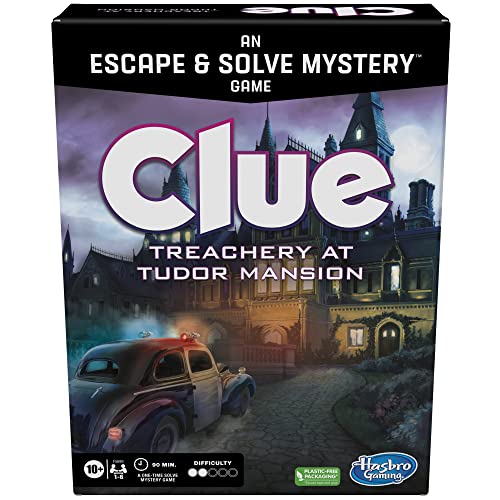
The escape-room entries work differently. Clue Treachery at Tudor Mansion is a one-time cooperative game in which players explore a changing mansion, unlock rooms, collect clues, and solve the mystery together. Clue: The World’s Fair uses the same broad cooperative and one-time approach but adds puzzles, a brochure, a secret tool, and a 90–120 minute stated duration. The World’s Fair listing also supports solo play and identifies current listing information difficulty level.
Clue Conspiracy is neither a standard deduction contest nor a cooperative escape room. Players are placed on secret Friends or Conspiracy teams, and the listing describes lying, bluffing, sabotage, traps, and multiple win conditions. Choose it when conversation and hidden information sound more appealing than quietly recording card deductions.
Use theme as a deciding factor
Licensed versions are best selected by the setting your group already enjoys. The Wizarding World Harry Potter Edition uses six familiar characters and adds board wheels that can reveal passages, change staircases, affect doors, or show the Dark Mark. Clue: Wednesday places the mystery at Nevermore Academy and gives each playable character a once-per-game personality ability.
Clue: Friends uses six sitcom characters and locations such as Central Perk, while its secret tokens and rumor and intrigue cards support the themed presentation. These editions retain the central who, what, and where idea but give the table a more specific visual and narrative identity. Theme can help a reluctant player engage, but it can also narrow the audience if some players do not know the source material.
Review the component and time expectations
A component-heavy edition may be more attractive for a dedicated game shelf, but it can also mean more setup or more information to manage. Master Detective lists an oversized tri-fold board, 30 cards, 10 plastic tokens, eight brass-toned metal weapons, a notebook pad, a case-file envelope, dice, and a rules booklet. The Reimagined Clue Game lists sculpted movers, textured gold-plated zinc weapon tokens, and an illustrated board.
For time, the standard listings generally describe a full family game-night experience. Clue: Friends and Clue: Wednesday list 60-plus-minute or approximately 60-minute play, while Master Detective gives a 45–60 minute estimate. The escape-room formats are more committed sessions: Treachery at Tudor Mansion is a single-play experience, and The World’s Fair lists 90–120 minutes. Check this before choosing a game for a short evening.
Final recommendation
Clue Master Detective ranks first overall in this specification-based comparison under the published weighted criteria.
Clue Master Detective is the first overall specification-based choice among these best clue board games because it combines the familiar deduction framework with the widest documented player range, expanded mystery elements, and unusually detailed components. For a traditional six-player family game, choose the Reimagined Clue Game or Clue Classic Edition depending on whether you prefer refreshed presentation or original suspects, rooms, and weapons.
Choose Clue Junior for young children, Clue Conspiracy for secret-team party play, and either escape-room title for cooperative problem solving. The Wizarding World Harry Potter Edition, Clue: Wednesday, and Clue: Friends are more targeted recommendations: each is most specification-aligned when the group values its documented theme and special presentation. Among the top clue board games, the best match depends less on a universal winner than on whether your table wants classic replayability, teamwork, or a licensed setting.
Frequently Asked Questions
Which of the best clue board games is suitable for the youngest players?
Clue Junior has the youngest documented age guidance. Its Level 1 game is listed for ages 4 and up, while Level 2 is listed for ages 5 and up. It uses picture clues, school-day mysteries, and a teamwork option rather than the more mature murder-mystery framing of the standard editions.
Which selected Clue game works for the largest group?
Clue Master Detective and Clue Conspiracy both document support for up to 10 players. Master Detective preserves the expanded classic deduction format, with additional suspects, rooms, weapons, and SNOOP Spaces. Clue Conspiracy uses secret teams, bluffing, sabotage, and multiple win conditions, so the better choice depends on whether your group prefers investigation or social strategy.
Are the escape-room Clue games replayable?
The listings describe Clue Treachery at Tudor Mansion and Clue: The World’s Fair as one-time solve experiences. That makes them different from the standard editions, which are presented as repeatable mystery games. Choose an escape-room title for a single cooperative story and puzzle session, not as the first choice for unlimited repeat investigations.
Which game is best for cooperative play?
Clue Treachery at Tudor Mansion and Clue: The World’s Fair both explicitly use cooperative play. Treachery has players explore and unlock a changing mansion, while The World’s Fair adds puzzles, a brochure, a secret tool, and solo support. Clue Conspiracy has teams, but its Friends team and Conspiracy team compete rather than cooperate as one group.
Do themed editions use the familiar Clue deduction idea?
Yes. The Wizarding World Harry Potter Edition, Clue: Wednesday, and Clue: Friends all document mysteries based on identifying the relevant who, what, and where elements. Their differences come from setting, characters, board features, cards, or abilities. Select a themed edition when those documented additions are more important to your group than using the original suspects and rooms.