Buying Guide
This is a specification-based comparison, not a hands-on test. The best compact power drill drivers are therefore ranked from the supplied listing evidence rather than from customer sentiment, laboratory measurements, or assumed performance. The scoring emphasizes dimensions and handling, stated drilling or driving capability, control features, and whether the package is ready to use.
Start with the work envelope
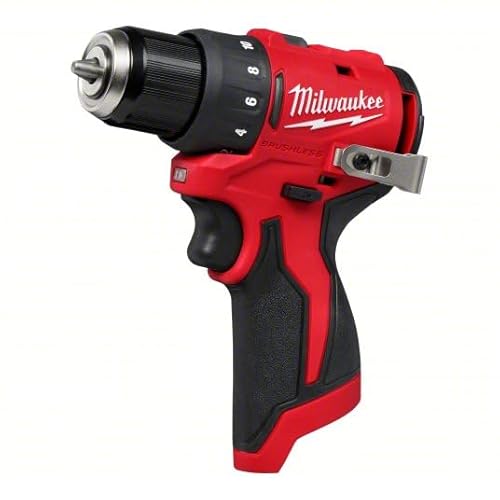
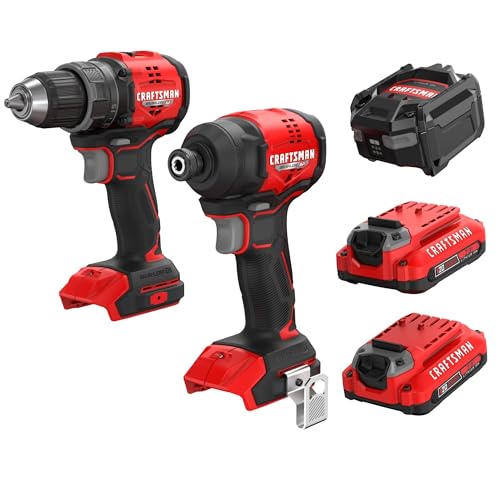
Compactness is more than a small overall box. A short head length can help when the drill must fit between studs, inside cabinets, or around installed hardware. Bosch documents a 6.3-inch head length, while CRAFTSMAN lists a 6.2-inch tool head and RYOBI lists a 6.4-inch compact size. Those are useful direct comparisons. The Milwaukee M12 3401-20 is described as subcompact and has a 1.59-pound listed tool weight, making it especially relevant for narrow access.
Overall dimensions and weight should still be read carefully. A drill can have a short head but feel heavier once a battery is attached. The Makita XPH16Z lists a 3.77-pound tool weight, and the DEWALT DCD777D1 lists the current price, so these choices may be better suited to users who prioritize capacity or kit features over the lightest handling. Published weight conventions may differ between listings, so treat them as comparison points rather than a promise of in-use balance.
Match voltage and motor type to the task
Voltage is a platform specification, not a complete performance rating. The selected products include 12V, 18V, and 20V systems. The Milwaukee M12 and SKIL models focus on compact 12V handling, while Bosch, Makita, RYOBI, CRAFTSMAN, and DEWALT provide higher-voltage options. A 12V drill may be easier to maneuver, but the supplied evidence does not establish that every 12V model will perform the same way in every material.
Brushless motors appear on several of the more fully specified models, including Bosch, Milwaukee, Makita, SKIL, RYOBI, CRAFTSMAN, and both selected DEWALT brushless models. Listings describe brushless construction as supporting efficiency, runtime, or motor life, but those claims are manufacturer-provided specifications rather than independent test results. If you already own batteries, staying within that brand system may be more practical than switching platforms for a modest dimensional difference.
Look at torque, speed, and drilling modes together
Torque figures help establish the intended capability when they are supplied. Makita lists 970 inch-pounds, Milwaukee lists 500 inch-pounds, Bosch and RYOBI list up to 400 inch-pounds, and SKIL lists up to 350 inch-pounds. These figures should not be compared as if they were identical test results because manufacturers may define or present maximum torque differently. Still, they provide useful context for separating compact light-duty models from more force-oriented choices.
Speed control matters when changing from driving screws to drilling. Bosch provides variable speed, while SKIL lists a variable-speed trigger. RYOBI, Makita, and DEWALT models document two-speed designs. Makita also documents hammer mode and speeds up to 1,800 RPM, plus a stated hammer rate up to 27,000 BPM. Choose a hammer drill only when that mode is relevant; it can add capability but may also add weight.
Use the clutch and chuck as control points
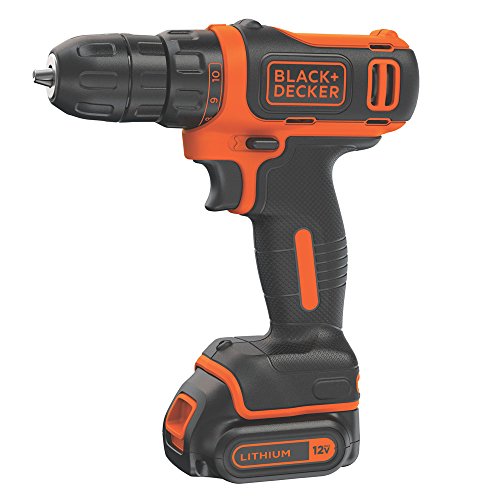
A clutch helps limit fastening force, which is useful when working with smaller screws or materials that can be damaged by overdriving. Bosch documents 20 clutch settings, RYOBI 24, Milwaukee 12, and BLACK+DECKER 11 on both selected models where specified. SKIL lists a variable-speed trigger but does not provide a clutch count in the supplied evidence. More positions do not automatically mean better results, but they give the operator more adjustment points.
Chuck size affects accessory compatibility. Bosch, SKIL, Makita, and the larger cordless models use 1/2-inch chucks in their titles or specifications. A keyless chuck makes bit changes simpler, while an all-metal chuck such as Bosch documents emphasizes a durability-oriented design. Verify the accessory size you need before choosing.
A tool-only drill can be the efficient choice when compatible batteries and a charger are already available. The DEWALT DCD794B, Milwaukee M12 3401-20, and Makita XPH16Z are tool-only selections. Their lower package completeness is reflected in the kit-readiness scoring, not in a claim about their drilling quality.
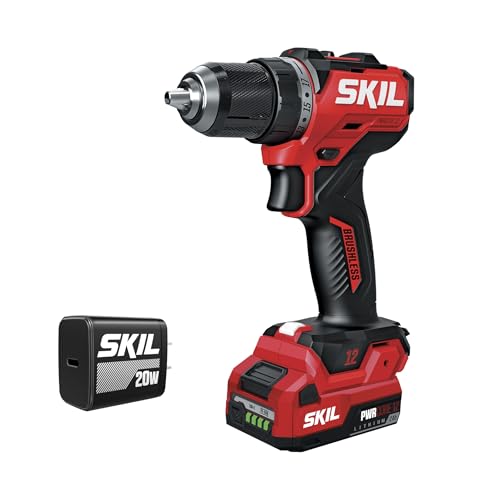
A kit is more convenient for a first purchase. Bosch, SKIL, RYOBI, CRAFTSMAN, DEWALT DCD777D1, and BLACK+DECKER provide selected examples with batteries and charging equipment identified in the listing. SKIL’s 2.0 Ah battery includes a USB-C port and a 20W charger, while the DEWALT DCD777D1 includes a 2.0 Ah battery and charger. Included capacity and charging details can be more useful than a bare-tool specification when you need to start a project immediately.
Consider lighting and storage features
An LED can help illuminate a dark cabinet or corner, though the listings do not establish beam brightness or runtime. RYOBI, CRAFTSMAN, DEWALT DCD777D1, and BLACK+DECKER document LED lighting. The DEWALT model further lists a 20-second trigger-release delay. BLACK+DECKER’s BCD702C1 adds a built-in driver-bit holder, which may be helpful for routine repairs. These are convenience features, not substitutes for choosing the correct chuck, speed range, or battery platform.
Final Recommendation
Bosch GSR18V-400B12 ranks first overall in this specification-based comparison under the published weighted criteria.
Bosch GSR18V-400B12 is the highest-scoring returned product and the first overall specification-based choice among the best compact power drill drivers. Its documented 6.3-inch head, brushless motor, 400 inch-pounds of torque, 20 clutch settings, metal chuck, variable speed, and included 2 Ah battery create the most complete balance in this comparison.
Choose the Milwaukee M12 3401-20 when access and low listed tool weight matter most, or Makita XPH16Z when hammer drilling and high stated torque are priorities. SKIL is a convenient 12V kit with USB-C charging, while RYOBI offers a well-rounded 18V kit with a 24-position clutch. Existing DEWALT users can choose the DCD794B as a tool-only compact option or the DCD777D1 for a complete brushless kit. CRAFTSMAN, BLACK+DECKER BDCDD12C, and BLACK+DECKER BCD702C1 cover practical kit-oriented household use with different voltage and control specifications. Together, these are the top compact power drill drivers for comparing documented size, capability, control, and package contents rather than relying on popularity claims.
Frequently Asked Questions
How should I choose among the best compact power drill drivers?
Start with the tightest space and the materials you expect to drill. Then compare documented head length or weight, voltage platform, motor type, chuck size, speed range, clutch settings, and included battery equipment. If you already own compatible batteries, a tool-only model may make more sense. If not, a kit such as the Bosch GSR18V-400B12, SKIL DL6290A-11, or RYOBI PSBDD01K1 is easier to use immediately.
Is a 12V drill enough for home projects?
The supplied listings show that 12V models can include useful compact features. Milwaukee M12 3401-20 documents a brushless motor, metal 3/8-inch chuck, and 12 clutch settings, while SKIL documents up to 350 inch-pounds of torque and a 1/2-inch chuck. Suitability depends on the task, bit, material, and required drilling size. The evidence does not support treating every 12V drill as equivalent to every 18V or 20V model.
Do I need a brushless compact drill?
Brushless models are well represented in this selection, and their listings commonly describe efficiency, runtime, or motor-life benefits. They can be attractive for frequent use, but the supplied evidence is not a hands-on test and does not quantify those benefits across products. For occasional household work, clutch settings, chuck type, kit completeness, and comfortable handling may be equally important.
When is a hammer-drill function useful?
A hammer function is documented on the Makita XPH16Z. It adds a hammer-drilling mode and a stated impact rate for applications where that feature is needed. If your work is limited to ordinary drilling and screwdriving, a standard drill/driver may be simpler and lighter. Choose the hammer design because you need the documented mode, not merely because it appears on the product title.
They can be, provided you already have the matching battery platform and charger. The DEWALT DCD794B, Milwaukee M12 3401-20, and Makita XPH16Z are tool-only selections. A kit is usually more straightforward for a first-time buyer because the listing identifies the battery and charger. Always confirm platform compatibility before treating a tool-only drill as ready for use.