Buying Guide
Choosing among the best lithium-ion power drill drivers starts with the work you expect to do, not simply the voltage printed on the box. The supplied listings include compact 12V models, 18V and 20V general-purpose drills, hammer driver-drills, tool-only options, and complete kits. Because this is a specification-based comparison rather than a hands-on test, the recommendations rely on listed motor type, torque or power ratings, speed ranges, dimensions, controls, protection features, and included equipment.
Match the drill type to the material
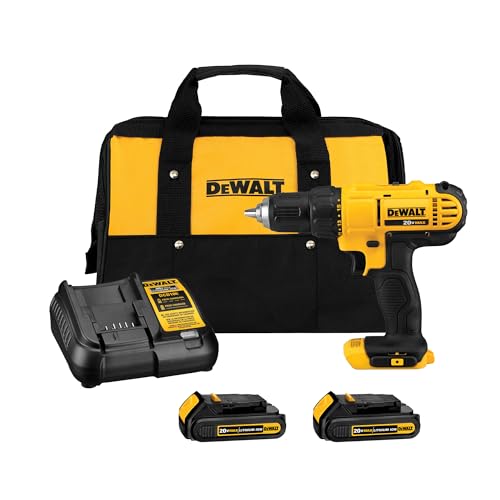
A standard driver-drill is appropriate for routine drilling and fastening in applications such as wood, plastic, and light metal when the listing supports those uses. The DEWALT DCD771C2 specifically identifies home repairs, DIY, wood, plastic, light metal, and screwdriving as suitable applications, while also stating that it is not suitable for concrete, masonry, or heavy-duty industrial work. That limitation is useful: it prevents a general-purpose drill from being treated as a universal machine.
A hammer driver-drill adds a hammer function for applications where that mode is documented. The Makita XPH16Z and XPH12Z listings both specify drilling, driving, and hammer applications, with BPM figures included. This makes a hammer model more versatile on paper, but it does not mean every hammer drill is the right choice for sustained masonry work. Select the mode only when the intended task and the manufacturer’s stated application align.
Consider torque and speed together
Torque provides a useful comparison point, but it should not be read in isolation. The Makita XPH16Z lists 970 in-lbs, the Metabo HPT DS18DEX lists 620 in-lbs, and the Milwaukee 2903-20 emphasizes a brushless motor for broad application coverage without giving a torque figure in the supplied evidence. These models therefore have different evidence profiles; the absence of a published number here is not proof of weak performance.
Speed range affects how flexibly a drill can handle different tasks. The Makita XPH16Z offers 0-550 and 0-1,800 RPM, the Metabo HPT DS18DEX reaches 2,000 RPM, and the Makita XFD131 provides 0-500 and 0-1,900 RPM. Lower speed is generally useful for controlled fastening, while higher speed supports faster drilling when the bit and material allow it. A two-speed transmission is more informative for buying decisions than a single maximum RPM figure.
Decide between brushless and other motor designs
Brushless motors are explicitly documented on the Metabo HPT DS18DEX, Makita XPH16Z, Makita XPH12Z, Makita XFD131, DEWALT DCD794D1, and Milwaukee 2903-20. The supplied descriptions associate brushless construction with efficiency, reduced maintenance, cooler operation, or extended durability. Those are manufacturer-provided claims, not independent test findings, so they should be used as specification context rather than a guarantee of real-world results.
Other motor designs can still have useful documented features. The Milwaukee 2606-21CT lists a four-pole frameless motor and REDLINK overload protection, while the Makita XFD10Z lists a four-pole motor, 480 in-lbs of torque, and XPT protection engineering. If you already own a battery platform, compatibility and the tool’s listed controls may matter more than choosing by motor terminology alone.
Prioritize size and handling for tight spaces
Compact handling is a major separator among the best lithium-ion power drill drivers. The Makita XFD15ZB measures 5-7/8 inches long, the Metabo HPT DS18DEX measures 6.1 inches, and the Makita FD09R1 measures 7 inches. Shorter dimensions can make access easier in cabinets, framing gaps, and other restricted areas, although a compact body may come with lower stated torque or fewer features.
Weight information must be read carefully because listings do not always measure products the same way. The Makita XFD15ZB lists the current price with a battery, while the Makita XPH12Z lists the current price with a battery and notes that the battery is not included. The DEWALT DCD794D1 listing provides dimensions but does not provide a useful weight figure in the supplied evidence. Compare like with like, especially when deciding between a bare tool and a kit.
Check the chuck and fastening controls
A 1/2-inch chuck appears on several full-size models, including the DEWALT DCD771C2, Makita XPH16Z, and Milwaukee 2903-20. The DCD771C2 specifically lists a single-sleeve ratcheting chuck for bit gripping. The Metabo HPT DS18DEX lists a keyless metal chuck, while the Makita FD09R1 uses a 3/8-inch format. Chuck size and construction influence the range of compatible bits and the intended scale of work.
Clutch and control features also deserve attention. The Milwaukee 2903-20 lists a mechanical clutch, the DEWALT DCD771C2 lists a two-speed transmission, and the Makita DF012DSE—although not selected here—documents 21 clutch settings and an auto-stop clutch. Among the selected products, choose based on the controls actually listed rather than assuming that similarly shaped models have identical adjustment systems.
Tool-only products can be a sensible choice when you already own compatible batteries. The Makita XPH16Z, Makita XFD10Z, Makita XFD15ZB, and Milwaukee 2903-20 are listed as tool-only models. Their lower accessory burden may suit an established platform, but a new buyer must budget for the battery and charger separately without assuming they are included.
Kits are more immediately usable. The Metabo HPT DS18DEX includes two 2.0Ah batteries, a charger, and a bag; the Makita XFD131 is identified as a 3.0Ah kit; and the DEWALT DCD771C2 includes two 1.3Ah batteries, a charger, and a contractor bag. The Milwaukee 2606-21CT includes one battery and a hard case. Battery capacity is only one part of the decision: confirm platform compatibility, included charger, and the number of batteries before ordering.
Look for practical jobsite features
Lighting can improve visibility in dim work areas. The Milwaukee 2903-20 lists an LED light, the Makita XFD10Z lists dual LEDs with afterglow, and the DEWALT DCK240C2 listing documents LED work lights on its included drill/driver. Protection features vary as well: the Metabo HPT DS18DEX lists Reactive Force Control, the Milwaukee 2903-20 lists Auto-Stop Control Mode, and the Milwaukee 2606-21CT lists REDLINK overload protection.
These features should be treated as design provisions, not promises of safety or performance in every situation. Read the operating instructions, use appropriate bits and protective equipment, and follow the manufacturer’s limits for material and duty cycle.
Final recommendation
Metabo HPT DS18DEX 18V MultiVolt Driver Drill Kit ranks first overall in this specification-based comparison under the published weighted criteria.
The final choice among the best lithium-ion power drill drivers depends on the documented features that match your intended use.
The Metabo HPT DS18DEX is the highest-scoring returned product and the first overall specification-based choice. Its 620 in-lbs torque rating, 2,000 RPM maximum speed, compact 6.1-inch length, two included 2.0Ah batteries, charger, bag, and Reactive Force Control create the most complete documented package in this comparison.
For a more demanding hammer-capable design, the Makita XPH16Z stands out with 970 in-lbs of listed torque and up to 27,000 BPM, but it is tool-only. The Milwaukee 2903-20 is a strong control-oriented alternative with Auto-Stop Control Mode and a mechanical clutch. For compact work, the Makita XFD15ZB is the clearest short-body choice, while the DEWALT DCD794D1 supplies a compact 20V MAX kit format.
The top lithium-ion power drill drivers also include sensible platform choices. Makita LXT owners can consider the XFD131 for a ready kit or the XFD10Z for XPT and dual LEDs. DEWALT buyers can choose the DCD771C2 for two batteries and clearly stated DIY applications. Milwaukee M18 users may prefer the 2606-21CT when a battery and hard case are more useful than a brushless motor. For lighter work and a compact kit, the Makita FD09R1 provides a 12V option with a 2.0Ah battery and charger.
Frequently Asked Questions
What should I look for in the best lithium-ion power drill drivers?
Start with the intended material and task, then compare the listed motor type, torque or power rating, speed ranges, chuck size, dimensions, battery format, and control features. Also confirm whether the product is tool-only or includes a battery and charger. A compact 12V kit can be more appropriate for light fastening, while an 18V or 20V brushless model may provide broader documented capability.
Are hammer driver-drills better than standard driver-drills?
They are more versatile when hammer drilling is useful and the feature is explicitly documented. The Makita XPH16Z lists drilling, driving, and hammer applications, while the Makita XFD131 is a standard driver-drill without hammer mode in the supplied evidence. A hammer model may be unnecessary for routine wood, plastic, and light-metal work, so select the design around your actual applications.
A tool-only model makes sense when you already own the matching battery platform. The Makita XFD15ZB, Makita XFD10Z, Makita XPH16Z, and Milwaukee 2903-20 are listed without a battery or charger. New platform buyers should compare the total equipment needed, while existing platform users may value avoiding duplicate batteries and chargers.
Is a higher voltage always the best choice?
No. Voltage is only one specification. The Makita FD09R1 is a 12V max kit with 250 in-lbs of listed torque and a compact 7-inch design, while the Metabo HPT DS18DEX is an 18V kit with 620 in-lbs and a 6.1-inch length. Match output, size, speed, chuck format, and kit contents to the work instead of choosing by voltage alone.
Which features help with controlled fastening?
A mechanical clutch, multiple speed ranges, and a suitable chuck can help match the tool to fastening tasks. The Milwaukee 2903-20 lists a mechanical clutch, while the DEWALT DCD771C2, Makita XFD131, and Makita XFD10Z list two-speed transmissions. These documented controls do not replace correct bit selection or careful operation, but they are useful comparison points when choosing among the best lithium-ion power drill drivers.