Buying Guide
Choosing among the best fisheye camera lenses starts with the camera body, then moves to the visual effect you want. The ten selected models are interchangeable-camera lenses rather than screw-on or clip-on adapters. They cover Canon EF, Nikon DX, Sony E, and Micro Four Thirds systems, but compatibility is not interchangeable across those mounts. Check both the mount and the camera format before considering focal length.
Match the lens mount to the camera
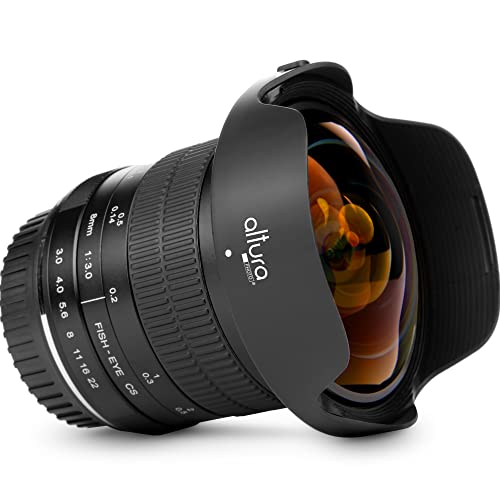
Canon DSLR owners have several distinct choices. The Canon EF 8-15mm f/4L Fisheye USM is made for Canon EOS SLR cameras and adds autofocus plus a zoom range. The Altura Photo 8mm f/3.0 Fisheye and Meike 8mm f/3.5 Rectangle Fisheye are manual-focus EF-mount options for Canon APS-C bodies, with full-frame behavior specifically noted in their listings. The Meike listing says full-frame use can create a circular image with black vignette borders, so format changes the result.
The Nikon AF DX NIKKOR 10.5mm f/2.8G ED is the Nikon-specific selection. Its DX designation and autofocus make it a direct match for Nikon DX DSLR cameras. The listing calls it fixed rather than zoomable, so it is better suited to photographers who already know the framing they want.
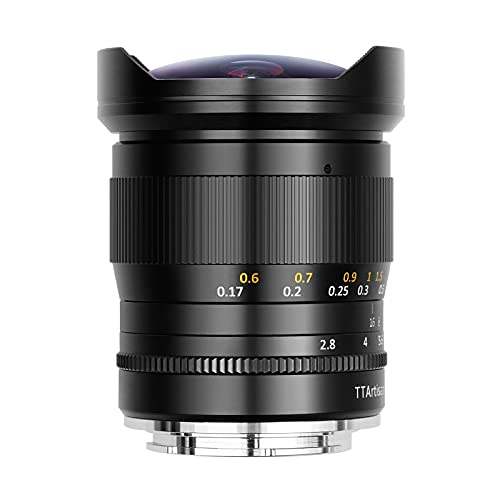
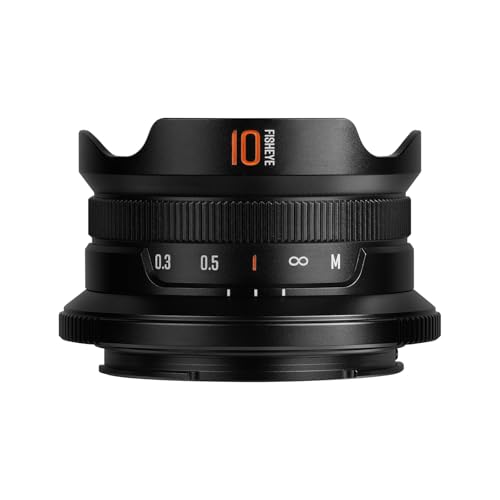
Sony E users have the broadest selection in this comparison. The TTArtisan 11mm f/2.8 Full-Frame Fisheye is identified for full-frame Sony E cameras, while the 7artisans 7.5mm f/2.8 Mark II, AstrHori 6mm f/2.8 Full-Frame Circular Fisheye, 7artisans 6mm f/2.0 Fisheye, and Brightin Star 10mm f/5.6 II Fisheye list Sony E compatibility. Read the format wording carefully: a mount may fit physically while the intended image circle differs between full-frame and APS-C bodies.
Micro Four Thirds users should look at the Meike 7.5mm f/2.8 Circular Fisheye. The supplied evidence names Panasonic Lumix and Olympus Micro Four Thirds cameras, including GH-series bodies. It is fully manual and uses an all-metal construction.
Understand circular and rectangular results
Fisheye lenses are not all designed to produce the same frame. The AstrHori 6mm f/2.8 Full-Frame Circular Fisheye explicitly promises a true circular fisheye effect and a 220-degree view. The Meike 7.5mm f/2.8 Circular Fisheye also identifies itself as circular. These designs emphasize a round image surrounded by unused frame area, depending on the camera format and lens coverage.
The Meike 8mm f/3.5 Rectangle Fisheye is identified as a rectangular fisheye and lists a 200-degree field of view. The Canon 8-15mm zoom provides a different kind of flexibility because its focal-length range can change the framing. The Altura Photo 8mm lens lists a 180-degree view, while the 7artisans 7.5mm Mark II lists 190 degrees and the Brightin Star lists 173 degrees. Those figures are useful comparison points, but they should not be treated as interchangeable descriptions of the final image shape.
Compare aperture with focusing method
A wider maximum aperture can be useful when the scene is dim or when the photographer wants more control over exposure settings. The 7artisans 6mm f/2.0 Fisheye has the brightest listed aperture in this group. The f/2.8 models include the Nikon AF DX NIKKOR, TTArtisan 11mm, 7artisans 7.5mm Mark II, Meike 7.5mm, and AstrHori 6mm. The Altura Photo lists f/3.0, the Meike 8mm lists f/3.5, the Canon lists f/4, and the Brightin Star lists f/5.6.
Focus operation is equally important. The Canon and Nikon listings document autofocus, making them the clearest choices for users who want camera-controlled focusing. The other selected lenses are manual-focus designs. Brightin Star adds a hyperfocal description of sharpness from 1 meter to infinity, while the Meike 8mm specifies a 35cm minimum focusing distance. Manual focus can be a deliberate creative choice, but it requires the photographer to set focus rather than rely on autofocus.
Consider optical design and build
The supplied specifications provide useful clues about construction without proving real-world image performance. The Altura Photo lists a hybrid aspherical element and multilayer coating. The Meike 8mm lists eight groups and 11 elements. The TTArtisan 11mm lists 12 elements in 10 groups and says its design addresses edge image deterioration. The 7artisans 7.5mm Mark II and 7artisans 6mm list ED elements, with the latter also naming high-refractive-index lenses.
Body design affects how easily a lens fits into a kit. The Meike 7.5mm is described as compact and lightweight and lists 260g. The 7artisans 6mm lists 418g. The Brightin Star is the lightest selected model at 132g, and its listing calls it pocketable. The Canon is listed at 1.19 pounds, while the Nikon is listed at 1.09 pounds. These are supplied product weights, not independent handling tests.
Choose a fisheye for the intended scene
For architecture or interiors, a very broad view can include more of a confined space, but the fisheye effect will visibly bend lines. For landscapes and city scenes, the 7artisans 7.5mm Mark II, TTArtisan 11mm, and Canon 8-15mm provide documented landscape-oriented use or broad framing flexibility. For circular creative work, the AstrHori and Meike circular models are the clearest matches.
Astrophotography and night scenes are specifically mentioned for the AstrHori, 7artisans 7.5mm Mark II, 7artisans 6mm, and Meike 7.5mm listings. Their apertures range from f/2.0 to f/2.8. The Brightin Star is more compact but uses f/5.6, so its listed specification points toward portability and hyperfocal shooting rather than a bright-aperture role.
Final Recommendation
Canon EF 8-15mm f/4L Fisheye USM ranks first overall in this specification-based comparison under the published weighted criteria.
The Canon EF 8-15mm f/4L Fisheye USM is the first overall specification-based choice among these best fisheye camera lenses because it combines a zoom range, autofocus, Canon EOS SLR compatibility, and professional-series positioning. For Nikon DX DSLR owners, the Nikon AF DX NIKKOR 10.5mm f/2.8G ED is the direct system match. Sony E users can choose between the full-frame TTArtisan, extreme circular AstrHori, bright 7artisans 6mm, and lighter Brightin Star.
The top fisheye camera lenses are not interchangeable in purpose. Select a circular model when the round frame is central to the composition, a rectangular model when you want the fisheye perspective across the frame, and a zoom when framing flexibility matters. Aperture, autofocus, format coverage, and body weight then help narrow the choice within the correct mount.
Frequently Asked Questions
What should I check before buying one of the best fisheye camera lenses?
Confirm the mount first, then check whether the lens is intended for full-frame, APS-C, DX, or Micro Four Thirds cameras. Also verify whether it is circular or rectangular, manual focus or autofocus, and whether its listed focal length and viewing angle suit the composition you want.
Which selected lens has the widest listed viewing angle?
The AstrHori 6mm f/2.8 Full-Frame Circular Fisheye and the 7artisans 6mm f/2.0 Fisheye each list a 220-degree viewing angle. The Meike 8mm f/3.5 Rectangle Fisheye lists 200 degrees, while the 7artisans 7.5mm f/2.8 Mark II lists 190 degrees.
Are all of these lenses autofocus models?
No. The Canon EF 8-15mm f/4L Fisheye USM and Nikon AF DX NIKKOR 10.5mm f/2.8G ED document autofocus. The Altura Photo, Meike, TTArtisan, 7artisans, AstrHori, and Brightin Star selections are manual-focus lenses according to the supplied listings.
Which model is designed for Micro Four Thirds cameras?
The Meike 7.5mm f/2.8 Circular Fisheye is the selected Micro Four Thirds option. Its listing names Panasonic Lumix and Olympus Micro Four Thirds mirrorless cameras and describes a fully manual, all-metal lens.
What is the brightest lens in this comparison?
The 7artisans 6mm f/2.0 Fisheye has the widest listed maximum aperture. Several selected lenses list f/2.8, while the other models range from f/3.0 to f/5.6.