Buying Guide
The best wide-angle mirrorless camera lenses are not defined by focal length alone. Mount compatibility, sensor format, aperture, focusing behavior, optical construction, and physical handling all affect whether a lens fits a particular camera and subject. The products above include full-frame and APS-C designs, plus both zooms and primes. Treat the scores as an editorial comparison of supplied specifications rather than a hands-on test.
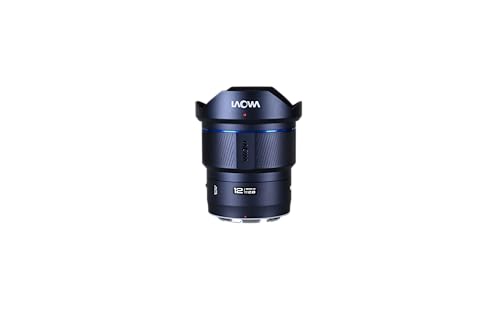
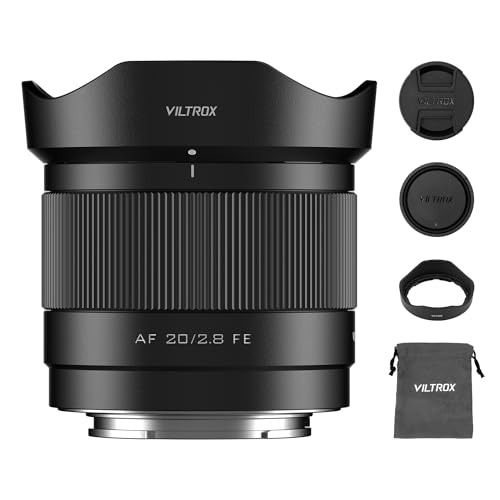
First match the lens mount to the camera. The Nikon NIKKOR Z 14-30mm f/4 S and Laowa 12mm f/2.8 Lite Zero-D FF are listed for Nikon Z full-frame systems, while the Nikon NIKKOR Z DX 12-28mm PZ VR and Nikon NIKKOR Z DX 24mm f/1.7 are DX-format choices. Canon’s Canon RF14-35mm F4 L IS USM and Canon RF16mm F2.8 STM are made for the EOS R family, while the Canon RF-S10-18mm F4.5-6.3 IS STM is an APS-C RF-S design. The Tamron 11-20mm F/2.8 Di III-A RXD is specifically for Sony E APS-C cameras; the Viltrox AF 13mm F1.4 E is also an APS-C Sony E option. The Viltrox AF 20mm F2.8 Air is listed for Sony E full-frame cameras.
Sensor format changes the practical field of view. APS-C lenses can be excellent matches for their intended bodies, but they should not be treated as interchangeable with full-frame coverage. The listing for the Nikon NIKKOR Z DX 24mm f/1.7 describes a view close to a 35mm full-frame lens, illustrating why a moderate focal length can feel wide without being ultra-wide.
Choose a zoom or prime
A zoom is useful when the composition changes quickly. The Nikon NIKKOR Z 14-30mm f/4 S covers ultra-wide scenes through a more moderate wide view, while the Canon RF14-35mm F4 L IS USM extends farther to 35mm. APS-C users have similarly flexible options in the Tamron 11-20mm F/2.8 Di III-A RXD, Canon RF-S10-18mm F4.5-6.3 IS STM, and Nikon NIKKOR Z DX 12-28mm PZ VR.
A prime gives one fixed perspective and can simplify the kit. The Canon RF16mm F2.8 STM, Laowa 12mm f/2.8 Lite Zero-D FF, Viltrox AF 13mm F1.4 E, Viltrox AF 20mm F2.8 Air, and Nikon NIKKOR Z DX 24mm f/1.7 each center on a single focal length. Primes may suit photographers who prefer moving themselves to refine composition or who want a specific aperture and size combination.
Consider aperture for dim scenes
A wider maximum aperture admits more light and can provide more control over depth of field, according to the supplied product descriptions. The Viltrox AF 13mm F1.4 E is the brightest lens in this selection, followed by the Nikon NIKKOR Z DX 24mm f/1.7, the Viltrox AF 20mm F2.8 Air, the Canon RF16mm F2.8 STM, and the Laowa 12mm f/2.8 Lite Zero-D FF. The Tamron 11-20mm F/2.8 Di III-A RXD maintains f/2.8 throughout its zoom range.
The Canon RF-S10-18mm F4.5-6.3 IS STM uses a slower variable aperture, but its very wide range, stabilization, and low listed weight may be more relevant for handheld APS-C video than aperture alone. The Nikon NIKKOR Z DX 12-28mm PZ VR also documents optical VR, which addresses a different handling need from a brighter aperture.
Look at focusing and video controls
For video, focusing noise, focus breathing, stabilization, and zoom control deserve attention. The Nikon NIKKOR Z 14-30mm f/4 S and Canon RF16mm F2.8 STM list smooth or quiet STM operation. The Viltrox AF 13mm F1.4 E describes focus-breathing control, and the Nikon NIKKOR Z DX 24mm f/1.7 describes video-optimized autofocus with reduced mechanical noise and focus breathing.
The Nikon NIKKOR Z DX 12-28mm PZ VR is distinctive because it provides 11 power-zoom speeds and several control methods. The Canon RF-S10-18mm F4.5-6.3 IS STM lists 4.0 stops of shake reduction. These are specification advantages for particular workflows, not guarantees of a specific shooting result.
Match the lens to the subject
For architecture and interiors, broad coverage and distortion control are central. The Laowa 12mm f/2.8 Lite Zero-D FF lists a 122-degree field of view and near-zero distortion, while the Canon RF14-35mm F4 L IS USM offers 14mm coverage and close focusing. For landscapes, the Nikon NIKKOR Z 14-30mm f/4 S, Tamron 11-20mm F/2.8 Di III-A RXD, and Nikon NIKKOR Z DX 12-28mm PZ VR provide zoom flexibility.
For vlogging, the Canon RF-S10-18mm F4.5-6.3 IS STM explicitly highlights selfies and video, and its 10mm APS-C end can include both the presenter and surroundings. For low-light scenes or star-focused compositions, the Viltrox AF 13mm F1.4 E, Nikon NIKKOR Z DX 24mm f/1.7, and Laowa 12mm f/2.8 Lite Zero-D FF document brighter apertures than the slower zooms.
Check size, weight, and close focus
A wide-angle lens can be carried frequently, so dimensions and listed weight matter. The Canon RF-S10-18mm F4.5-6.3 IS STM lists a 0.33-pound weight, the Canon RF16mm F2.8 STM lists about 0.36 pounds, and the Viltrox AF 20mm F2.8 Air lists 157 grams. By contrast, the Viltrox AF 13mm F1.4 E lists 2.14 pounds, reflecting a different balance between aperture and portability.
Close focusing can add foreground detail and creative framing. The Canon RF14-35mm F4 L IS USM lists a 7.9-inch minimum focus distance and 0.38x magnification at 35mm. The Canon RF16mm F2.8 STM lists 5.11 inches, while the Nikon NIKKOR Z DX 24mm f/1.7 lists 4.7 inches from the front of the lens. These figures are useful for planning subject distance, but they do not replace camera-specific framing checks.
Final recommendation
Laowa 12mm f/2.8 Lite Zero-D FF ranks first overall in this specification-based comparison under the published weighted criteria.
Nikon NIKKOR Z 14-30mm f/4 S is the first overall specification-based choice among these best wide-angle mirrorless camera lenses. Its 14-30mm range, constant f/4 aperture, STM autofocus, and retractable design create a well-rounded full-frame Z-mount package. The Canon RF14-35mm F4 L IS USM is the closest fit for Canon full-frame users who want 35mm reach and close focusing. For APS-C Sony users, the Tamron 11-20mm F/2.8 Di III-A RXD combines a bright constant aperture with a useful zoom range, while the Viltrox AF 13mm F1.4 E prioritizes maximum aperture.
Creators should give special attention to the Canon RF-S10-18mm F4.5-6.3 IS STM and Nikon NIKKOR Z DX 12-28mm PZ VR. Their stabilization and video-oriented features differ, but each addresses a clear APS-C workflow. Those seeking the top wide-angle mirrorless camera lenses for a small full-frame kit can consider the Canon RF16mm F2.8 STM or Viltrox AF 20mm F2.8 Air, depending on whether a 16mm or 20mm perspective is preferred. Always verify the exact mount and sensor compatibility before selecting.
Frequently Asked Questions
Which of these best wide-angle mirrorless camera lenses is suited to full-frame Nikon Z cameras?
The Nikon NIKKOR Z 14-30mm f/4 S is a full-frame Z-series zoom with 14-30mm coverage and a constant f/4 aperture. The Laowa 12mm f/2.8 Lite Zero-D FF is a full-frame Z-mount prime with a 122-degree field of view and f/2.8 aperture. The Nikon NIKKOR Z DX 12-28mm PZ VR and Nikon NIKKOR Z DX 24mm f/1.7 are DX-format options, so check the camera’s sensor format and intended lens coverage.
Is a prime or zoom better for wide-angle photography?
Neither design is universally better. A zoom such as the Canon RF14-35mm F4 L IS USM or Tamron 11-20mm F/2.8 Di III-A RXD allows framing changes without changing lenses. A prime such as the Canon RF16mm F2.8 STM or Viltrox AF 20mm F2.8 Air offers one fixed perspective and can be compact. Choose the design that matches whether framing flexibility or a specific focal length matters more.
Which selected lens has the brightest aperture?
The Viltrox AF 13mm F1.4 E lists the brightest maximum aperture in this selection. The Nikon NIKKOR Z DX 24mm f/1.7 is another bright option for Nikon DX cameras. Other documented bright choices include the Canon RF16mm F2.8 STM, Laowa 12mm f/2.8 Lite Zero-D FF, and Viltrox AF 20mm F2.8 Air.
What should video creators check besides focal length?
Review the focusing motor, focus-breathing information, stabilization, and zoom controls. The Nikon NIKKOR Z DX 12-28mm PZ VR lists 11 power-zoom speeds and optical VR. The Canon RF-S10-18mm F4.5-6.3 IS STM lists 4.0 stops of shake reduction, while the Viltrox AF 13mm F1.4 E describes focus-breathing control. These documented features help identify lenses aligned with particular video setups.
Are all wide-angle lenses in this comparison interchangeable?
No. Mount and sensor format are critical. Canon RF, Canon RF-S, Nikon Z, Nikon Z DX, Sony E APS-C, and Sony E full-frame listings represent different compatibility groups. Confirm the camera mount and whether the lens is intended for full-frame or APS-C use before choosing a lens from this comparison.