Buying Guide
Choosing among the best film cameras with zoom lenses starts with identifying the camera design that matches the way you want to use film. The selected models fall into two broad groups: compact point-and-shoot cameras and autofocus SLR kits. Compacts such as the Olympus Stylus 105, Olympus Superzoom 115, Olympus Stylus Zoom 140 QD, Olympus Superzoom 70 G, Canon Sure Shot 76, and Pentax IQZoom EZY emphasize automatic operation. The Canon EOS Rebel G, Nikon N55, Minolta 7000, and Nikon AF N8008 use an SLR format and documented autofocus zoom-lens kits.
Compact cameras versus SLR kits
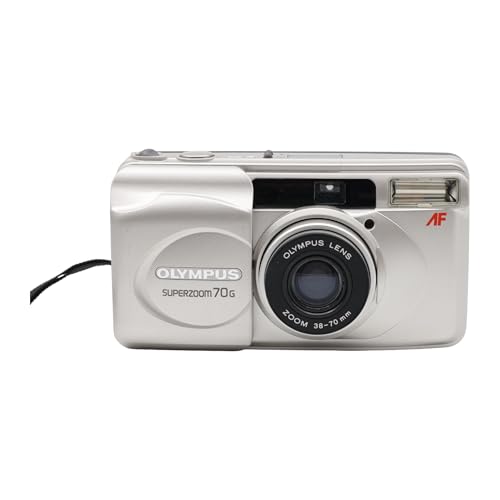
A compact camera generally puts more of the shooting process behind automatic systems. The Olympus Superzoom 70 G specifies automatic exposure, autofocus, motorized film advance, and rewind. The Pentax IQZoom EZY also documents autofocus, a built-in flash, and a film winder. These features reduce the number of steps needed between loading film and taking a frame.
The SLR options provide a different handling style. The Canon EOS Rebel G uses Canon EF mount lenses, while the Nikon N55 listing documents custom ISO, shutter, and aperture settings. The Minolta 7000 and Nikon AF N8008 are also identified as 35mm SLR kits with autofocus zoom lenses. Because these cameras use an SLR body format, they may suit users who want a more traditional camera shape and a system-oriented lens mount. The supplied listings do not provide complete lens specifications for every SLR, so verify the included lens details before selecting one.
Compare the documented zoom ranges
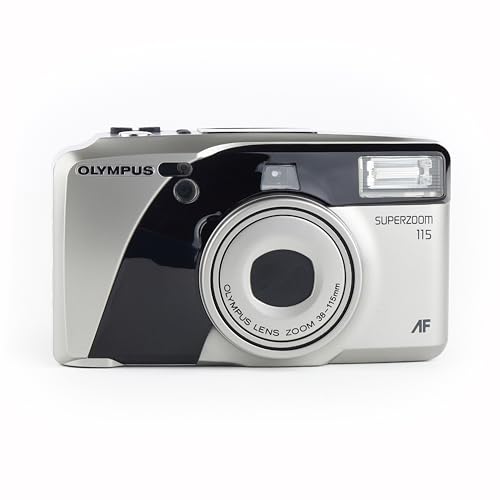
Zoom range is one of the clearest differences in this category. The Olympus Stylus Zoom 140 QD has a documented 38-140mm lens, reaching the farthest into telephoto framing among the selected products. The Olympus Stylus 105 covers 38-105mm, while the Olympus Superzoom 115 covers 38-115mm. These ranges provide more reach for distant subjects than the 38-70mm lenses specified for the Olympus Superzoom 70 G and Pentax IQZoom EZY.
A broader range is not automatically the right fit. A 38-70mm lens can be sufficient for general scenes, travel, and portraits, while a 38-140mm lens offers more framing flexibility at the telephoto end. The Canon Sure Shot 76 and several SLR listings identify a zoom lens but do not state its focal-length range in the supplied evidence. That missing detail should be treated as an information gap rather than filled in by assumption.
Consider focusing and exposure controls
Autofocus is documented across the selected compacts and several SLR kits. The Olympus Superzoom 115 specifies an 11-point multi-wide autofocus system. The Olympus Stylus Zoom 140 QD, Olympus Superzoom 70 G, Pentax IQZoom EZY, and Canon Sure Shot 76 also identify autofocus or autofocusing lenses. This makes them distinct from manual-focus film designs, which are not represented in the selected group.
Exposure control varies more noticeably. The Olympus Superzoom 70 G and Olympus Superzoom 115 specify automatic exposure, while the Nikon N55 explicitly lists custom ISO, shutter, and aperture settings. That makes the Nikon the clearest option here for users who want documented adjustment of core exposure settings. The Canon EOS Rebel G, Minolta 7000, and Nikon AF N8008 are autofocus SLR choices, but the supplied listings do not describe their full exposure-control systems. Do not infer additional modes from the camera family name alone.
Check film handling and flash features
Automatic film handling can make a mechanical process simpler. The Olympus Stylus 105, Olympus Superzoom 115, Olympus Stylus Zoom 140 QD, and Olympus Superzoom 70 G list automatic loading, advance, or rewind functions. The Pentax IQZoom EZY specifies a film winder, and the Nikon AF N8008 lists a film motor drive. The Canon Sure Shot 76 lists a film loader.
Flash features are also common among the compact models. The Olympus Stylus 105 has a pop-up flash with red-eye reduction and auto color balancing. The Olympus Stylus Zoom 140 QD lists a multi-mode flash with red-eye reduction, and the Olympus Superzoom 70 G includes multiple flash modes. The Canon Sure Shot 76 and Nikon AF N8008 document built-in flashes. These features can be useful when a compact camera needs an integrated illumination option, although the listings do not establish performance in particular lighting conditions.
Account for special design features
Some models stand out because of features beyond the lens. The Olympus Stylus 105 is documented with all-weather protection for rain, snow, sea spray, and blowing sand. The Olympus Superzoom 115 lists an ultra-compact metal body designed to survive the elements. The Olympus Stylus Zoom 140 QD includes date imprinting and a self-timer, while the Olympus Stylus 105 also offers quartz date imprinting.
These specifications help separate otherwise similar automatic cameras. A buyer who expects outdoor use may focus on the Stylus 105’s documented protection. Someone prioritizing a long telephoto reach may prefer the Stylus Zoom 140 QD. For a more adjustable SLR experience, the Nikon N55’s listed ISO, shutter, and aperture settings deserve attention. For simpler operation, the Olympus Superzoom 70 G or Pentax IQZoom EZY has a more direct feature description.
Final recommendation
Olympus Stylus Zoom 140 QD ranks first overall in this specification-based comparison under the published weighted criteria.
The Olympus Stylus 105 is the highest-scoring returned product and the first overall specification-based choice among the best film cameras with zoom lenses. Its 38-105mm range, autofocus, automatic film handling, built-in flash, and documented all-weather protection create the most balanced specification set in this comparison.
The Olympus Stylus Zoom 140 QD is the better fit when maximum documented telephoto reach matters, thanks to its 38-140mm lens. The Olympus Superzoom 115 is another strong long-range compact, with 11-point autofocus and ED glass. For users who prefer an SLR, the Canon EOS Rebel G offers an autofocus zoom kit and EF mount compatibility, while the Nikon N55 is the clearest selection for documented ISO, shutter, and aperture adjustment. Among the top film cameras with zoom lenses, the best match depends on whether you prioritize compact automation, lens reach, outdoor protection, or SLR-style handling.
Frequently Asked Questions
What should I look for in the best film cameras with zoom lenses?
Start with the documented focal range, then compare focusing, exposure, film transport, flash, and body features. A 38-70mm lens suits general compact use, while the 38-105mm, 38-115mm, and 38-140mm options provide progressively more telephoto framing. Also distinguish automatic point-and-shoot models from autofocus SLR kits.
Which selected camera has the longest documented zoom range?
The Olympus Stylus Zoom 140 QD has the longest documented range at 38-140mm. The Olympus Superzoom 115 follows with 38-115mm, and the Olympus Stylus 105 lists 38-105mm. These figures describe focal-length flexibility only; the supplied evidence does not establish image quality in use.
Are these cameras all compatible with 35mm film?
The selected compact models and SLR kits are identified as 35mm film cameras or 35mm point-and-shoot cameras in their listings. The Canon Sure Shot 76, Olympus Superzoom 70 G, Pentax IQZoom EZY, and Olympus Stylus Zoom 140 QD explicitly identify 35mm formats, while the SLR listings identify 35mm SLR bodies.
Which model documents the most exposure adjustment?
The Nikon N55 explicitly lists custom ISO, shutter, and aperture settings. The Olympus Superzoom 115 and Olympus Superzoom 70 G instead specify automatic exposure. The selected listings do not provide complete exposure-mode details for every SLR, so additional controls should not be assumed without confirming the specific kit documentation.