Buying Guide
Choosing the best foldable over-ear headphones starts with the type of listening you actually do. A commuter may prioritize active noise cancellation and a wired fallback, while a student may prefer simple wired controls and no battery dependency. The products in this comparison are ranked from public specifications and listing features, not hands-on testing.
Check the folding mechanism and carrying needs
Foldable designs are not identical. The Marshall Monitor III A.N.C. includes a hard case, while the Soundcore Space One Pro specifically claims that it compresses to half its size. Those details matter if the headphones will travel in a crowded backpack or carry-on. The G300 uses rotating ear cups and weighs 210g, making its portability claim more specific than a generic statement that a headset is lightweight.
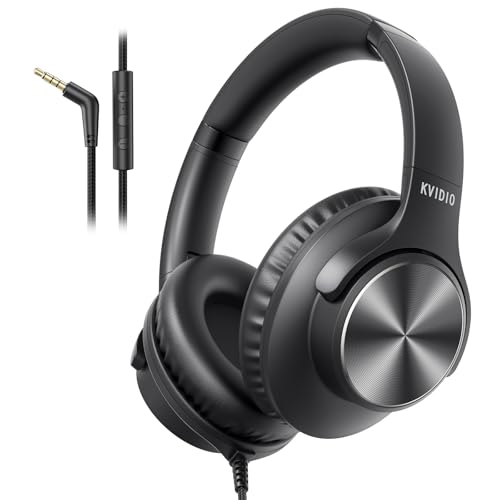
The KVIDIO INFLOW and SENZER SG500 take a different approach. Both are wired models with folding structures, and the SG500 folds inside its arms. Wired headphones can be convenient for school, airplane entertainment systems, or computers because they do not need to be charged during use. However, a 3.5mm connector may require an adapter with newer phones, tablets, or laptops.
Decide whether you need wireless, wired, or both
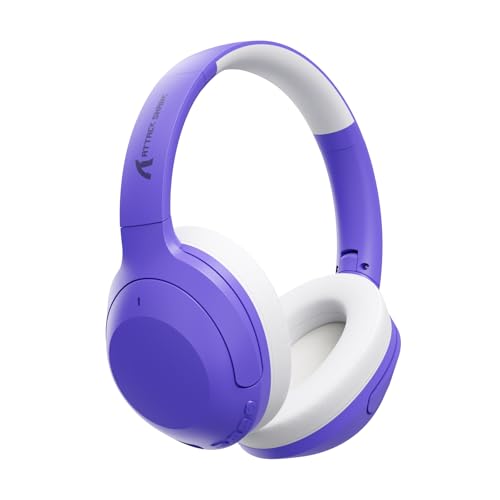
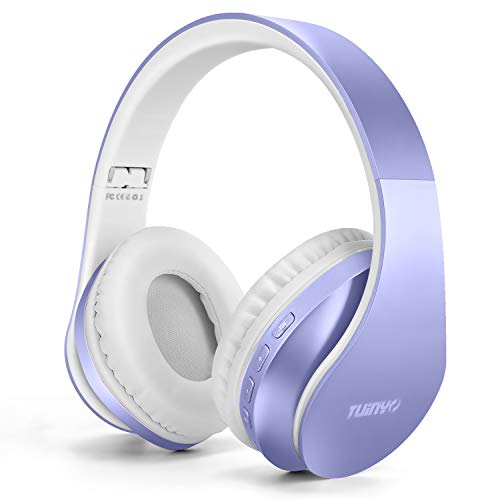
The most flexible designs here support both Bluetooth and a cable. The RORSOU C6, ZIHNIC WH-816, TUINYO WH-816, and G300 all document wireless and 3.5mm modes. Dual-mode operation provides a fallback when a battery is depleted or when a source device lacks Bluetooth.
The Space One Pro adds Bluetooth 5.3, LDAC, app-based equalizer controls, and simultaneous connection to two devices. The Acer OHR205 also documents multipoint pairing, allowing a phone and laptop to remain connected. These features are useful for moving between calls and media, but the listing data does not establish how every device will behave in practice.
Compare battery claims carefully
Battery figures should be read alongside operating modes. Marshall lists up to 70 hours with ANC and 100 hours without it. Space One Pro lists 40 hours with ANC and 60 hours without ANC, plus a claim that five minutes of charging provides eight hours of playtime. Acer lists up to 70 hours, while RORSOU lists up to 60 hours.
The G300 claims more than 20 hours, and the ZIHNIC and TUINYO models each list 14 hours of music time. These figures are listing claims rather than independent measurements, so actual endurance may vary with volume, wireless features, and use of noise control or lighting. Wired models such as KVIDIO and SENZER avoid wireless battery limits altogether.
Match noise control to your environment
Active noise cancellation is documented for Marshall, Space One Pro, RORSOU, G300, and CEEK. Space One Pro uses four-stage adaptive ANC, while Marshall also provides transparency mode. RORSOU describes cancellation for low- and mid-frequency noise and includes a wired cable. The G300 identifies ANC with a claimed reduction of up to 21dB.
Passive isolation is a different feature. KVIDIO describes passive noise isolation from its over-ear design, and SENZER describes a noise-cancelling microphone rather than ANC for the ear cups. That microphone feature helps voice communication, but it should not be treated as the same thing as reducing outside sound for the listener.
Consider sound, comfort, and calls
Driver information can help compare the documented audio hardware. Acer, RORSOU, and KVIDIO list 40mm drivers, while CEEK emphasizes surround sound and adjustable bass vibration for gaming or VR. Marshall highlights its signature sound and Soundstage spatial audio. These descriptions explain intended features, but they do not replace listening tests.
Comfort evidence is similarly specification-based. Space One Pro lists a self-adjusting flexible headband, soft protein-leather padding, and slow-rebound foam. Marshall lists soft ear cushions, while Acer, RORSOU, ZIHNIC, TUINYO, and SENZER identify memory-foam or protein-foam padding. Fit remains personal, so headband adjustment and ear-cup movement may matter as much as the material name.
For calls and gaming, look for the type of microphone provided. Marshall, Acer, RORSOU, G300, ZIHNIC, and TUINYO list built-in microphones. CEEK includes a detachable omnidirectional gaming microphone, and SENZER provides a bendable microphone arm. KVIDIO places its microphone and playback controls on the cable. These arrangements serve different setups, so check the connection requirements of the device you plan to use.
Final recommendation
Soundcore Space One Pro ranks first overall in this specification-based comparison under the published weighted criteria.
Soundcore Space One Pro is the first overall specification-based choice in this comparison.
For shoppers seeking the best foldable over-ear headphones, Soundcore Space One Pro combines compact storage, adaptive ANC, multipoint Bluetooth, LDAC, app-based sound customization, and fast charging. Its documented combination gives it the highest weighted editorial result among the selected products.
Marshall Monitor III A.N.C. is a close alternative for buyers who prioritize long stated battery endurance, a hard case, ANC, transparency mode, soft ear cushions, and spatial audio. Acer’s OHR205 is another useful everyday option because it combines long stated battery life, multipoint pairing, wired listening, and memory-foam earpads.
Among the top foldable over-ear headphones for specialized uses, CEEK is the gaming and VR-focused pick, while SENZER is the clearest wired console headset. RORSOU, G300, ZIHNIC, and TUINYO each offer a different balance of ANC, portability, battery claims, and connection options. KVIDIO is the straightforward wired choice for school, office, and tablet use.
Frequently Asked Questions
What makes the best foldable over-ear headphones different from ordinary over-ear models?
They document a hinge, folding arm, rotating ear cup, or another mechanism that reduces storage size. A foldable model can be easier to place in a bag, but the exact mechanism varies. Space One Pro claims a half-size compression, Marshall includes a hard case, and KVIDIO and SENZER document rotating or folding components.
Are foldable headphones available with active noise cancellation?
Yes. Marshall, Space One Pro, RORSOU, G300, and CEEK document active noise cancellation. Space One Pro specifies adaptive ANC, Marshall includes transparency mode, and G300 states a claimed reduction of up to 21dB. Wired models in this selection primarily document passive isolation or microphone noise reduction instead.
Is a wired foldable headset a good option for travel?
It can be, especially when using an airplane entertainment system, a laptop, or another device with a 3.5mm jack. KVIDIO and SENZER do not depend on wireless battery power. The trade-off is cable management and possible adapter use with devices that lack a headphone jack.
Which selected models support both wireless and wired listening?
KVIDIO and SENZER are wired-only entries in this top 10. Marshall, Space One Pro, and Acer are wireless models in the supplied listings, while RORSOU, G300, ZIHNIC, TUINYO, and CEEK document both wireless and wired listening modes.
Should battery claims be compared directly?
Only with care. The listings use different conditions, including ANC on or off, lighting on or off, and stated music-time assumptions. Marshall, Space One Pro, Acer, RORSOU, G300, ZIHNIC, and TUINYO provide explicit runtime claims, while wired models avoid this limitation during cable-connected use.