Buying Guide
A full-tang fixed blade extends the blade material through the handle rather than stopping partway inside it. That construction is the defining filter here, but it is not the only factor that separates the best full-tang fixed-blade knives.
This guide uses only supplied listing information. It is not a hands-on test, and it does not summarize customer opinions. Scores reflect the documented specifications and features, not marketplace activity or volatile listing signals.
Start with the task and blade length
Blade length is one of the clearest practical differences in this group. The SOG Field Knife has a 4-inch blade and a listed weight of 3.8 ounces, making it a compact field option. The Cold Steel SRK Compact reaches 5 inches while listing a 5.1-ounce weight, which is a useful middle ground for users who want reach without choosing a large knife.
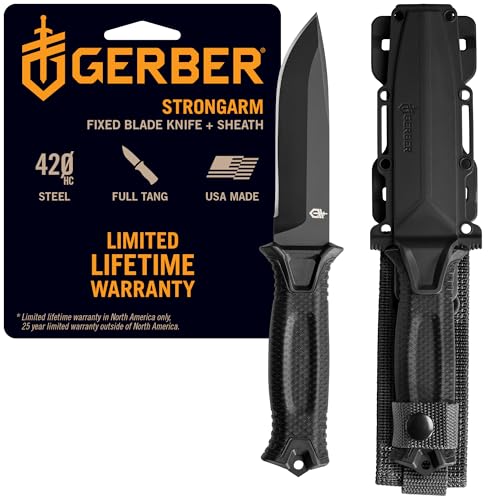
The Morakniv Garberg has a 4.3-inch blade, while the Gerber StrongArm lists a 4.8-inch size. These dimensions fit common camp and outdoor formats without the reach of the 7-inch Cold Steel Recon Tanto. The Recon Tanto is better matched to someone specifically seeking a large tanto-style profile; its 11.75-inch overall length and 8.7-ounce listed weight make it a more substantial carry choice.
For hunting-oriented designs, the Old Timer 15OT Deerslayer lists a 5.6-inch clip point, and the Old Timer Heritage Series 169OT lists a 5-inch drop point. The latter listing specifically describes a larger belly for slicing and general uses, while the Deerslayer includes a finger choil and thumb jimping.
Compare blade steel and geometry
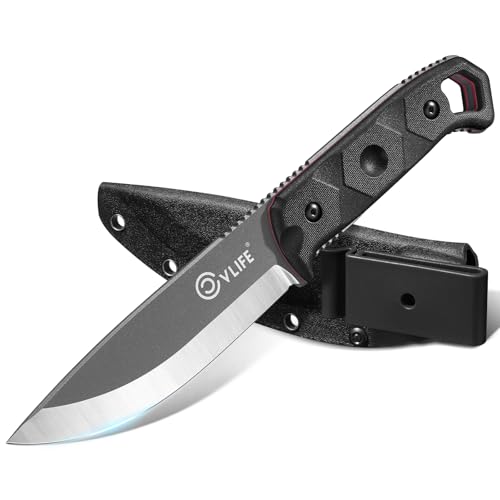
Steel names are useful comparison points, but the supplied listings do not provide a complete laboratory characterization for every model. The Garberg identifies a carbon-steel blade with DLC coating and a square-edged spine. The Schrade SCHF36CP lists 1095 powder-coated high-carbon steel, while the Cold Steel models specify SK-5. The CVLIFE bushcraft knife identifies D2 tool steel and a 4.7-millimeter spine.
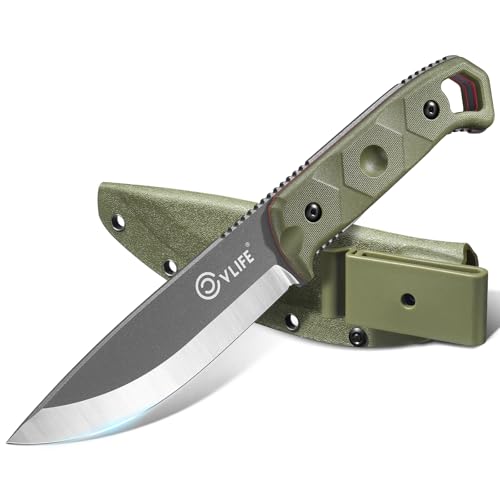
Geometry should match the work. The CVLIFE uses a modified Scandi grind and drop-point tip, with the listing describing feather sticking and bow-drill preparation. The Old Timer Heritage model also uses a drop point and is described as having a larger belly for slicing. Clip points appear on the SOG Field Knife, Cold Steel SRK Compact, Old Timer Deerslayer, and TOPS 3 Pointer. The Recon Tanto uses a tanto profile, so it serves a different design preference than a general-purpose drop point.
Coatings and maintenance also matter. The Garberg’s DLC coating is described as minimizing rust and reflections, but the listing still says to wipe the blade with oil after use. The Schrade’s blade is powder coated, and the StrongArm lists a Cerakote coating described for wear and corrosion resistance. These details are useful, but they do not remove the need to follow the manufacturer’s care guidance.
Evaluate handle material and control
A secure handle should be considered alongside blade size. The Gerber StrongArm uses a rubberized diamond-texture grip. The Cold Steel SRK Compact and Recon Tanto use Kray-Ex handles, and the SOG Field Knife uses thermoplastic rubber. These materials are described as grippy or suited to wet conditions in their respective listings.
The Schrade adds a ring-textured TPE handle, finger choil, and jimping. The CVLIFE bushcraft model lists nylon-fiberglass scales, red liners, and anti-slip jimping. Traditional choices differ: the Old Timer Heritage 169OT lists a laminate wood handle, while the Deerslayer uses sawcut Delrin slabs. The TOPS 3 Pointer uses black canvas Micarta and a traction-coated blade, making it particularly compact and control-focused on paper.
Handle comfort is personal, so specification-based guidance should avoid claiming that one shape will fit every hand. Look for the features most relevant to your use: texturing for wet work, jimping for thumb placement, a finger choil for indexing, or a symmetrical profile if you want flexible orientation. The Garberg specifically documents a symmetrical handle and a sheath lock between handle and sheath.
Inspect the sheath and carry options
The sheath determines how safely and conveniently a fixed blade travels. The Garberg has the most elaborate listed system, including a polymer sheath, belt loop, MOLLE mount, straps, secondary locking loop, and a click lock. The Gerber StrongArm also emphasizes adaptable carry, with a multi-mount sheath supporting horizontal carry or vertical attachment.
For adjustable positioning, the CVLIFE bushcraft knife lists a rotating clip and adjustable retention screw. The CVLIFE 5.1-inch model uses a multi-angle clip and customizable draw tension, although it is not among the final ten because the selected group provides stronger overall evidence. The SOG Field Knife has a notched GRN sheath, while the TOPS 3 Pointer includes a Kydex sheath.
Leather sheaths appear on both Old Timer selections. They offer a traditional belt-carry format, but the material may require different care than polymer, nylon, or Kydex. Before choosing, confirm whether you prefer belt, MOLLE, horizontal, neck, or compact backup carry. A technically capable knife is less useful if its documented sheath does not suit your equipment.
Match weight and accessories to your kit
Weight can influence whether a knife becomes a primary tool or a backup. The SOG Field Knife lists 3.8 ounces, the Cold Steel SRK Compact lists 5.1 ounces, and the Schrade lists 12.3 ounces. The larger Schrade package includes a ferro rod and sharpening stone, so its accessory set may matter as much as the knife itself for a camping kit.
The Garberg also supports fire preparation through its square-edged spine and includes multiple mounting components. The TOPS 3 Pointer includes an oil bottle, while several other models focus on a knife and sheath. Consider the complete carry system rather than blade steel alone.
Final recommendation
CVLIFE 5.2-inch D2 Bushcraft Knife ranks first overall in this specification-based comparison under the published weighted criteria.
The final choice among the best full-tang fixed-blade knives depends on the documented features that match your intended use.
Morakniv Garberg Full Tang is the highest-scoring returned product and the first overall specification-based choice. Its documented full-tang construction, DLC-coated carbon-steel blade, symmetrical handle, fire-steel spine, locking sheath connection, and MOLLE-compatible carry system give it the broadest feature coverage in this comparison.
The CVLIFE 5.2-inch D2 Bushcraft Knife is the stronger fit for a thicker bushcraft-oriented format, while the Schrade SCHF36CP is appealing when included fire-starting and sharpening accessories matter. Choose the Gerber StrongArm for adaptable field carry, the Cold Steel SRK Compact for a lighter five-inch format, or the SOG Field Knife for a particularly light option.
Among the top full-tang fixed-blade knives, the Cold Steel Recon Tanto is the specialized large tanto choice rather than a general recommendation for everyone. The Old Timer Heritage 169OT and Deerslayer favor traditional hunting and outdoor designs, and the TOPS 3 Pointer is the compact pick.
Frequently Asked Questions
What makes the best full-tang fixed-blade knives different from partial-tang knives?
A full-tang design extends the blade material through the handle. The supplied listings identify this construction for every selected product, but they do not provide hands-on durability testing. Full tang is therefore a construction specification, not a guarantee of performance in every task.
The TOPS Knives 3 Pointer has the shortest listed blade at 3.13 inches and a listed weight of the current price. The SOG Field Knife is another compact choice, with a 4-inch blade and a listed weight of 3.8 ounces. Choose based on whether minimal size or more blade reach matters more.
Which sheath systems offer the most carry flexibility?
The Morakniv Garberg includes a MOLLE mount, belt loop, straps, secondary locking loop, and polymer sheath. The Gerber StrongArm lists horizontal or vertical attachment, while the CVLIFE bushcraft model lists a rotating clip and adjustable retention. These documented options provide more positioning flexibility than a basic belt sheath.
Is D2 steel automatically the best choice for every outdoor task?
No. The supplied listings identify D2 on the CVLIFE and Old Timer Heritage models, but steel selection should be considered with blade geometry, thickness, coating, maintenance, and intended work. A drop point, clip point, tanto, or Scandi grind may be more relevant to the task than the steel name alone.
What should I check before carrying a fixed-blade knife?
Check the sheath retention, carry position, blade dimensions, and applicable local rules. The products in this comparison include different belt, MOLLE, Kydex, nylon, polymer, and leather systems, so confirm that the selected setup keeps the blade secured and suits your equipment.