Buying Guide
Picking the best hunting camping fixed blade knives comes down to matching the documented blade, tang, grip, and sheath to the work you actually do in the field. The ten knives below are organized as a specification-based comparison, not as a hands-on test or a recap of buyer feedback. Use the sections that follow to weigh blade steel, construction, and carry before settling on a single design.
Blade Steel and Edge Geometry
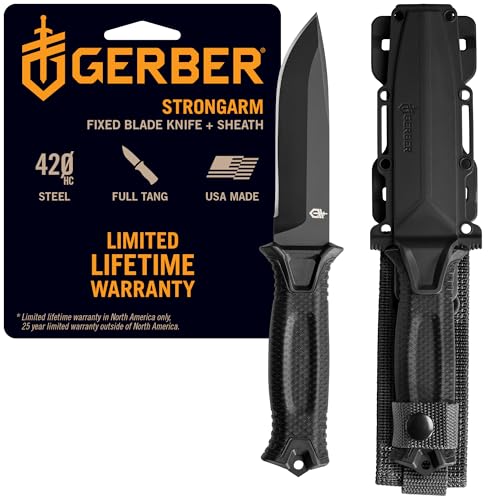
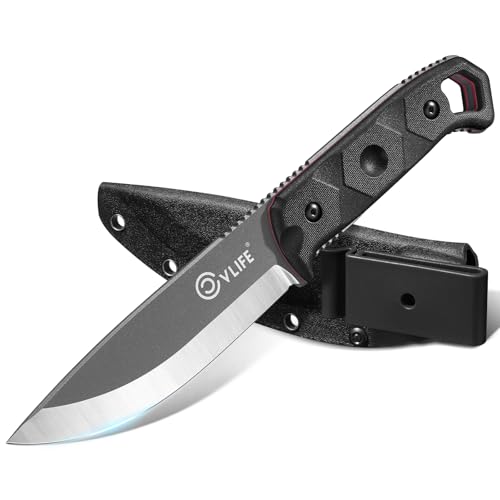
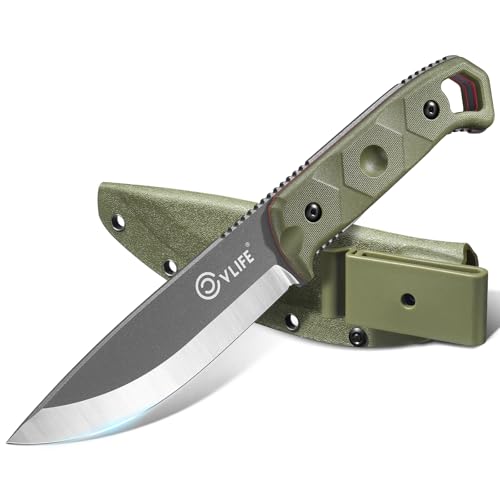
Blade steel drives cutting performance, sharpening behavior, and corrosion resistance. Stainless options like the 420HC on the Gerber StrongArm, 5Cr15MoV on the Gerber Freeman Guide, and 8Cr13MoV on Smith & Wesson M&P Special Ops are documented for corrosion resistance and field durability. Carbon choices such as 1095 on the Morakniv Companion and 65Mn on the Kershaw Camp 10 are documented for toughness and easier field sharpening. Tool steels such as SK-5 on the Cold Steel SRK Compact and D2 on the Freelander D2 Machete and Wide-Belly Skinner are documented for edge retention. Drop-point and clip-point profiles dominate this list because they balance skinning control with general camp work, while the Camp 10 recurve targets chopping.
Tang and Construction
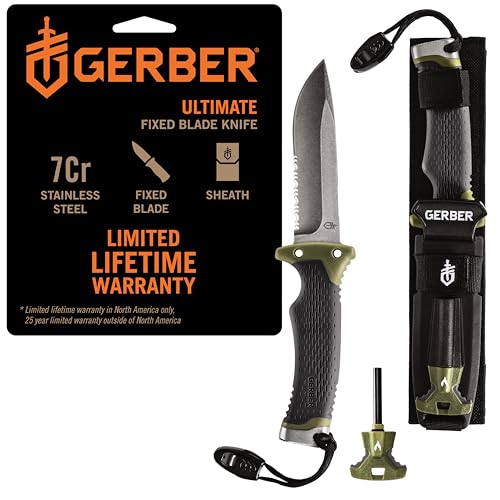
A full-tang build, where the steel runs the entire handle length, is the standard for serious outdoor fixed blades. StrongArm, SRK Compact, SOG Field Knife, Gerber Ultimate, Gerber Freeman Guide, Smith & Wesson M&P Special Ops, Kershaw Camp 10, and the Freelander D2 designs all carry full-tang documentation. This matters when batoning wood, prying, or applying lateral pressure during skinning, because the tang spreads load across the handle instead of concentrating it at the blade-handle joint.
Handle and Grip Control
Wet hands, cold mornings, and gloves make grip material a deciding factor. Rubberized diamond texture on StrongArm, TPR on SOG Field Knife, Kray-Ex on SRK Compact, and TacHide on Freeman Guide are documented to improve wet-condition control. The Morakniv Companion uses a polymer friction grip with a finger guard, while the Freelander D2 knives use synthetic rubber and G10 with a protective guard. If you work with gloves, prioritize designs with a guard or quillon to keep your hand from sliding onto the edge.
Sheath and Carry System
Sheath design determines how a knife reaches the trail. MOLLE compatibility on StrongArm, integrated sharpener and ferro rod on Gerber Ultimate, adjustable Kydex on Freelander D2 Machete, and notched GRN on SOG Field Knife expand how a knife can be carried or used.
Size and Weight Balance
Carry weight shapes how a knife feels on a long day. Lightweights like the Morakniv Companion at 3.9 ounces with sheath and the SOG Field Knife at 3.8 ounces are documented for comfortable belt carry. Mid-weight options such as the SRK Compact at 5.1 ounces balance reach and portability. Heavier designs like the Kershaw Camp 10 at 1 pound 2.3 ounces and the Smith & Wesson M&P Special Ops at 12.64 ounces are documented for chopping work but may feel heavy on day hikes.
Versatility for Hunting and Camp
Consider whether the knife must handle skinning, food prep, wood processing, and shelter building. Drop-point designs like Gerber Freeman Guide and Freelander Wide-Belly Skinner support detailed skinning, while recurve and large drop-point designs like Kershaw Camp 10 and Freelander D2 Machete cover chopping. Hybrid designs such as StrongArm, SOG Field Knife, and Smith & Wesson M&P Special Ops combine edge geometry, pommels, and grip control for mixed hunting and camp use.
Warranty and Build Support
Warranty length matters when a handle scales loosen or a sheath part wears, and it is part of the long-term value of the design. Newer or smaller brands such as Freelander carry less documentation in this area.
Final Recommendation
Gerber StrongArm Fixed Blade Knife (4.8 in) ranks first overall in this specification-based comparison under the published weighted criteria.
The Gerber StrongArm Fixed Blade Knife is the first overall specification-based choice in this roundup of the best hunting camping fixed blade knives, with documented 420HC steel, full-tang construction, rubberized grip, and MOLLE sheath. For a lightweight trail knife, the Morakniv Companion Carbon Steel remains a strong secondary pick because of its 3.9-ounce carry weight and documented 1095 blade. Choppers and survival kits are well served by the Kershaw Camp 10 Machete, Cold Steel SRK Compact, Gerber Ultimate, Smith & Wesson M&P Special Ops, and Freelander D2 Machete. Hunters focused on skinning should look closely at the Gerber Freeman Guide and Freelander Wide-Belly Skinner. Together, these knives form a solid set of the top hunting camping fixed blade knives for 2026, each grounded in real specifications rather than impressions.
Frequently Asked Questions
Among the best hunting camping fixed blade knives, what blade length is best for hunting and camping fixed blades?
For most hunting and camping tasks, blades between 4 and 5 inches hit a good balance of control and reach. The Gerber StrongArm at 4.8 inches and the Morakniv Companion at 4.1 inches illustrate this middle range, while the Kershaw Camp 10 at 10 inches targets heavier chopping.
Are full-tang knives always better than partial-tang designs?
Full-tang construction is documented to handle batoning, prying, and lateral cutting pressure better than partial-tang designs, which is why nearly every entry here lists full-tang construction. For light skinning only, partial tangs can still work, but for mixed hunting and camp chores full-tang is the safer documented choice among the best hunting camping fixed blade knives.
How important is sheath design for a fixed blade knife?
Sheath design controls how the knife carries and how quickly it deploys. Features like MOLLE webbing on the StrongArm, integrated sharpener and ferro rod on the Gerber Ultimate, adjustable Kydex on the Freelander D2 Machete, and notched GRN on the SOG Field Knife each add real field utility beyond basic blade protection.
Which steel type is easiest to maintain in the field?
Stainless options like 420HC, 5Cr15MoV, and 8Cr13MoV are documented for corrosion resistance, which makes them easier to maintain in wet conditions. Carbon choices like 1095 and 65Mn are documented for easier sharpening but may need more care to prevent rust during long trips.
Should I choose a dedicated skinner or a general-purpose hunting knife?
If you primarily field-dress game, a drop-point skinner such as the Gerber Freeman Guide or Freelander Wide-Belly Skinner gives precise slicing control. If you also process wood, clear brush, or build shelters, a general-purpose fixed blade like the Gerber StrongArm, Cold Steel SRK Compact, or SOG Field Knife is the more flexible pick among the top hunting camping fixed blade knives.