Buying Guide
The best survival camping fixed-blade knives should be judged by the work they are documented to support, not by a dramatic title or a single steel name. A fixed blade removes the folding mechanism from the equation, but the useful differences remain substantial: blade length, construction, grind, handle material, sheath design, and maintenance requirements all affect how the knife fits a camp kit.
Start with the work you expect to do
For light campsite preparation, cord cutting, food preparation, and general utility, a blade around four inches is easier to pack and control. The SOG Field Knife, Morakniv Companion, and FLISSA D2 Fixed Blade all use compact blade lengths in the supplied listings. The SOG is listed at four inches, the Morakniv at 4.1 inches, and the FLISSA at 3.6 inches. These dimensions can suit users who do not need a long reach for wood processing.
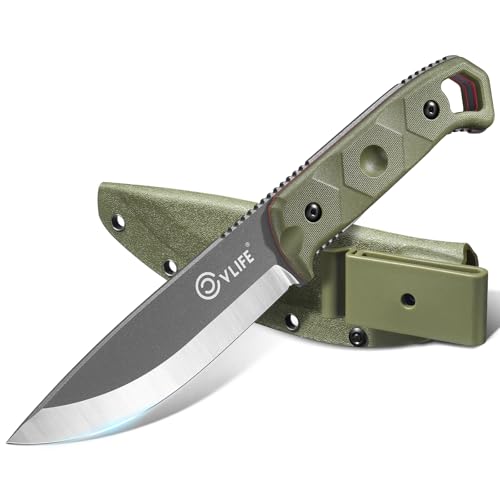
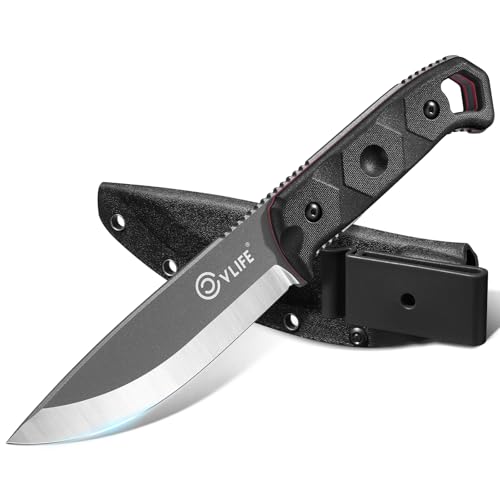
A larger blade can be useful when your routine includes shelter work, carving, or firewood preparation. The BPSKNIVES Adventurer lists a 5.3-inch blade, while CVLIFE lists 5.2 inches. The Freelander listing emphasizes a thick full-tang spine, and the Bloodline listing describes use for wood preparation and feather sticks. Larger or thicker designs may offer a more substantial working profile, but they can take more room on a belt or in a pack.
Compare construction carefully
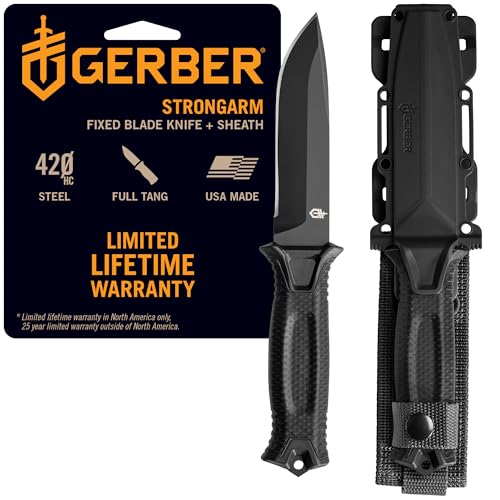
Full-tang construction is explicitly documented for the Gerber StrongArm, BPSKNIVES Adventurer, Bloodline, CVLIFE, Freelander, SOG, and FLISSA D2 models. In these listings, the blade material extends through the handle or the product is directly described as full tang. That is useful evidence when you want a fixed blade intended for demanding outdoor work.
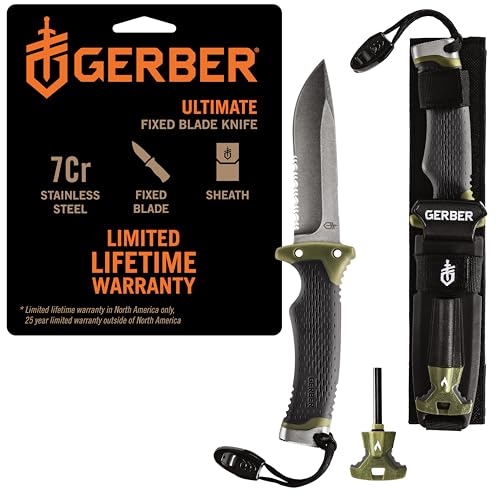
The Gerber Ultimate and Morakniv Companion listings provide strong information about their blades, handles, sheaths, and accessories but do not identify them as full tang. The SDOKEDC listing similarly supplies useful steel, handle, and sheath details without stating blade length or full-tang construction. Those omissions do not make the knives unsuitable, but they should affect how confidently you compare them with products that provide more construction detail.
Match steel to maintenance habits
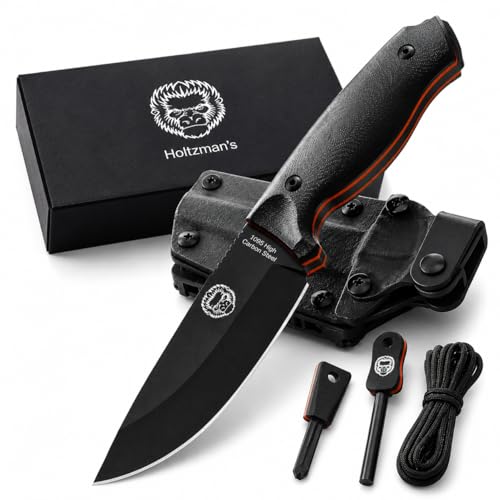
Carbon steel appears in the BPSKNIVES Adventurer, Bloodline, and Morakniv Companion listings. The BPSKNIVES description specifically warns that its high-carbon blade can rust and advises rinsing and drying it after use. The Bloodline is also described as 1095 high-carbon steel. Carbon steel can be attractive to users who prefer traditional bushcraft materials, but it is not a maintenance-free choice in wet camping conditions.
The CVLIFE, Freelander, and FLISSA D2 models use D2 according to their listings. CVLIFE describes the blade as semi-stainless and advises wiping it clean, so D2 should not be treated as immune to corrosion. The SDOKEDC listing identifies 14C28N and highlights corrosion resistance. Gerber StrongArm uses 420HC with a coating described as improving wear and corrosion resistance. These distinctions are more useful than simply labeling one steel universally superior.
Look at the handle and grip
A secure handle matters when the knife is wet, cold, or used repeatedly. The Gerber StrongArm lists a rubberized diamond-texture grip. The Gerber Ultimate uses a textured rubber grip, while SOG uses thermoplastic rubber. BPSKNIVES uses walnut wood, and Morakniv uses an ergonomic polymer handle with a soft friction grip and finger guard.
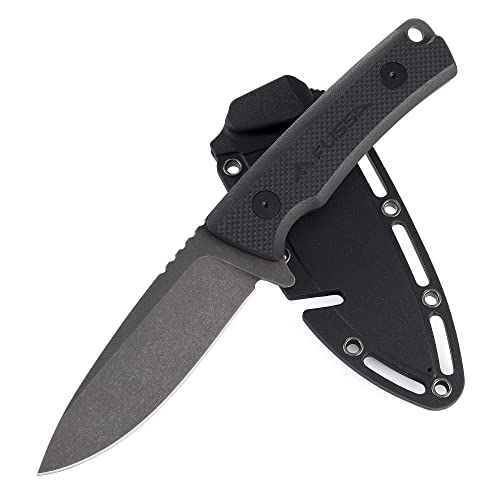
G10 appears on the Bloodline, SDOKEDC, and FLISSA D2 models. The Bloodline listing describes a textured G10 handle, while SDOKEDC describes G10 as nonslip and resistant to corrosion and wear. FLISSA identifies its handle as G10 and describes a curved ergonomic shape. Handle material alone does not prove comfort or performance, so consider the supplied texture, guard, and shape information together.
Inspect the sheath and carry options
A fixed blade is only convenient if its sheath fits your carry method. The Gerber StrongArm has a multi-mount sheath for horizontal carry or vertical attachment. CVLIFE lists adjustable retention and a rotating clip, and SDOKEDC lists an adjustable Kydex clip with removable spacers. These systems provide more configuration detail than a basic belt loop.
The Bloodline includes a custom-fit Kydex sheath, belt clip, and mounting hardware. Freelander also includes a custom-fitted Kydex sheath with a belt attachment. Morakniv uses a polymer sheath with belt clip, while FLISSA D2 uses nylon with a belt clip. The Gerber Ultimate sheath includes a sharpener and ferrocerium rod, making the sheath part of the knife’s survival-accessory package rather than only a storage cover.
Decide whether accessories belong in your kit
Some of the best survival camping fixed-blade knives are sold with tools that reduce the number of separate items you need to pack. Gerber Ultimate includes a sharpener, ferro rod, and whistle. BPSKNIVES Adventurer includes a ferro rod, and Bloodline includes a ferro rod, scraper, paracord, and mounting equipment. These features may be useful for a prepared survival kit, but they should not replace an assessment of the blade and sheath themselves.
A simpler knife can make sense if you already carry fire-starting equipment or prefer to choose each accessory separately. Morakniv, SOG, FLISSA D2, and SDOKEDC have more focused documented packages. The right choice depends on whether integrated accessories or a lighter, less complicated setup better matches your camping habits.
Final recommendation
CVLIFE 5.2-inch D2 Fixed Blade Knife ranks first overall in this specification-based comparison under the published weighted criteria.
The final choice among the best survival camping fixed-blade knives depends on the documented features that match your intended use.
Gerber Gear StrongArm is the highest-scoring returned product and the first overall specification-based choice. Its full-tang 420HC blade, textured grip, coating, and adaptable sheath give it the broadest balance of construction and carry features in this comparison. The BPSKNIVES Adventurer is a strong alternative for bushcraft users who want a Scandi grind and ferro rod, while CVLIFE and Freelander suit shoppers seeking thicker, more substantial field-tool specifications.
Among the top survival camping fixed-blade knives, Morakniv Companion stands out for a compact listed weight and straightforward belt carry. Bloodline offers a broad bushcraft accessory kit, and SDOKEDC emphasizes 14C28N steel, G10, and adjustable Kydex carry. Gerber Ultimate is the most accessory-focused option, SOG is a lightweight full-tang choice, and FLISSA D2 offers a short D2 blade with G10. Review blade length, steel maintenance, and sheath configuration before choosing.
Frequently Asked Questions
What makes the best survival camping fixed-blade knives different from folding knives?
A fixed blade has no folding pivot and is carried in a sheath. That design can simplify access and cleaning, but it also requires a secure sheath and more deliberate storage. The products in this comparison all document fixed-blade construction, while only some explicitly document full tang. Check that distinction rather than assuming every fixed blade uses the same internal construction.
Is carbon steel a good choice for camping?
Carbon steel can be a practical bushcraft choice when you are prepared to clean and dry the blade. BPSKNIVES specifically instructs users to wipe away moisture and notes that its blade can rust. Morakniv Companion and Bloodline also use carbon steel according to their listings. If your trips involve persistent moisture, consider the maintenance instructions and compare them with stainless or coated alternatives such as Gerber StrongArm or SDOKEDC.
What blade length works for general camp use?
There is no single correct length. The SOG Field Knife, Morakniv Companion, and FLISSA D2 use blades from 3.6 to 4.1 inches and may be easier to carry for routine cutting. CVLIFE and BPSKNIVES use blades around 5.2 to 5.3 inches and are positioned for more substantial outdoor tasks. Choose based on pack space, local carry rules, and the work you actually expect to perform.
Are included fire starters worth prioritizing?
They can be useful if you want a consolidated kit. Gerber Ultimate includes a ferrocerium rod in its sheath, while BPSKNIVES Adventurer and Bloodline also list ferro rods. An integrated accessory does add convenience, but it should not outweigh an unsuitable blade, grip, or sheath. Treat the fire starter as a supporting feature rather than the main reason to select a knife.
What should I check before carrying a fixed blade outdoors?
Confirm local laws and campsite rules, then inspect sheath retention, belt attachment, and the intended carry position. Also read the care instructions for the blade steel. Products with adjustable clips, such as CVLIFE and SDOKEDC, may offer more positioning options, while basic belt-clip or loop designs can be simpler. Keep the knife secured and protected when it is not in use.