Buying Guide
The best heavy-duty handsaws are not all built for the same cutting pattern. A long straight wood saw can be useful for boards, panels, and general property work, while a curved pruning saw is shaped around branches. Folding models prioritize transport, and a double-edged pull saw is aimed at controlled woodworking rather than yard cleanup. Start by matching the saw design to the material and work position before comparing tooth or handle details.
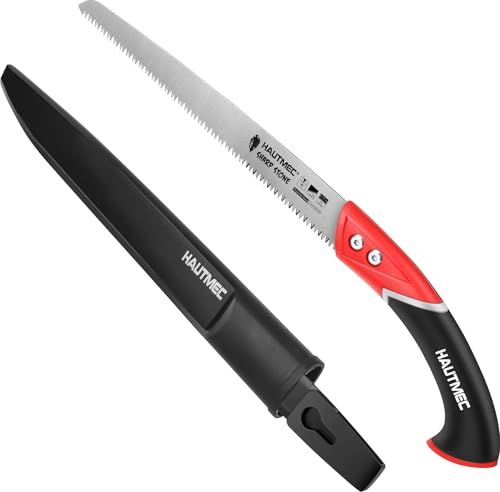
Fixed-blade saws generally offer a direct, uncomplicated cutting setup. The HAUTMEC HT0026 uses a 14-inch blade within a 22-inch saw and is listed for wood, boards, PVC, branches, plywood, and wallboard. The QYQRQF 18-inch model follows a similar broad-use idea, with a longer fixed format and documented use across timber, insulation, panels, PVC, and branches. These are appropriate when the saw will live in a workshop, garage, or maintenance kit and maximum compactness is not the priority.
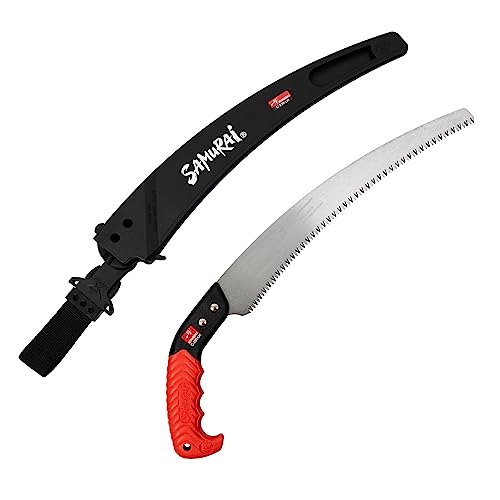
Pruning saws use designs more closely matched to branches. The Corona RS 7510D has an 18-inch curved blade and a D-handle for gloved or two-handed operation. The Fiskars PowerTooth also uses a D-handle, while the Samurai C330LH has a 13-inch curved, non-tapered blade and includes a scabbard. The HAUTMEC HT0305-PS takes a straight fixed-pruning approach with a rigid 1.4 mm blade and belt sheath. These designs should be considered when outdoor wood cutting is the main job.
Compare tooth geometry and cutting direction
Tooth count alone does not determine suitability, especially because the selected saws use different tooth shapes and cutting actions. The HAUTMEC HT0026 documents 9 TPI triple-ground teeth and push-and-pull strokes. The QYQRQF model uses 7 TPI triple-ground teeth and chip removal. Those features point toward fast, aggressive cutting in general wood tasks, but the listing evidence does not establish a measured speed advantage in actual use.
The KAKURI Ryoba is different. Its two edges are specified for rip cuts and crosscuts, with separate tooth rates. That makes it the clearest choice for users who need to cut both along and across wood grain. It is a pull saw, so its operating technique differs from the push-pull fixed saws. The Corona and Samurai models use curved pruning profiles, and the REXBETI and WEIMELTOY folding saws use staggered or sharpened teeth for outdoor wood.
Look at blade material and thickness
Blade material and treatment are useful indicators of intended use, but they do not replace hands-on durability testing. The HAUTMEC HT0305-PS lists a 1.4 mm SK5 blade, while the KAKURI lists a 1.2 mm Japanese carbon-steel blade. The HAUTMEC HT0026 lists a 1 mm heat-treated 65Mn blade, and the QYQRQF lists a 0.9 mm 65Mn blade. The listed thicknesses suggest different balances between stiffness, weight, and cutting feel, but the supplied data does not support claiming that one will last a specific number of cuts.
Several products specify hardened teeth. HAUTMEC HT0026 and HT0305-PS identify induction-hardened edges, the Fiskars blade is described as fully hardened, and the Samurai and KAKURI models specify impulse-hardened teeth. REXBETI uses an SK5 blade and reinforced structure, while WEIMELTOY identifies a hardened SK5 blade. Treat these as documented construction features, not guarantees of service life.
Match the handle to the work
Handle shape matters most when cuts require leverage or gloves. D-handles on the Corona RS 7510D and Fiskars PowerTooth are explicitly positioned for control, and the Corona listing mentions gloved or two-handed use. Conventional ergonomic handles on HAUTMEC HT0026, QYQRQF, and HAUTMEC HT0305-PS provide anti-slip or soft-touch surfaces. The REXBETI and WEIMELTOY folding saws also use rubber-coated or soft rubber grips.
A handle can improve grip security, but the evidence does not establish that any model eliminates fatigue or prevents injury. Use a stable stance, keep the blade path clear, and select a handle size that suits your gloves and hand position. A fixed saw may feel more direct for repeated strokes, while a folding handle can be easier to carry but introduces a locking mechanism that should be checked before use.
Consider portability and storage
Folding designs are the natural choice for backpacks, vehicles, and compact tool kits. REXBETI folds for camping and survival-kit storage, while WEIMELTOY folds to cover the blade and uses a button lock in both open and closed positions. Their shorter blades are suitable for branches and general outdoor wood, but they are not as well suited to long straight cuts as the fixed 18- or 22-inch saws.
The Samurai includes a scabbard, and the HAUTMEC HT0305-PS includes a rigid ABS belt sheath. KAKURI supplies a blade cover. These accessories address transport and storage rather than cutting performance. A covered or folded blade is particularly practical when the saw will be carried with other tools or outdoor equipment.
Select by application
For mixed household materials, begin with HAUTMEC HT0026 or QYQRQF because their listings explicitly include several materials beyond ordinary wood. For large branches, compare Corona RS 7510D, Fiskars PowerTooth, Samurai C330LH, and HAUTMEC HT0305-PS by curved versus straight blade, handle style, and carrying method. For woodworking grain direction, KAKURI has the most specific design. For compact outdoor use, REXBETI and WEIMELTOY offer folding formats.
Final recommendation
HAUTMEC HT0305-PS 12-Inch Pruning Saw ranks first overall in this specification-based comparison under the published weighted criteria.
HAUTMEC HT0026 is the highest-scoring returned product and the first overall specification-based choice among these best heavy-duty handsaws. Its documented combination of a 1 mm heat-treated blade, triple-ground teeth, chip removal, push-and-pull action, and broad material range gives it the most specification-aligned balance for general use. The HAUTMEC HT0305-PS is the better specialized pick when a rigid pruning blade and belt sheath matter, while the Corona RS 7510D is more purpose-built for large branches.
Among the top heavy-duty handsaws, KAKURI is the clear specialist for rip and crosscuts, and REXBETI or WEIMELTOY makes more sense when folded storage is important. These conclusions are based on listed specifications only, not hands-on testing or customer sentiment. Before buying, verify the blade length, tooth configuration, and intended material against the work you actually plan to do.
Frequently Asked Questions
What should I look for in the best heavy-duty handsaws?
Prioritize a blade and tooth design suited to your material, then consider handle control, blade rigidity, and storage. For broad household work, HAUTMEC HT0026 lists wood, boards, PVC, branches, plywood, and wallboard. For pruning, a curved or purpose-built branch saw such as Corona RS 7510D may be a closer fit.
Are folding handsaws suitable for heavy-duty work?
They can be suitable for documented outdoor wood-cutting tasks, but their compact format usually means less reach than a long fixed saw. REXBETI lists cutting branches up to 6–7 inches, and WEIMELTOY lists branches up to 6 inches. Their folding locks and protected closed position add portability and storage convenience.
Which selected saw is best for woodworking?
KAKURI 41992 is the most woodworking-specific option because its Ryoba blade has separate rip-cut and crosscut edges. HAUTMEC HT0026 is more broadly oriented toward wood and other materials, so it may be preferable when one saw must handle mixed maintenance tasks.
Do more teeth always mean a better handsaw?
No. Tooth count works together with tooth shape, cutting direction, blade thickness, and material. The selected products range from fine-tooth and double-edged woodworking designs to aggressive triple-ground and staggered pruning teeth. Choose the geometry that matches the cut rather than comparing TPI alone.
How should a handsaw be stored?
Use the supplied blade cover or sheath where provided, and fold the blade only after confirming the lock is engaged. KAKURI includes a blade cover, Samurai includes a scabbard, and HAUTMEC HT0305-PS includes an ABS belt sheath. Fixed saws without a listed cover should be stored so the teeth cannot contact people or other tools.