Buying Guide
Choosing among the best handsaws starts with the material and cut, not the handle color or a broad marketing label. A saw for framing wood has different priorities from a saw for flush joinery, while a pruning saw needs tooth geometry and blade shape suited to branches. The products here are compared from public specifications and feature descriptions. They were not hands-on tested, and no customer sentiment is used.
Match the saw to the material
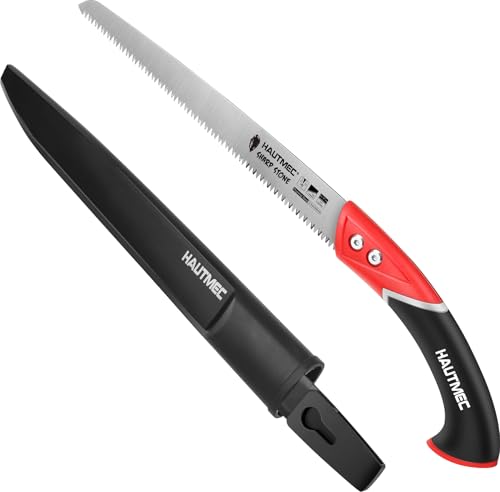
For ordinary lumber, boards, plywood, and wood-based panels, a conventional push saw is usually the most direct category. The IRWIN 15-Inch Coarse-Cut Hand Saw uses a thick-body blade, M2 tooth technology, tri-ground teeth, and deep gullets. Those documented features point toward efficient, controlled wood cutting. The HAUTMEC 14-Inch 11 TPI Fine-Cut Hand Saw is a better fit when a finer tooth pattern and cleaner cut are more important. Its listing specifically includes wood, laminate, panels, and PVC.
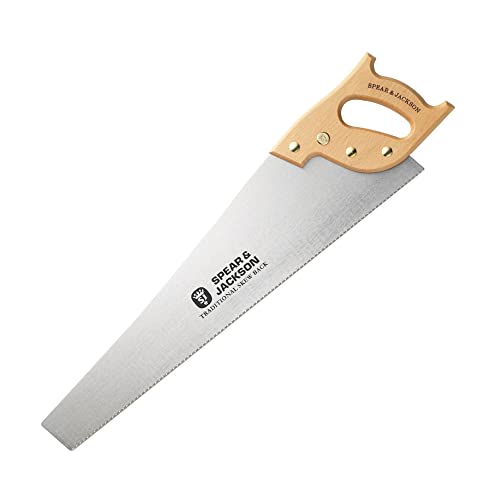
A universal tooth layout can be useful when the same saw will cut along and across the grain. The Spear & Jackson 22-Inch Skew-Back Saw documents universal teeth and use with timber, chipboard, plywood, and other wood-based materials. Its resharpenable teeth may also matter to users who maintain tools over time. For mixed home repair, the welltoy 3-in-1 Multi-Blade Hand Saw documents separate blades for drywall, plywood, plastic, PVC, and thin metal. That breadth is useful, but a multi-blade tool also means selecting and storing the appropriate blade.
Understand tooth count and tooth shape
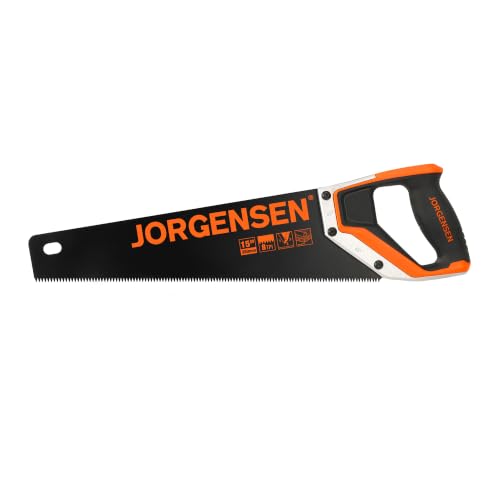
Teeth per inch, or TPI, is only one part of a saw’s cutting character, but it helps compare the selected models. The JORGENSEN 15-Inch Coarse Hand Saw lists 8 TPI, while the HAUTMEC lists 11 TPI. In general, the JORGENSEN’s lower count and deep gullets suggest a more aggressive coarse-cut orientation, whereas the HAUTMEC’s higher count is positioned for finer cuts. The listing for the RUITOOL 6-Inch Double-Edge Ryoba Pull Saw gives separate 17 TPI and 14 TPI edges, allowing a more specific choice between hardwood and softwood work.
Japanese pull saws cut on the pull stroke rather than the push stroke. The RUITOOL and SUIZAN 6-Inch Ryoba Japanese Pull Saw both document this style. The SUIZAN also specifies a 0.4mm blade, 0.55mm kerf, and separate 17 TPI hardwood and 20 TPI softwood sides. These details make it appropriate for users who want a compact woodworking saw with clearly differentiated edges. Pull saws are not simply interchangeable with every conventional push-saw technique, so allow for the different cutting motion.
Choose blade shape for pruning
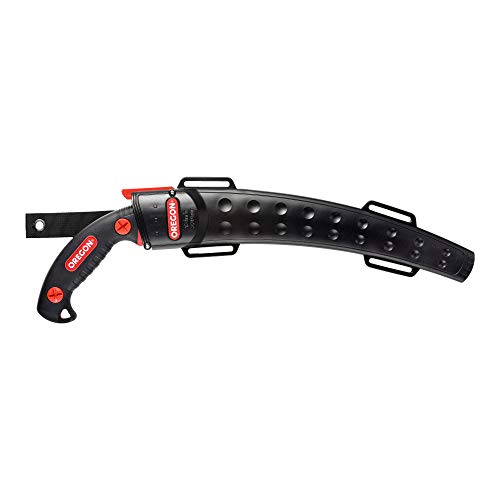
Branch work calls for a different design from flat stock. Curved pruning blades can help keep the cutting edge engaged around a branch, while a folding design can make transport easier. The Oregon 13-Inch Curved Premium Hand Saw documents a curved profile, tri-edge offset teeth, a full-length tang, and a removable blade. It is a strong specification-based match for tree trimming where reach and replaceability matter.
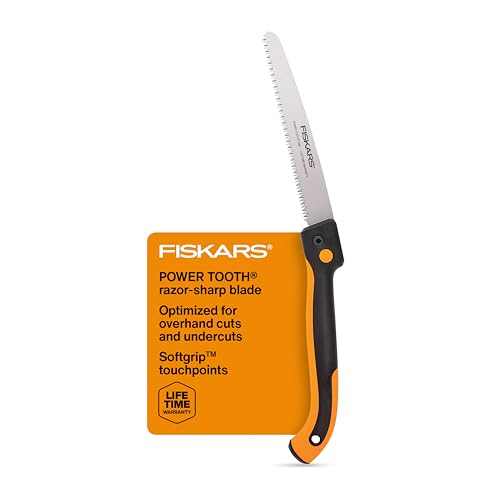
The Corona 13-Inch RazorTOOTH Pruning Saw is another dedicated pruning option. Its listing documents a curved blade, three-sided razor teeth, a pistol-grip handle, and suitability for limbs up to 7 inches in diameter. The Fiskars 10-Inch Folding Pruning Saw takes a more portable approach: its blade folds into the handle and locks in two positions for overhand and undercuts. That makes it practical for carry, camping, and garden work, although its folding format is different from a longer fixed pruning saw.
Evaluate control and handling
A comfortable grip does not replace correct tooth selection, but it can affect how confidently a user guides a manual saw. The IRWIN uses a ProTouch handle, the HAUTMEC uses ABS and TPR materials, and the JORGENSEN uses a TPE and ABS grip connected to an aluminum frame. These are documented design features, not proof of a particular performance outcome. Look for a handle that matches your hand size and leaves enough room to maintain a controlled stroke.
Blade length also affects handling. The compact RUITOOL and SUIZAN saws use 6-inch blades for focused woodworking and flush-cut work. The Oregon and Corona use 13-inch pruning blades, while the Spear & Jackson extends to 22 inches for larger wood-based materials. Longer blades can cover more material per stroke, but they may be less convenient in confined spaces. A small saw may be easier to position, but its shorter cutting span can limit larger tasks.
Consider storage and maintenance
Protective storage is especially important when teeth are exposed. The HAUTMEC includes a blade cover, the JORGENSEN includes a plastic edge protector, and the Oregon includes a scabbard with a push-button release. The Corona listing documents blade construction and a comfort handle but does not identify a supplied sheath in the evidence provided, so storage should be planned separately.
Folding saws offer a different storage benefit. The Fiskars blade folds into the handle, and its two locking positions are part of the documented design. Fixed saws may need a cover, scabbard, or dedicated tool storage. For maintenance, the Spear & Jackson is notable because its teeth can be resharpened, while the Oregon documents a removable blade and a replacement part number. Those features can matter more to frequent users than a small difference in initial convenience.
Final recommendation
HAUTMEC 14-Inch 11 TPI Fine-Cut Hand Saw ranks first overall in this specification-based comparison under the published weighted criteria.
The IRWIN 15-Inch Coarse-Cut Hand Saw is the first overall specification-based choice among these best handsaws because its thick-body blade, tri-ground teeth, deep gullets, tapered-pitch nose, and ProTouch handle provide the most specification-aligned documented balance for general wood cutting. It is not the right tool for every job: choose the HAUTMEC for a finer wood-oriented cut, the RUITOOL or SUIZAN for compact pull-saw woodworking, and the Oregon or Corona for pruning.
For portability, the Fiskars folding design is a convenient documented option. For long timber and sheet-material work, the Spear & Jackson’s 22-inch blade offers the longest reach in this group. The JORGENSEN adds built-in marking guides, while the welltoy provides wide documented material coverage through its three-blade system. These are the top handsaws here for different jobs, not interchangeable versions of one universal tool.
Before buying, confirm whether you need a push saw or pull saw, coarse or fine teeth, a straight or curved blade, and fixed or folding storage. Also check the material list and supplied protection. Those details should narrow the field more reliably than a generic claim about speed or durability.
Frequently Asked Questions
How should I choose among the best handsaws for home projects?
Start with the material. Select the IRWIN or HAUTMEC for general wood and board work, the welltoy for documented multi-material repairs, and the Fiskars for portable pruning. For more specialized woodworking, the RUITOOL and SUIZAN provide double-edge pull-saw configurations. Blade length, tooth count, and cutting direction should be considered together rather than separately.
Are Japanese pull saws difficult to use?
They use a different motion from conventional push saws: the RUITOOL and SUIZAN listings describe cutting on the pull stroke. Their thin, compact blades and differentiated edges are aimed at woodworking precision. A user accustomed to a push saw may need to adapt technique and avoid forcing the blade during the stroke. The evidence supports their design and intended uses, but it does not establish a universal learning curve or performance result.
Which selected saw is best for tree branches?
The Oregon, Corona, and Fiskars are the clearest pruning matches. The Oregon and Corona use curved 13-inch blades, while the Fiskars uses a 10-inch folding blade with two locking positions. The Corona listing specifically documents cutting limbs up to 7 inches in diameter. The Fiskars is more portable, and the Oregon documents a removable blade and supplied scabbard. Choose based on whether reach, portability, or replaceability is most important.
Does a higher TPI always mean a better handsaw?
No. TPI should be matched to the task. The JORGENSEN’s 8 TPI design is positioned for coarse cutting, while the HAUTMEC’s 11 TPI configuration is positioned for fine cuts. The RUITOOL and SUIZAN use different tooth counts on opposite edges for different wood applications. Tooth shape, blade thickness, blade length, and the material being cut all affect whether a configuration is appropriate.
What storage features should I look for?
A blade cover, edge protector, or scabbard can help protect exposed teeth during storage and transport. The HAUTMEC includes a blade cover, the JORGENSEN includes an edge protector, and the Oregon includes a scabbard. The Fiskars folds its blade into the handle. If a fixed saw does not document supplied protection, store it where the teeth cannot contact hands, cords, or other tools.