Buying Guide
Choosing among the best fine-cut handsaws starts with identifying the cut, material, and working space. A saw designed for flush trimming is not automatically the right tool for long lumber cuts, and a high tooth count does not by itself describe the entire cutting experience. The listings in this comparison document several distinct designs, including conventional push saws, Japanese pull saws, backed joinery saws, and double-edge blades.
Match the saw to the cut
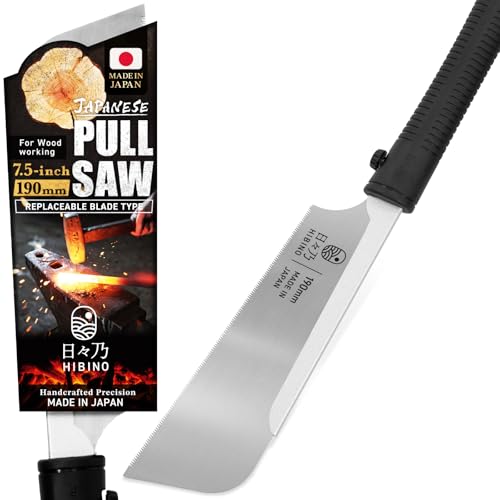
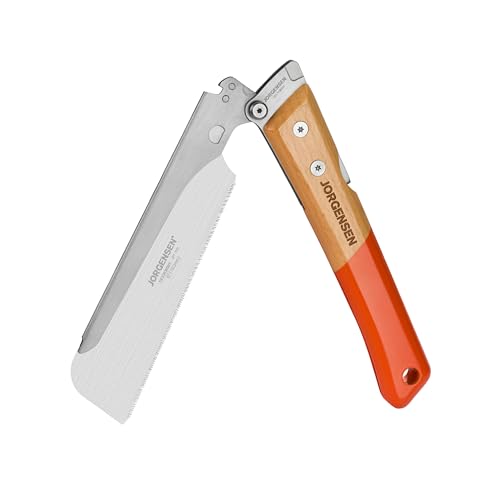
For joinery, narrow kerfs and controlled starts are usually the central specification concerns. The HIBINO 7.5-Inch Kataba Pull Saw lists a 14 TPI fine crosscut blade, a flexible exposed tip, and a ridged spine. That combination is directed toward detail work and flush trimming. The SUIZAN 7-Inch Dozuki Dovetail Saw goes further toward backed joinery work with a documented 0.3mm blade and 0.5mm kerf. The JORGENSEN 6-Inch Folding Dovetail Saw lists 21 TPI teeth and a 0.3mm blade, making it another focused option for dovetails and tenons.
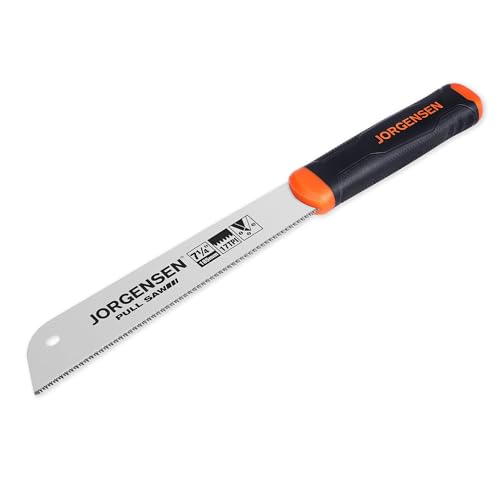
For flush cuts around dowels, tenons, or trim, look for a flexible blade and a tip or edge that can sit close to the work. The SUIZAN 6-Inch Japanese Flush-Cut Saw lists a 0.4mm blade and 0.45mm kerf, while the JORGENSEN 7.25-Inch Single-Edge Pull Saw specifically lists flush-cutting dowels and tenons. The JORGENSEN 5-Inch Double-Edge Flush Cut Saw uses two tooth densities, allowing the user to choose between its 18 TPI and 25 TPI edges for different small-work priorities.
Choose tooth pattern and density
Tooth density affects the kind of finish and cutting pace a listing is designed to support. The 25 TPI edge on the JORGENSEN 5-Inch Double-Edge Flush Cut Saw is the finest documented option in this group, while the JORGENSEN 6-Inch Folding Dovetail Saw lists 21 TPI for detailed work. These compact saws are logical choices when the workpiece is small and the cut needs close control.
A two-sided blade can be more adaptable. The WORKPRO 6-Inch Double-Edged Pull Saw lists 14 TPI for rip cuts and 17 TPI for cross cuts. The JORGENSEN 10-Inch Double-Edge Pull Saw lists a 7–12 TPI rip side and an 18 TPI fine crosscut side. Those designs reduce the need to carry separate saws for different grain directions, although their coarser sides are not as specialized for the finest finish as a dedicated high-TPI blade.
The IRWIN MARATHON 24-Inch ProTouch Fine Cut Saw takes a different approach. Its listing specifies extra-fine 12-point front teeth, Tri-Ground teeth, deep gullets, and a tapered-pitch nose. The 12-point front section is intended to help start cuts, while the long blade is better matched to larger boards and longer strokes than the compact Japanese models.
Consider push versus pull operation
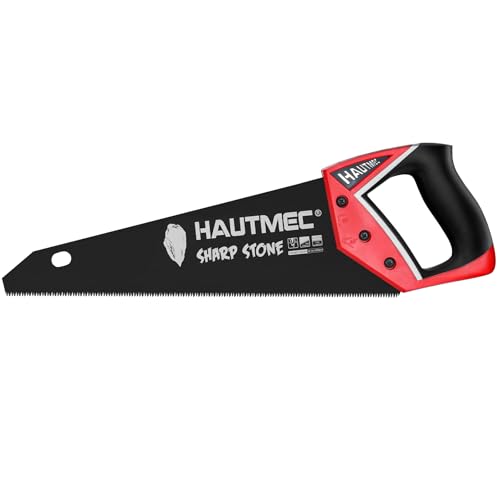
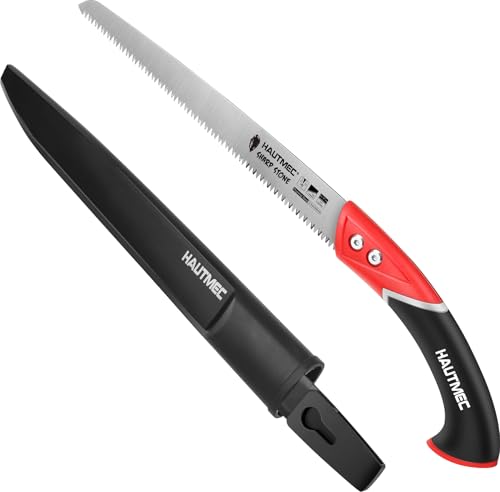
The IRWIN MARATHON and HAUTMEC HT0301 are conventional handsaws, while the HIBINO, SUIZAN, WORKPRO, and JORGENSEN Japanese-style models are pull saws. A pull saw cuts on the pulling stroke and generally uses a thinner or more flexible blade in these listings. This can be useful for detail work, but the user must keep the blade aligned and avoid forcing it sideways.
The HAUTMEC HT0301 is a practical conventional option for broader home and renovation duties. Its listing covers wood, laminate, PVC trim, standard 2×4 lumber, and branches up to 1 inch. It also includes 45- and 90-degree marking guides. By contrast, the IRWIN MARATHON’s 24-inch length and 1mm blade emphasize reach and rigidity for longer cuts.
Check blade material and upkeep features
Blade material and hardening details help explain how a saw is positioned, but they do not replace actual testing. The HIBINO lists SK-85 high-carbon Japanese steel and a replaceable blade. The WORKPRO and JORGENSEN detail pages list SK5 steel, while the SUIZAN 6-Inch Japanese Flush-Cut Saw lists Japanese steel and replaceable blades. Replaceability can be useful when a blade eventually needs renewal, but it may also mean keeping compatible replacement blades available.
Protective features matter during storage. The HIBINO includes a plastic teeth guard, the HAUTMEC HT0301 includes a blade guard, and the JORGENSEN 7.25-Inch Single-Edge Pull Saw lists a plastic teeth guard and outer shell. These features protect teeth and reduce accidental contact during transport, but safe storage still requires normal tool-handling care.
Evaluate handle and size
Handle design should correspond to how much control the task requires. The HAUTMEC HT0301 lists a three-bolt ABS and TPR handle, while the HIBINO lists an ABS handle with a TPR rubber grip. The IRWIN MARATHON uses a hardwood handle with a ProTouch rubberized grip. These are conventional full-handle layouts suitable for general sawing.
Compact Japanese saws use smaller handles and shorter blades. The WORKPRO lists a non-slip beechwood handle and a narrow head. The JORGENSEN 6-Inch Folding Dovetail Saw uses a European beech handle and folding system. Compact tools are easier to position in small work, but their shorter blades cover less material per stroke. The 10-inch JORGENSEN provides more reach while retaining a pull-saw format.
Final recommendation
WORKPRO 6-Inch Double-Edged Pull Saw ranks first overall in this specification-based comparison under the published weighted criteria.
The final choice among the best fine-cut handsaws depends on the documented features that match your intended use.
The HIBINO 7.5-Inch Kataba Pull Saw is the highest-scoring returned product and the first overall specification-based choice. It combines fine 14 TPI teeth, a flexible flush-cut tip, a ridged spine, and a replaceable blade in a focused joinery format. Among the top fine-cut handsaws, it is the clearest fit for detail work where control and maintenance flexibility matter.
Choose the SUIZAN 7-Inch Dozuki for backed joinery, the WORKPRO for a compact two-sided blade, or the JORGENSEN 10-Inch Double-Edge Pull Saw when broader rip and crosscut coverage is more important. For general home projects involving wood, PVC trim, and small branches, the HAUTMEC HT0301 is the more versatile conventional option. For long boards, the IRWIN MARATHON’s 24-inch blade is the most clearly documented fit.
Frequently Asked Questions
What are the best fine-cut handsaws for dovetails?
The SUIZAN 7-Inch Dozuki Dovetail Saw and JORGENSEN 6-Inch Folding Dovetail Saw are the most directly targeted choices in this comparison. The SUIZAN lists a 0.3mm blade and 17 TPI teeth, while the JORGENSEN lists 21 TPI teeth, a 0.3mm blade, and dovetail and tenon applications. Both are specialized Japanese-style pull saws rather than broad construction saws.
Should I choose a pull saw or a conventional handsaw?
Choose based on the cut and the blade format you can control comfortably. Pull saws such as the HIBINO, WORKPRO, and SUIZAN models emphasize detail, thin blades, or compact positioning. Conventional options such as the IRWIN MARATHON and HAUTMEC HT0301 provide familiar push-saw operation, with the IRWIN emphasizing long reach and the HAUTMEC emphasizing general material coverage.
Which saw is best for flush-cutting dowels?
The HIBINO 7.5-Inch Kataba Pull Saw and JORGENSEN 7.25-Inch Single-Edge Pull Saw are strong specification matches because both listings explicitly mention flush work. The HIBINO documents a flexible exposed tip, while the JORGENSEN lists flush cutting for dowels and tenons. The SUIZAN 6-Inch Japanese Flush-Cut Saw is another focused option with a documented 0.45mm kerf.
Is a double-edge saw useful for fine woodworking?
It can be useful when different grain directions or finish priorities arise. The WORKPRO has 14 TPI and 17 TPI sides for rip and cross cuts. The JORGENSEN 10-Inch model combines a 7–12 TPI rip side with an 18 TPI crosscut side, while the JORGENSEN 5-Inch model offers 18 TPI and 25 TPI edges. A double-edge design adds flexibility, but each side remains best suited to its stated purpose.
What should I look for in a replacement-blade saw?
Confirm that the listing documents a replaceable blade and identify the intended replacement format before buying. The HIBINO, SUIZAN 6-Inch, and JORGENSEN 6-Inch and 10-Inch models list replaceable or tool-less replacement features. Replacement capability can extend the useful life of a handle, but it does not make every blade interchangeable across brands or models.