Buying Guide
Choosing among the best woodworking hand saws starts with identifying the cut, not simply choosing the longest blade. The supplied products fall into two broad families: Japanese pull saws and conventional carpenter saws. Pull saws cut on the pull stroke and commonly use thinner, flexible blades. Conventional saws generally use a push stroke, longer rigid blades, and tooth patterns intended for board cutting. Neither format is universally preferable; the right choice depends on the material, cut direction, available space, and finish you need.
Match the saw to the cut
A ryoba is one of the most adaptable designs in this comparison because it places two tooth patterns on one blade. The Temple Tool Co. 9.5-Inch Ryoba and both SUIZAN ryoba models document separate rip and crosscut sides. Rip teeth follow the wood grain, while crosscut teeth are intended to cut across it. This arrangement can reduce the need to keep separate saws for basic stock preparation and joinery.
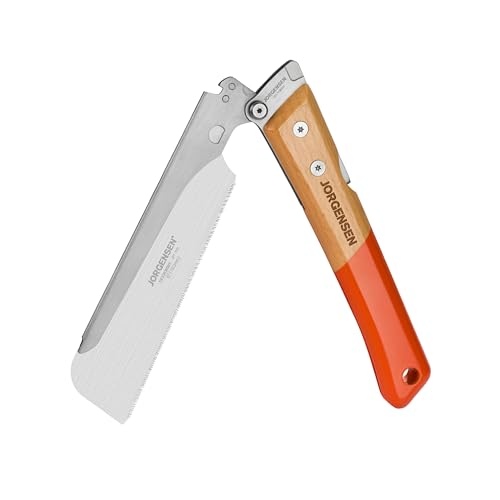
The JORGENSEN 6-Inch Folding Dovetail Saw is more specialized. Its 21 TPI blade and stated 0.3 mm thickness are aimed at dovetails and tenons, where a narrow kerf and fine tooth layout matter more than rapid stock removal. The RUITOOL 6-Inch Double-Edge Ryoba and WORKPRO 6-Inch Japanese Pull Saw also emphasize compact, precise work. Their shorter blades can be easier to position around small parts and in tight spaces, although they are not the natural choice for cutting across large boards.
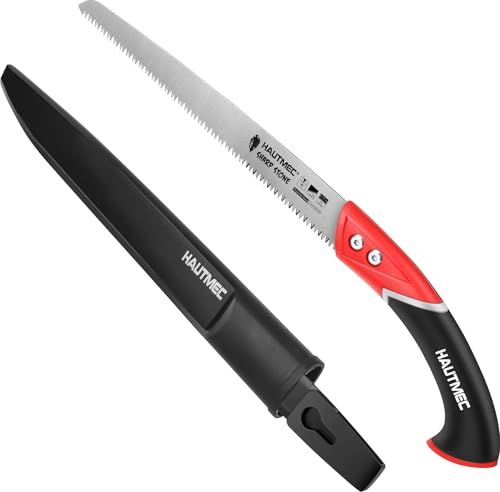
For broad, conventional cuts, consider the IRWIN 15-Inch Coarse-Cut Hand Saw or JORGENSEN 15-Inch Pro Hand Saw. Their longer blades and lower tooth counts are better aligned with general carpentry and board work. The HAUTMEC 14-Inch Fine-Cut Hand Saw sits between those coarse options and the fine joinery saws, with an 11 TPI layout intended for lumber, panels, laminate flooring, and skirting boards.
Understand tooth count and tooth layout
Tooth count is useful only when considered with the task. Lower TPI generally indicates a more open tooth layout for faster material removal, while higher TPI is commonly associated with finer cuts. The product evidence reflects that distinction: the JORGENSEN 15-Inch Pro Hand Saw lists 8 TPI, whereas the JORGENSEN dovetail model lists 21 TPI. The SUIZAN 6-Inch Ryoba lists 17 and 20 TPI sides, and the SUIZAN 9.5-Inch Ryoba lists 9 and 15 TPI sides.
A double-edge saw is not automatically a substitute for every other saw. It gives you more than one cutting pattern, but each edge remains limited by its tooth design. If you mostly cut dovetails, a fine dedicated saw may be easier to select and control. If you frequently alternate between rip and crosscut work, a ryoba can be more practical. Check whether the listing identifies which side serves each purpose, because tooth labels and intended uses differ between models.
Compare blade thickness, kerf, and flexibility
Blade thickness affects the character of the cut and the saw’s handling. Thin blades can support narrow kerfs and detailed work, but they may require more deliberate control. The SUIZAN 9.5-Inch Ryoba lists a 0.5 mm blade and 0.8 mm kerf; the SUIZAN 6-Inch Ryoba lists 0.4 mm thickness and 0.55 mm kerf. JORGENSEN’s folding dovetail saw lists an even thinner 0.3 mm blade. These are useful specification differences when working on joinery or close-fitting parts.
Conventional saws use thicker blade constructions in this group. HAUTMEC specifies a 1.0 mm blade, while the JORGENSEN 15-Inch Pro lists 0.85 mm. IRWIN describes its blade as thick-body. These designs may provide a more rigid feel for longer cuts, but they are not intended to match the narrow kerf of the fine Japanese pull saws.
Flexibility is another consideration. WORKPRO, SUIZAN, Temple Tool Co., and several other Japanese models describe flexible blades. A flexible blade can be useful for flush work and close trimming, but it also requires attention to alignment so the blade does not wander from the intended path. A rigid conventional blade can feel more stable when cutting larger stock.
Evaluate handles and handling features
Handle design affects how confidently you can start and guide a cut. The Temple Tool Co. model uses a solid wingnut handle with brass components. SUIZAN models emphasize traditional Japanese construction, while WORKPRO specifies a non-slip beech handle. The RUITOOL listing focuses on a compact 6-inch blade, which can help with close control even though the supplied evidence does not give a detailed handle specification.
Conventional models provide different control cues. IRWIN lists a ProTouch handle, and the two 15-inch JORGENSEN and HAUTMEC saws use combinations of ABS and TPE or TPR grip materials. The JORGENSEN 15-Inch Pro also includes 45- and 90-degree auxiliary angles in the handle for marking. These features are relevant if you want one saw for cutting and occasional layout work.
Decide whether replaceability matters
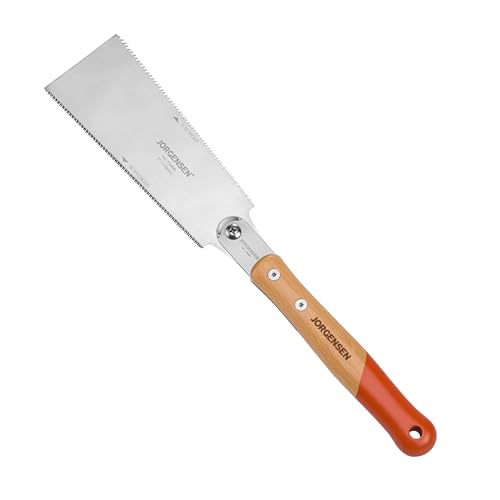
Replaceable blades can change the ownership approach. The JORGENSEN 7-Inch Ryoba explicitly lists a replaceable blade, and the JORGENSEN folding dovetail model lists tool-less blade replacement. Those features may be useful when you want to retain the handle and replace only the cutting element. By contrast, the SUIZAN Flush Cut Saw explicitly states that its blade is not replaceable. That model can still be a sensible dedicated flush saw, but blade replacement should be part of your selection decision.
Consider portability and storage
Shorter pull saws are generally easier to carry and position, while folding models add another portability advantage. The JORGENSEN 6-Inch Folding Dovetail Saw combines a short blade with a folding system. The SUIZAN 6-Inch Ryoba, RUITOOL model, and WORKPRO saws also use compact blade lengths. Longer models such as the Temple Tool Co. and SUIZAN 9.5-Inch ryoba saws provide more reach, but their overall size may be less convenient in a crowded toolbox.
Conventional saws in the 14- and 15-inch range are better suited to longer strokes across boards, though they need more storage space. Blade protectors are listed for the JORGENSEN 15-Inch Pro and the HAUTMEC model includes a blade cover. Such included storage features are practical details to check when a saw will travel between a shop and a job site.
Final recommendation
Temple Tool Co. 9.5-Inch Ryoba ranks first overall in this specification-based comparison under the published weighted criteria.
The Temple Tool Co. 9.5-Inch Ryoba is the first overall specification-based choice among these best woodworking hand saws because it combines rip and crosscut capability, a narrow-kerf pull design, Japanese steel, and a solid wood handle. For the top woodworking hand saws focused on fine joinery, choose the JORGENSEN 6-Inch Folding Dovetail Saw. The SUIZAN 6-Inch Ryoba is a strong compact alternative, while the IRWIN 15-Inch Coarse-Cut Hand Saw is the better fit when conventional long-blade carpentry matters more than narrow joinery cuts.
Before buying, confirm the tooth side you need, blade length, thickness, kerf, and whether the blade is replaceable. If your work changes frequently, a dual-edge ryoba offers useful range. If your projects center on dovetails and tenons, prioritize the thin, high-TPI JORGENSEN model. For boards and general household cutting, the longer conventional saws provide a more appropriate format.
Frequently Asked Questions
What are the best woodworking hand saws for general use?
The Temple Tool Co. 9.5-Inch Ryoba is the broadest specification-based choice in this group because it has separate rip and crosscut edges and is listed for softwood, hardwood, stock sizing, and joinery. The SUIZAN 9.5-Inch Ryoba provides a similarly broad two-sided format with more detailed blade and kerf specifications.
Are Japanese pull saws better for woodworking?
They are better suited to some woodworking tasks, not every task. The selected Japanese models use pull-saw designs, and several list thin or flexible blades, narrow kerfs, and fine tooth configurations. Those features fit joinery, flush cuts, and detailed work. Conventional saws such as the IRWIN 15-Inch Coarse-Cut Hand Saw and HAUTMEC 14-Inch Fine-Cut Hand Saw may be more appropriate for longer cuts through boards.
Which selected saw is best for dovetails?
The JORGENSEN 6-Inch Folding Dovetail Saw is the clearest fit because its listing specifically names dovetails and tenons. It also lists 21 TPI teeth and a 0.3 mm blade, specifications that support a fine, narrow-kerf joinery role. The folding and tool-less blade-change features add portability and maintenance flexibility.
Should I choose a 6-inch or 9.5-inch woodworking saw?
Choose a 6-inch model when maneuverability and detail work are priorities. The RUITOOL, WORKPRO, and SUIZAN 6-Inch models are compact choices, while the JORGENSEN dovetail saw is particularly specialized. A 9.5-inch saw such as the Temple Tool Co. or SUIZAN model provides more reach and can be more convenient for larger stock and general rip or crosscut work.
Does a replaceable blade matter on a hand saw?
It matters if you want to keep the handle and change the blade rather than replace the complete saw. The JORGENSEN 7-Inch Ryoba and JORGENSEN folding dovetail saw both document replacement systems. The SUIZAN Flush Cut Saw explicitly lists a non-replaceable blade, so buyers seeking a serviceable blade system should compare that feature before choosing.