Buying Guide
Choosing among the best trimming handsaws starts with the branch sizes, cutting positions, and storage conditions you expect to encounter. The listings in this comparison cover compact folding saws, fixed curved pruning saws, extendable designs, Japanese pull saws, and general-purpose fine-tooth handsaws. Those formats overlap, but they are not interchangeable.
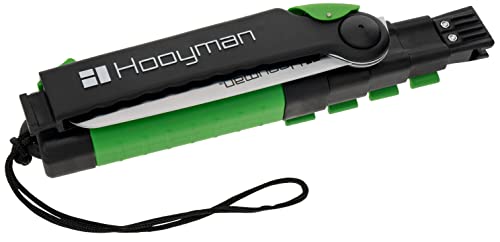
A folding pruning saw is usually the most portable format. FELCO 603, the Hooyman MegaBite, HURRICANE, and GRENPRO all document folding or compact storage features. These designs are practical when the saw must travel in a backpack, tool belt, toolbox, or garden kit. Folding also lets the handle cover the teeth when stored, although the specific locking design differs by product.
A fixed pruning saw can offer a longer cutting area without extension hardware. Auto Dynasty documents a 15.5-inch curved blade, double-edge teeth, and a supplied sheath. That configuration is more oriented toward reach along branches than pocket portability. A sheath is important because the blade does not fold into its handle.
For branches above comfortable arm level, the Hooyman 5-Foot Extendable Tree Saw is the only selected product with a documented five-foot extension. Its head can detach for handsaw use, so it is more flexible than a dedicated pole-only design. The trade-off is added structure and a higher listed weight than most compact models.
Consider tooth geometry and cutting direction
Tooth count and geometry help explain intended use, but listing data should not be treated as a guarantee of cutting speed. The HURRICANE and GRENPRO specify 7 TPI triple-ground teeth, while the X-STEEL specifies 14 TPI triple-cut teeth and pull-stroke action. The lower tooth count is associated in these listings with broader outdoor pruning applications; the higher tooth count and thin profile point toward more controlled cuts.
The JORGENSEN is especially specialized. One edge is listed at 18 TPI for hardwood and the other at 25 TPI for softwood. It is a flush-cut saw rather than a general branch saw, making it relevant for precise wood trim and finish work. The X-STEEL similarly emphasizes a Japanese pull-saw format and confined spaces.
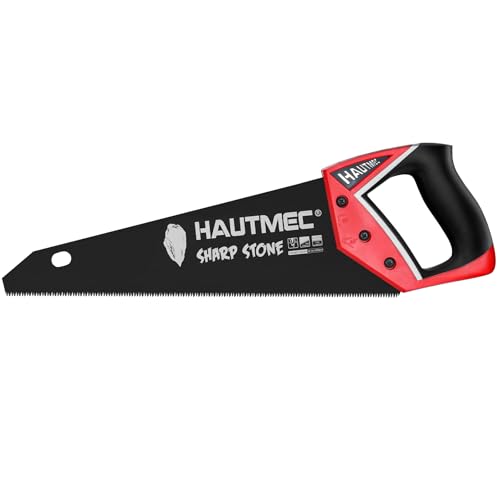
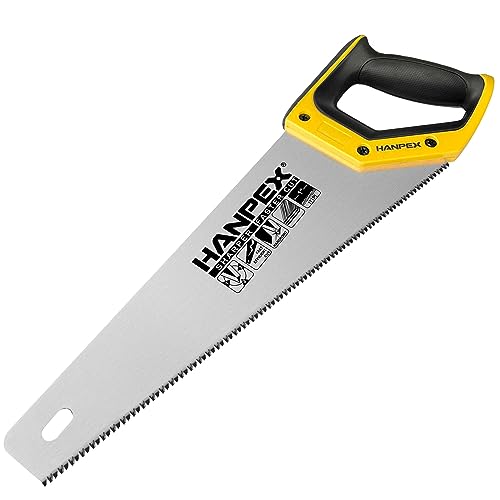
General-purpose 14-inch saws such as HAUTMEC HT0301 and Hanpex use 11 TPI fine teeth. Both listings include garden or tree work alongside wood, PVC, plywood, or wallboard. These products may suit homeowners who want one manual saw for light trimming and maintenance rather than a dedicated folding arborist-style tool.
Evaluate blade materials and coatings
Several selected products document high-carbon steel types. FELCO states proprietary heat treating and hardening; Hooyman specifies high-carbon SK5 steel and impulse-hardened teeth; HURRICANE specifies SK5 steel and HRC58 teeth; and GRENPRO lists SK5 steel with Teflon coating. These details help distinguish the products on paper, but they do not replace hands-on evidence about actual service life.
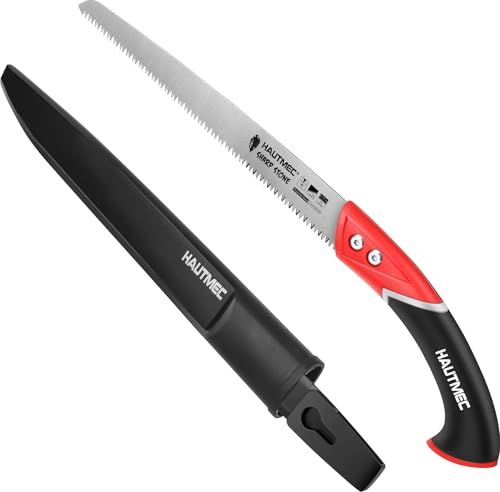
Coatings can matter where storage or work conditions are damp. HURRICANE lists a chrome electrophoretic finish, GRENPRO lists Teflon coating, and both HAUTMEC models mention anti-rust or low-friction coatings. Keep blades clean and dry according to the manufacturer’s directions, and use guards, sheaths, or folded storage where supplied.
Replaceability is another practical consideration. Replaceable designs can be useful when the saw is used frequently, but the replacement format must remain available and compatible.
Prioritize grip and working control
A secure handle matters when the saw is used repeatedly or in wet conditions. FELCO uses a soft-touch, non-slip phthalate-free handle. Hooyman MegaBite specifies an ergonomic rubber over-mold, while HURRICANE and GRENPRO list rubberized non-slip grips. These features support control in the listing evidence, but comfort remains personal and cannot be confirmed without testing.
Curved or angled designs can change how the saw approaches a branch. FELCO and Auto Dynasty use curved profiles, and GRENPRO documents three angle positions for overhead, undercut, and standard work. Those features are useful when access is awkward, but they also add design complexity compared with a straight fixed handsaw.
Account for safety and storage
Look for a positive lock on folding models. A closed handle or blade guard helps keep teeth covered during transport, but users should still handle every saw as a sharp tool.
Fixed saws require a sheath or blade cover. Auto Dynasty includes a sheath, while HAUTMEC HT0301 includes a blade guard. Hanpex does not list a cover in the supplied evidence, so storage deserves extra attention. The JORGENSEN listing documents portability but does not list a protective guard.
Choose by use case, not just blade length
For ordinary garden pruning, FELCO 603, HURRICANE, and GRENPRO provide dedicated folding-pruning evidence. For elevated limbs, Hooyman is the most direct match because its extension reaches five feet. For a mixed tool kit, Hooyman MegaBite, HAUTMEC HT0301, and Hanpex document broader outdoor or household applications.
For precision trim, JORGENSEN and X-STEEL offer pull-saw designs and compact blades. Auto Dynasty is a better fit when a longer fixed curved blade is preferred. Blade length alone does not determine suitability: tooth pattern, locking method, handle, and intended cutting position should be considered together.
Final Recommendation
GRENPRO 10-Inch Folding Pruning Saw ranks first overall in this specification-based comparison under the published weighted criteria.
The final choice among the best trimming handsaws depends on the documented features that match your intended use.
FELCO 603 is the highest-scoring returned product and the first overall specification-based choice for routine pruning. Its curved pull-stroke design, chrome-plated 8-inch blade, non-slip handle, and locking system make the feature set especially focused for garden trimming.
The top trimming handsaws serve different jobs. Choose the Hooyman 5-Foot Extendable Tree Saw when elevated reach is essential, HURRICANE when a larger folding blade and detailed coating specifications appeal, or GRENPRO when three cutting angles are useful. Hooyman MegaBite is a compact outdoor option with two locking positions.
For precision work, JORGENSEN and X-STEEL are the more specialized choices. Their pull-saw formats, compact blades, and documented replaceability or double-edge configurations favor controlled cuts rather than large-branch clearing. HAUTMEC HT0301 and Hanpex are practical crossover saws for lighter branches and household materials, while Auto Dynasty emphasizes a longer curved fixed blade.
This ranking uses public listing specifications only. It does not establish actual cutting speed, comfort, durability in service, or performance on a particular species or diameter of wood. Confirm the current product details and included components before purchase, especially where listings distinguish folded length from blade length.
Frequently Asked Questions
What should I look for in the best trimming handsaws?
Start with the intended branch size and cutting position. For portable garden work, a folding saw with a locking blade and non-slip handle is convenient. For elevated limbs, documented extension reach matters more. For precise wood trim, a Japanese pull saw or a double-edge fine-tooth blade may be a better match than a large pruning saw.
Is a folding saw better than a fixed pruning saw?
Neither format is universally better. Folding saws such as FELCO 603 and HURRICANE are easier to store and carry, with listings that describe locks or covered teeth. Auto Dynasty uses a fixed curved blade and supplied sheath, which may suit users who prefer a longer, ready-to-use cutting profile. The choice depends on portability, reach, and storage habits.
Which selected saw has the most reach?
The Hooyman 5-Foot Extendable Tree Saw has the greatest documented reach. It extends to five feet, collapses to 12 inches, and can be used with a detachable saw head. It is the most direct choice for elevated branches among the selected products, though its extension system and listed weight make it less compact than a basic folding saw.
Are Japanese pull saws suitable for trimming?
Yes, when the task calls for controlled or flush cuts and the design matches the material. X-STEEL documents a 14 TPI pull-stroke pruning blade for gardening and confined spaces. JORGENSEN documents separate 18 TPI and 25 TPI edges for hardwood and softwood, making it more specialized for woodworking trim than broad branch removal.
Do higher TPI numbers always mean a better saw?
No. Tooth count should be matched to the material and cut style. The selected 7 TPI pruning saws emphasize outdoor branch work, while the 11 TPI HAUTMEC and Hanpex models cover fine cuts and mixed materials. JORGENSEN’s 18- and 25-TPI edges are intended for specific hardwood and softwood flush-cut applications. TPI is one specification, not a standalone quality measure.