Buying Guide
The best heavy-duty printing calculators are defined less by appearance than by how well their documented hardware matches repeated, paper-based calculation work. A useful comparison should consider print method, output speed, display visibility, accounting keys, paper handling, and the supplies required over time. The models above are ranked from supplied listing features and specifications; this is not a hands-on test.
Choose the printing method first
Ink-ribbon and thermal calculators create different workflows. Ribbon models such as the Victor 1460-4, Sharp VX-2652H, Sharp EL-1197PIII, Canon MP21DX, Canon MP27DII, and Canon CP1200DII print in two colors. The supplied descriptions identify black for positive values and red for negative values on several of these models. That color separation can make a printed calculation easier to scan, but ribbon supplies need replacement.
Thermal models use heat-sensitive paper instead of an ink ribbon. The Victor 1310 and Sharp ELT3301 both specify eight lines per second and no ink requirement. That can simplify consumable management, although it means buying compatible thermal rolls rather than ordinary calculator paper and ribbon combinations. Thermal output is worth considering when speed and ink-free operation matter more than the particular appearance or supply format of ribbon printing.
Match print speed to workload
Print speed matters most when the calculator produces a long tape during bookkeeping, purchasing, tax preparation, or reconciliation. The Victor 1310 and Sharp ELT3301 list eight lines per second. The Sharp VX-2652H and Canon CP1200DII list 4.8 lines per second, while the Victor 1460-4 lists 4.6 and the Sharp EL-1197PIII lists 4.5. The Canon MP21DX lists 3.5 lines per second.
These figures are specification comparisons, not measured results. A faster published rate may be useful for high-volume entry, but it should be balanced against the calculator’s paper type, key layout, display, and business controls. Models without a supplied speed figure, including the Monroe 8130X and Canon MP27DII, should not automatically be treated as slow; the available evidence simply does not quantify their output rate.
Prioritize display visibility
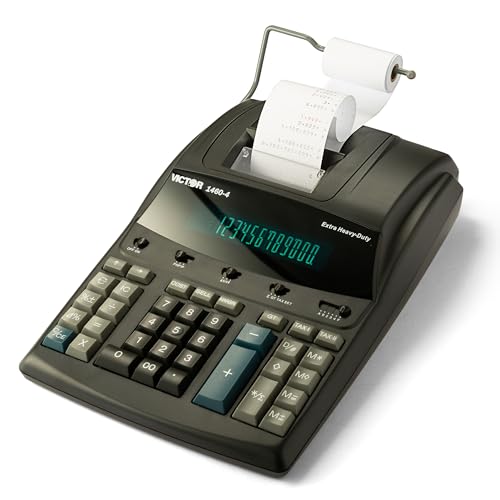
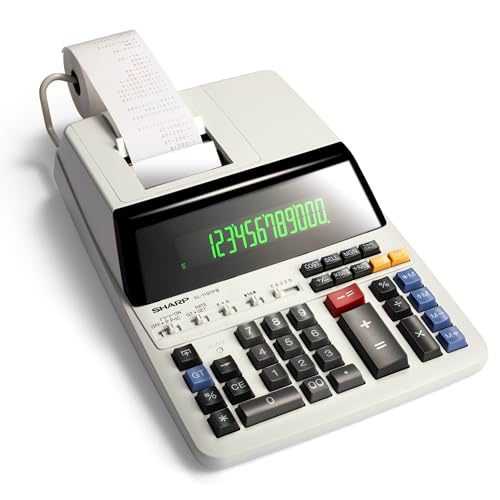
A printed tape is only useful when the operator can also check the current entry and total. The Victor 1460-4 specifies a huge 12-digit fluorescent display with 17mm-tall digits. The Victor 1460-4, Monroe ClassicX, Monroe 8130X, Sharp VX-2652H, Sharp EL-1197PIII, Canon MP21DX, and Canon CP1200DII all document fluorescent displays. The Sharp ELT3301 uses an extra-large backlit LCD and can switch between normal and larger print sizing.
The Victor 1310 offers a 12-digit LED display and big-print output. The Canon MP27DII is described with an extra-large display, though its listing does not provide a digit height. If the calculator will be used for long sessions, compare the stated display technology and digit size with the available desk lighting rather than assuming every large-looking desktop model offers the same visibility.
Check the business keys you actually use
For routine office work, cost/sell/margin, markup, tax, grand total, item count, percent, and independent memory functions can reduce repeated manual steps. The Monroe ClassicX and Monroe 8130X have especially broad documented accounting controls. The Victor 1310, Sharp ELT3301, and Canon MP21DX also list cost/sell/margin or related business functions.
The Sharp VX-2652H adds automatic tax calculations, two individual four-key memories, item count, grand total, and rounding controls. The Canon MP27DII emphasizes profit-margin and time calculations along with clock and calendar functions. The Canon CP1200DII is more tersely specified, but its listing confirms tax and business calculations. Select by the functions present in your daily work, not by the number of buttons alone.
Consider the paper record and roll access
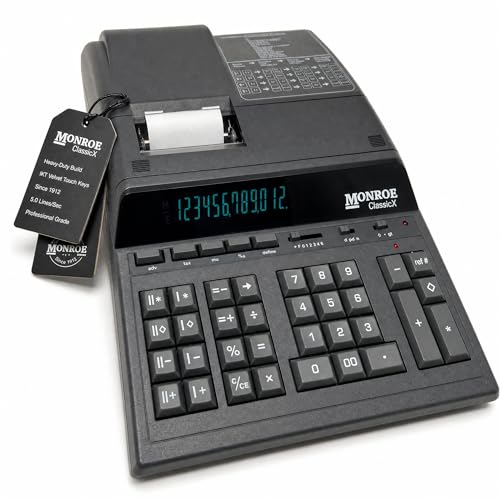
A printing calculator is often purchased to preserve an audit trail or review entries before filing. The Monroe ClassicX and Monroe 8130X use enclosed paper-roll designs. The ClassicX also lists built-in spare-roll storage, while the 8130X includes a starter roll, ribbon, and cover. These are useful documented features for professional desks where paper handling and supply access matter.
The Sharp ELT3301 uses a top-loading paper compartment, and the Victor 1310 uses 2.25-inch thermal rolls. The Canon MP21DX specifies a heavy-duty metallic paper holder. Before choosing, confirm the roll format and whether the workroom already stocks the required paper. A calculator with a convenient loading design may be preferable when rolls are changed frequently.
Allow for desk space and upkeep
Large commercial calculators need a permanent surface. The Monroe ClassicX lists a 15.3-inch length, and the Victor 1460-4 lists 15.6 inches. Those dimensions may suit a dedicated accounting station but can crowd a compact desk. Smaller listed dimensions do not necessarily establish a lighter-duty design, so use dimensions as a workspace check rather than a quality conclusion.
Also review warranty and support documentation. The Victor 1460-4 lists a replaceable ribbon; the Sharp EL-1197PIII lists a one-year parts-and-labor warranty; the Canon MP21DX and CP1200DII list one-year coverage; and the Monroe models list phone support, with different warranty details. These are listing statements, not a prediction of service life. Keep compatible paper and ribbon information with the calculator’s office supplies.
Final recommendation
Monroe ClassicX 12-Digit Heavy-Duty Printing Calculator ranks first overall in this specification-based comparison under the published weighted criteria.
Victor 1460-4 is the highest-scoring first overall specification-based choice among these best heavy-duty printing calculators. It offers the clearest combination of a large 17mm fluorescent display, fast two-color output, 12-digit capacity, and an explicitly extra-heavy-duty commercial design. The Monroe ClassicX is the stronger alternative for an enclosed roll, dual memory, and spare-supply storage, while the Monroe 8130X is well matched to professional accounting workflows.
Among the top heavy-duty printing calculators, the Victor 1310 and Sharp ELT3301 are the leading thermal options because both list eight-line-per-second output and ink-free printing. Choose the Sharp VX-2652H or Canon CP1200DII when a 4.8-line-per-second two-color workflow is more important. The Sharp EL-1197PIII, Canon MP21DX, and Canon MP27DII round out the selection with readable displays and useful business functions, but their best fit depends on the exact keys and desk format required.
Frequently Asked Questions
What makes the best heavy-duty printing calculators different from basic desk calculators?
They combine a paper printer with features suited to repeated office calculations. In this selection, documented examples include 12-digit displays, two-color output, fluorescent or backlit screens, business keys, independent memory, item counting, and commercial or heavy-duty design descriptions. The exact combination varies, so check the listing rather than assuming every printing calculator has the same controls.
Are thermal printing calculators easier to maintain?
They do not require ink ribbons, according to the Victor 1310 and Sharp ELT3301 listings. That can simplify one part of supply management, but thermal models require compatible heat-sensitive rolls. Ribbon-based models may offer a familiar two-color paper workflow and use replaceable ribbons. Maintenance convenience depends on which supplies your office already keeps available.
Which model is best for a long paper audit trail?
The Monroe 8130X is specifically positioned for professionals who require physical copies for records, and the Monroe ClassicX also documents a paper roll, automatic paper advance on total, and enclosed-roll construction. The Victor 1460-4, Sharp VX-2652H, Sharp EL-1197PIII, Canon MP21DX, and Canon CP1200DII also provide printed output. Compare roll access, paper format, and the business controls used in your process.
Do faster print speeds always make a calculator better?
No. Published speed is only one selection factor. The Victor 1310 and Sharp ELT3301 list eight lines per second, but a user may prefer a ribbon-based two-color model, an enclosed roll, a larger fluorescent display, or more specialized accounting keys. The best match depends on whether your priority is throughput, printed readability, supply format, or calculation functions.
Should I choose a large commercial calculator for a small desk?
Check the listed dimensions before buying. The Monroe ClassicX and Victor 1460-4 are substantial desktop models, while several other selected calculators list smaller footprints. A compact option may fit better, but size alone does not establish durability or feature coverage. Confirm the required display, paper mechanism, keys, and consumables as well as available workspace.