Buying Guide
The best high-end microphone cables are not defined by one material alone. A useful comparison starts with the connector format, balanced wiring, shielding construction, cable length, and the physical demands of the setup. The products above are ranked from supplied specifications, not from hands-on testing, listening trials, or customer sentiment.
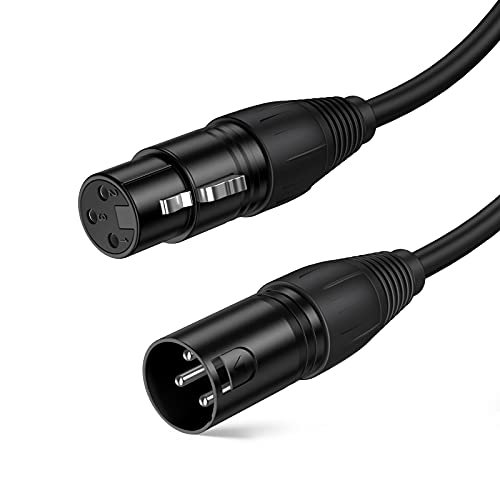
Most selected products use a male-to-female three-pin XLR arrangement. That is the conventional choice for connecting microphones to mixers, preamps, interfaces, powered speakers, and other professional audio equipment that uses XLR sockets. Check both devices before ordering: a cable can be well made and still be the wrong fit if one component uses a quarter-inch input or another connector type.
The LyxPro right-angle design is useful when a straight connector would press against a wall, rack panel, or desktop. A right-angle termination changes the cable’s routing direction, so it should be selected for a known layout rather than treated as a universal upgrade. Straight connectors are generally easier to reposition between different systems.
Consider star-quad wiring for interference-prone spaces
Star-quad cables use four conductors arranged as a balanced design. The LyxPro Quad Series and AA AUDIO ACCESSORY Professional Star Quad both document this construction. The latter also lists a full-coverage braided shield and foil layer, while the LyxPro listing emphasizes a greater signal-to-noise ratio and includes a cotton yarn wrap.
This design can be worth considering near stage lighting, power supplies, dimmers, wireless equipment, or dense studio wiring. It does not remove the need for correct gain staging, proper grounding, and sensible cable routing. If the cable will run only a short distance across a quiet desktop, a conventional balanced cable may be easier to justify.
Read shielding claims carefully
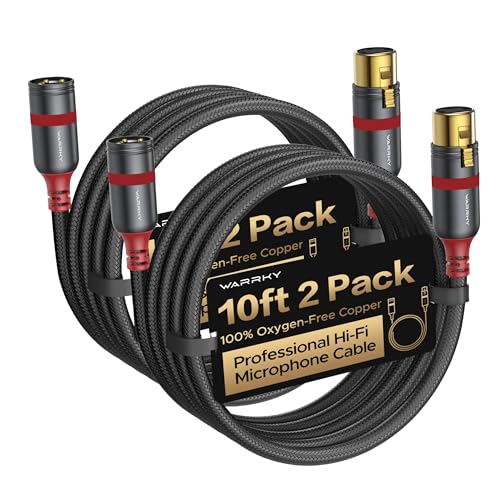
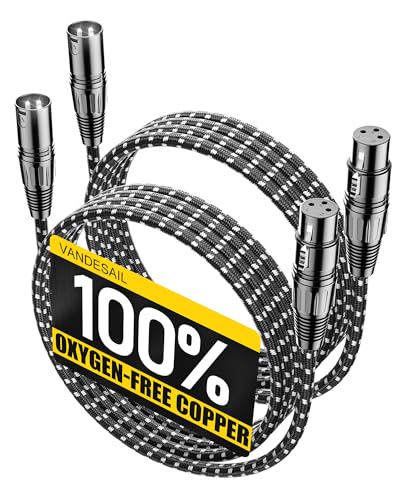
Shielding is a major differentiator in this category, but listing evidence varies. The AA AUDIO ACCESSORY 50-foot pair documents more than 95% OFC braided shielding and an additional aluminum layer. The six-foot AA AUDIO ACCESSORY star-quad cable lists 100% braided coverage plus foil. Warrky specifies aluminum foil and a 96-braid copper mesh, while VANDESAIL lists foil and 90% copper-braided shielding.
Other selected cables describe copper braid, metal braid, or double shielding without giving a percentage. Those descriptions still support a positive assessment, but they should not be treated as directly equivalent to a stated coverage figure. A shield helps manage unwanted electromagnetic and radio-frequency interference; it does not replace a balanced signal path or establish a silent system.
Choose length without creating avoidable slack
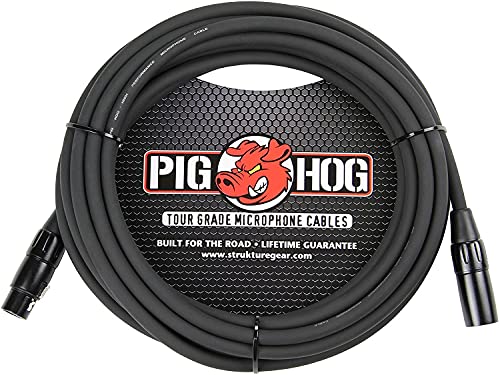
Six-foot cables are convenient for microphones placed close to an interface, mixer, or desktop stand. The AA AUDIO ACCESSORY star-quad cable, VANDESAIL pair, and Cable Matters pair fit this short-range role. Ten- to 15-foot cables offer more freedom for a stand, booth, or small stage. Warrky, LyxPro’s right-angle cable, Kxable, CableCreation, and Pig Hog occupy that middle range.
A 20-foot cable can cross a larger recording room or stage area, as shown by the LyxPro Quad Series. The AA AUDIO ACCESSORY two-pack extends to 50 feet for particularly long routes. Measure the path from connector to connector and leave modest routing allowance, but avoid buying much more length than the setup needs. Extra cable can add storage and coiling work.
Compare conductor and connector details
Conductor specifications vary across the selected products. The AA AUDIO ACCESSORY long cables list 20 AWG 99.99% OFC conductors; Cable Matters lists 21 AWG OFC; Warrky lists 22 AWG OFC; and LyxPro’s right-angle model lists 24 AWG OFC. Kxable specifies 22 AWG pure copper. These details are useful for comparing documented construction, but they do not by themselves establish audible superiority.
Connector evidence is also practical. Rean by Neutrik connectors appear on both AA AUDIO ACCESSORY selections. Other products list gold-plated contacts, nickel-plated pins, zinc-alloy shells, metal housings, locking latches, and molded or integrated strain relief. Prioritize a connector that fits securely and a strain-relief design appropriate to how often the cable is moved.
Evaluate jacket and handling features
Repeated coiling, transport, and stage use place stress on the jacket and connector exits. AA AUDIO ACCESSORY lists Kevlar reinforcement, Warrky lists aluminum housings and strain-relieved ends, VANDESAIL uses a nylon braid, and Pig Hog specifies an 8 mm rubber outer covering. CableCreation lists a thick TPE jacket, while LyxPro describes a flexible PVC jacket with cotton yarn wrap.
A braided exterior may help with handling and identification, while rubber, PVC, and TPE jackets offer different flexibility and surface characteristics. The supplied evidence does not establish that one jacket is universally better. Think about whether the cable will remain installed, be coiled after every session, or be transported frequently.
Account for packs and warranty coverage
A two-pack can be useful when connecting two microphones, keeping a spare available, or standardizing a small setup. The AA AUDIO ACCESSORY 50-foot pair, Warrky pair, VANDESAIL pair, and Cable Matters pair all provide two cables. A single cable may be preferable when only one connection is needed or when storage space is limited.
Warranty terms also differ. LyxPro lists five years, AA AUDIO ACCESSORY lists a lifetime warranty on the 50-foot pair, CableCreation lists two years, Kxable lists one year, and Pig Hog lists limited lifetime coverage. Warranty length is not a substitute for construction details, but it can matter for cables that will be transported or frequently reconnected.
Final Recommendation
AA AUDIO ACCESSORY Professional Star Quad XLR Cable ranks first overall in this specification-based comparison under the published weighted criteria.
AA AUDIO ACCESSORY 50ft XLR Cable 2-Pack is the first overall specification-based choice among these best high-end microphone cables because it combines long-run reach, 20 AWG OFC conductors, Rean connectors, extensive shielding, Kevlar reinforcement, and a lifetime warranty. For a short studio run, the AA AUDIO ACCESSORY Professional Star Quad XLR Cable is the more targeted choice because its star-quad structure and layered shielding are clearly documented. LyxPro Quad Series is a sensible middle-length alternative, while Warrky is a practical two-cable option with detailed multi-layer construction.
The top high-end microphone cables should be selected around the actual routing problem. Choose the right-angle LyxPro when clearance matters, VANDESAIL or Cable Matters for close two-cable setups, and Kxable or CableCreation when a 15-foot lead suits the room. Pig Hog is worth considering when a heavy outer covering is more important than extensive published electrical detail. These recommendations describe documented design features rather than verified listening or durability results.
Frequently Asked Questions
What should I check first when choosing the best high-end microphone cables?
Confirm the connector type, required length, and whether the cable is balanced. Then compare shielding, conductor details, strain relief, jacket construction, and warranty. A cable with excellent specifications is still unsuitable if its connectors do not match the microphone and audio equipment.
Are star-quad microphone cables always the best choice?
No. Star-quad construction is a documented design on the LyxPro Quad Series and AA AUDIO ACCESSORY star-quad cable, and it may be attractive in interference-prone environments. A conventional balanced XLR cable can be a more practical fit for a short, quiet desktop route. The surrounding equipment, power layout, and cable length also affect the result.
Do longer microphone cables reduce signal quality?
Length alone does not establish a failure or performance result. Longer cables require more careful routing and storage, and the AA AUDIO ACCESSORY selection documents 20 AWG conductors and extensive shielding for its 50-foot format. Buy enough length for the route without creating excessive slack, and compare the construction details provided for the specific cable.
Is a two-pack useful for a home studio?
It can be. Two-packs such as Warrky, VANDESAIL, Cable Matters, and AA AUDIO ACCESSORY can connect two microphones or provide a spare. If the setup uses only one microphone and has limited storage, a single cable may be simpler. Pack size should be treated as a practical requirement rather than proof of cable quality.
When is a right-angle XLR connector helpful?
A right-angle female connector can help when the microphone, interface, or mixer sits close to a wall or when a straight plug would interfere with nearby controls. The LyxPro right-angle cable documents this format. Because the orientation is fixed, inspect the equipment layout before choosing it instead of assuming it will suit every connection.