Buying Guide
Choosing among the best copper coaxial cables starts with the equipment, not the cable length alone. Coaxial cable is not a universal connection standard: household television, cable-modem, satellite, and antenna systems commonly use 75-ohm RG6 or RG11 designs with F-type connectors, while many radio and wireless systems use 50-ohm RG58, RG8X, or similar cable with PL259 or SMA connectors. Matching those basics prevents a technically well-built cable from being unusable in the intended setup.
Match the impedance to the system
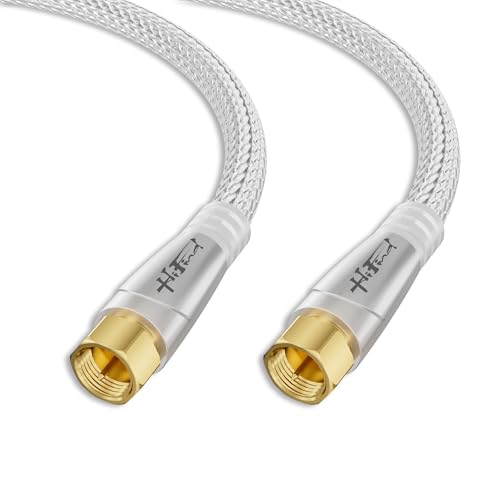
The 75-ohm products in this comparison include the XRDS-RF RG6, THE CIMPLE CO RG6, PHAT SATELLITE RG6, HiFind RG6, MOOKEERF RG11, and Adoreen RG6. Their documented applications include televisions, cable modems, antennas, CATV, broadband, satellite receivers, and related home AV equipment. RG6 is the common general-purpose format among these products. RG11 has a larger construction and is presented for longer runs, but its added size can make routing more difficult.
The 50-ohm selections are intended for radio and RF work. MOOKEERF RG8X, XRDS-RF RG8X, and XRDS-RF RG58 list CB, ham, HF, VHF, antenna, or RF equipment. The XRDS-RF SMA extension is designed for LTE routers, Wi-Fi antennas, SDR receivers, and other SMA-connected devices. Do not substitute a 50-ohm radio cable for a 75-ohm F-type home cable simply because both are called coaxial.
Confirm the conductor material
A solid copper center conductor is directly documented for the XRDS-RF RG6, THE CIMPLE CO, PHAT SATELLITE, HiFind, both selected RG8X cables, the selected RG58 cable, and the SMA extension. Copper provides the conductive path through the cable, but the listing language differs between products. MOOKEERF RG11 identifies a 14 AWG center conductor without clearly stating its material, while Adoreen uses a less precise copper-core description. Those distinctions are reflected in the comparison rather than treated as identical evidence.
Gauge also matters to the design. The selected RG11 lists a 14 AWG center conductor, while several RG6 products list 18 AWG construction. The RG58 listing identifies a 0.94mm core. These figures should be read as construction details, not promises of a particular signal result in every installation.
Consider shielding for the route
Shielding helps separate the signal path from external electromagnetic and radio-frequency interference. The PHAT SATELLITE, HiFind, and Adoreen cables document quad-shield structures. The PHAT SATELLITE listing gives especially detailed information about foil coverage, overlap, and braid layers. Other products use dual shielding or foil combined with a braid. More layers can be useful near household electronics or in an outdoor antenna route, but shielding alone does not correct a mismatched connector or impedance.
For RF applications, the XRDS-RF SMA cable states more than 95% shielding coverage, and the MOOKEERF RG8X describes more than 95% shield performance. The XRDS-RF RG58 uses bonded aluminum foil and tinned copper shielding. These are different construction descriptions, so compare them with the environment and equipment rather than assuming every percentage or layer count measures the same thing.
Choose connectors before ordering
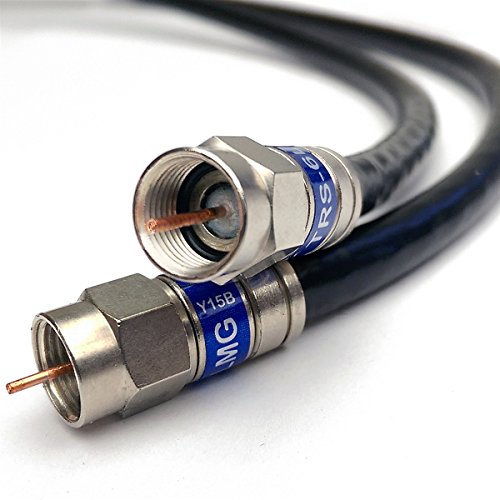
F-type connectors are associated with the 75-ohm home cable selections. The XRDS-RF RG6 is intended for F-type custom installations, while THE CIMPLE CO, PHAT SATELLITE, and other RG6 products describe F-type connections or compatible equipment. Check whether the device requires a male or female end and whether a coupler is needed.
Radio products use different connector families. Both selected MOOKEERF and XRDS-RF RG8X cables use PL259 UHF male connectors. The long XRDS-RF RG58 also lists PL259 connectors. The XRDS-RF SMA extension uses SMA male-to-female connectors and explicitly says it is not RP-SMA. SMA, RP-SMA, F-type, and PL259 should not be treated as interchangeable.
Plan the length and installation path
Buy enough length to make the route without a sharp bend, but avoid excessive slack. The six-foot HiFind cable and 10-foot-class alternatives suit nearby components. A 15-foot Adoreen cable, 18-foot radio cables, and 25- to 30-foot options cover moderate routes. The 50-foot THE CIMPLE CO and 100-foot XRDS-RF RG58 are better suited to larger layouts. The 35-foot SMA extension is useful where an antenna or wireless device must be positioned away from the main equipment.
Jacket and sealing details matter for exposed routes. THE CIMPLE CO lists UV-coated connectors and double O-ring weather compression connectors. PHAT SATELLITE specifies UV-resistant PVC and weather-sealed brass connectors. HiFind describes direct-burial outdoor suitability, while several other products list water-resistant, UV-resistant, or outdoor-capable jackets. These statements support installation planning, but they do not establish that every connector junction is suitable for permanent burial without additional protection.
Final recommendation
HiFind RG6 Quad Shielded 6 FT ranks first overall in this specification-based comparison under the published weighted criteria.
XRDS-RF RG6 Dual Shield Cable 50FT is the first overall specification-based choice among the best copper coaxial cables in this comparison. It combines a documented solid bare copper 18 AWG conductor, 75-ohm design, sweep testing up to 6GHz, and an outdoor-capable jacket. For a short, heavily shielded home connection, PHAT SATELLITE Solid Copper Quad Shield RG6 and HiFind RG6 Quad Shielded 6 FT are compelling alternatives. MOOKEERF RG11 is the better fit when a longer 75-ohm run is the priority and the larger cable can be routed comfortably.
For radio, the top copper coaxial cables are different from household RG6. MOOKEERF RG8X is a strong PL259 choice, while the XRDS-RF SMA Extension is the focused option for compatible LTE, Wi-Fi, SDR, and radio equipment. Check impedance, connector family, conductor evidence, and route length before choosing based on shielding or jacket appearance alone.
Frequently Asked Questions
Are the best copper coaxial cables always 75 ohms?
No. The selected RG6 and RG11 cables are 75-ohm products for television, broadband, satellite, and antenna systems. The RG58 and RG8X products are 50-ohm cables for radio and RF equipment. The correct impedance depends on the connected system.
Is RG11 better than RG6 for every installation?
No. MOOKEERF RG11 is documented as a larger, lower-attenuation design for long runs, but its larger construction may be less convenient in tight spaces. RG6 is generally the more practical format for ordinary home TV, modem, satellite, and antenna connections represented here.
What connector does a TV or cable modem usually need?
The selected home-oriented RG6 products use or support F-type connections. Confirm the port on the television, modem, receiver, or antenna before ordering. A cable with PL259 or SMA connectors serves a different equipment class and may require an appropriate, impedance-conscious solution.
Does quad shielding guarantee a better signal?
No. Quad shielding can provide more documented shielding layers, as shown by PHAT SATELLITE, HiFind, and Adoreen, but signal suitability also depends on impedance, conductor construction, connector fit, cable length, and the installation environment.
Can the XRDS-RF SMA cable connect to RP-SMA equipment?
The listing specifically identifies the product as SMA male-to-female and states that it is not RP-SMA. Verify the connector type and gender on both devices before using this 35-foot extension.