Buying Guide
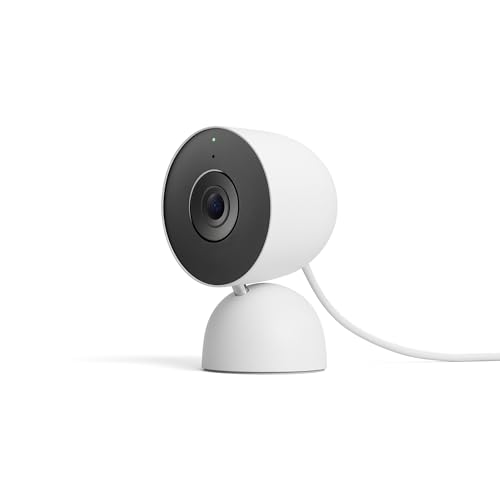
Plug-in cameras are a useful choice when a monitoring point has access to an outlet and you want to avoid battery charging. The best plug-in security cameras in this comparison cover several different designs: fixed indoor cameras, outdoor spotlight models, wired pan-tilt cameras, and multi-camera packages. Start by deciding where the camera will be installed, then compare the features that matter most for that location.
Choose indoor or outdoor construction
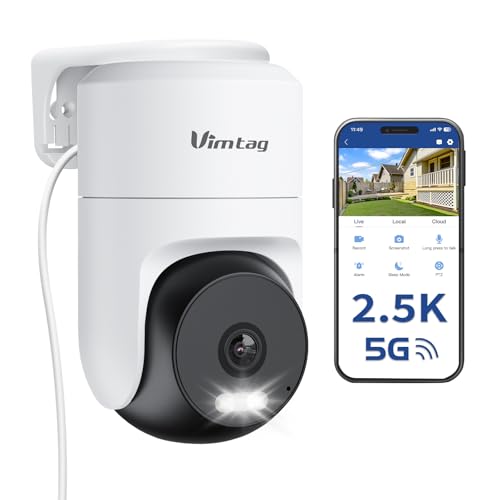
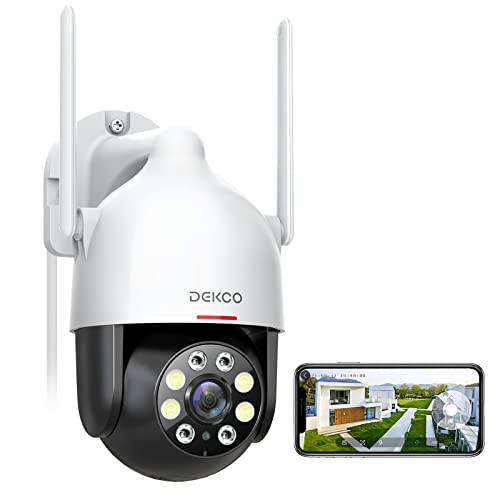
Indoor cameras are intended for rooms, hallways, nurseries, and pet areas. The Kasa EC71 and Tapo C101 are indoor-focused options, while the outdoor selections add weather-oriented construction or explicit protection ratings. The REOLINK Lumus and VIMTAG Pan/Tilt Outdoor Camera list outdoor features, and the DEKCO dome and VSMAHOME E1 also document outdoor use.
Do not treat a plug-in power connection as proof of weather resistance. An indoor camera still needs to remain protected from rain, condensation, and other outdoor conditions. For an exposed location, look for documented weather protection such as the IP66 rating listed for the REOLINK Lumus, DEKCO, and VIMTAG models. The Ring outdoor cameras also identify outdoor placement or weather-resistant construction in their supplied evidence.
Match resolution and zoom to the scene
Resolution affects how much detail is recorded, but the useful result also depends on viewing distance, lighting, and network conditions. The Ring Outdoor Cam Pro lists Retinal 4K and up to 10x enhanced zoom. Several other outdoor models list 2K or 2.5K video, while the Kasa and Tapo indoor cameras list 1080p.
For a doorway or room where subjects are relatively close, 1080p may be adequate for basic monitoring. A driveway, yard, or business exterior may benefit from the higher-detail models, especially when the camera can zoom. Be cautious about assuming that digital or enhanced zoom will match optical zoom; the supplied listings describe these features but do not establish equivalent image quality.
Decide whether pan and tilt are important
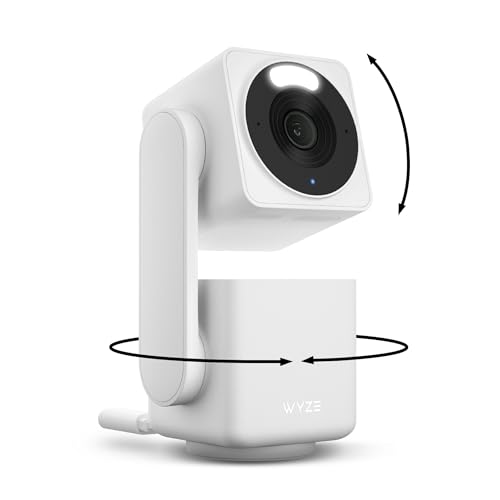
A fixed camera watches the area in front of its lens, while pan-tilt models can change the viewing direction through an app. Pan-tilt control is useful when one camera must cover a broad room, yard, porch, or driveway. The Arlo model documents 360-degree pan and 180-degree tilt, the VIMTAG model lists 360-degree horizontal and 90-degree vertical movement, and the DEKCO lists 350-degree horizontal and 90-degree vertical movement.
Indoor coverage can also be broad. The Kasa EC71 lists 360-degree horizontal and 113-degree vertical coverage. The VSMAHOME E1 two-pack combines two cameras with 360-degree pan and 90-degree tilt. A multi-camera package may be more practical than relying on one moving lens when you need simultaneous views of separate areas.
Review night vision and lighting
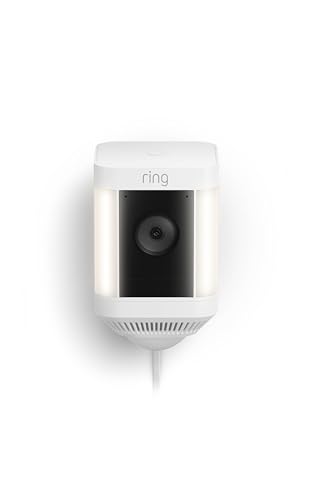
Night features vary considerably. Integrated spotlights can illuminate a scene and may also act as a visible deterrent. Ring Spotlight models, the REOLINK Lumus, and the DEKCO camera document spotlights or floodlights.
A camera with color night vision may still depend on available light or built-in illumination. The Ring Outdoor Cam Pro listing explains that it uses color in low light and changes to black-and-white in total darkness. That makes the stated lighting conditions important when comparing models for a dark yard or unlit side path.
Check Wi-Fi compatibility and cable placement
The cable removes battery-swapping work, but installation still depends on outlet access and a reliable Wi-Fi connection unless the product documents another connection method. Dual-band support appears on the Arlo, REOLINK, VIMTAG, and VSMAHOME E1 listings.
A longer cable can help with placement. The Arlo listing includes a 16-foot power cable, and the VSMAHOME E1 and VIMTAG listings describe included power cables. Measure the route from the outlet to the camera location, and consider whether the cable must pass through a wall or remain protected from weather.
Compare detection, alerts, and storage
Detection features can reduce the need to watch a live feed continuously. The Arlo, REOLINK, VIMTAG, and VSMAHOME models document multiple recognition categories. Indoor options add useful specialized detection: the Kasa EC71 and Tapo C101 list baby-crying detection, while the Tapo also lists person detection.
Storage is another major difference. The REOLINK Lumus supports microSD cards up to 256GB, the Kasa EC71 lists up to 256GB, and the Tapo C101 lists up to 512GB. DEKCO lists microSD support up to 128GB. Some Ring and Arlo features depend on separate subscription plans, so check which functions remain available without a plan. The evidence for each product should be read carefully because cloud history, advanced detection, and local recording are not interchangeable.
Use the right shortlist for your space
For broad outdoor coverage, the Arlo and VIMTAG pan-tilt models are the most feature-rich choices in this list. For active lighting and deterrence, the Ring Spotlight Cam Plus, Ring Spotlight Cam, DEKCO, and REOLINK Lumus have the clearest documented lighting or siren features. For indoor monitoring, the Kasa EC71 and Tapo C101 provide practical room-focused specifications. If local recording is a priority, compare the documented microSD capacities and whether the card is included; these listings generally state that it is separate.
Final Recommendation
Arlo Essential Outdoor Pan Tilt Zoom 2K Wired ranks first overall in this specification-based comparison under the published weighted criteria.
The final choice among the best plug-in security cameras depends on the documented features that match your intended use.
The Arlo Essential Outdoor Pan Tilt Zoom 2K Wired is the highest-scoring returned product and the first overall specification-based choice. Its 2K video, 12x zoom, 360-degree pan, 180-degree tilt, dual-band Wi-Fi, outdoor features, and two-camera package give it the broadest documented capability for exterior monitoring.
The top plug-in security cameras are not identical, so the best match depends on the installation. Choose the Ring Outdoor Cam Pro for listed 4K detail and enhanced zoom, the Ring Spotlight Cam Plus for spotlights and a siren, or the REOLINK Lumus for local microSD recording. The VIMTAG and VSMAHOME E1 models are strong alternatives when pan-tilt coverage is central to the plan. For rooms, the Kasa EC71 offers broad movement, while the Tapo C101 keeps the feature set simple and adds high-capacity microSD support.
This comparison is based on supplied public listing specifications and features. It is not a hands-on test, and it does not summarize customer opinions. Confirm outlet access, Wi-Fi-band compatibility, storage requirements, and any subscription-dependent functions before buying.
Frequently Asked Questions
What are the best plug-in security cameras for outdoor use?
The Arlo Essential Outdoor Pan Tilt Zoom 2K Wired, VIMTAG Pan/Tilt Outdoor Security Camera, REOLINK Lumus, DEKCO dome, and Ring outdoor models are the clearest outdoor choices in this comparison. Their listings document outdoor placement, weather resistance, lighting, pan-tilt movement, or other exterior-focused features. Match the camera to the required viewing range and confirm that the power cable can reach a protected outlet.
Do plug-in security cameras record continuously?
Some selected models explicitly document continuous recording. The Arlo and VSMAHOME E1 listings emphasize uninterrupted plug-in power, while the REOLINK Lumus supports optional 24/7 recording through an NVR. The Tapo C101 and Kasa EC71 list local storage, but the supplied evidence does not establish that every recording mode is continuous. Check the product’s storage and recording documentation before assuming nonstop recording.
Which selected cameras support local storage?
The REOLINK Lumus lists microSD support up to 256GB, the Kasa EC71 lists up to 256GB, the Tapo C101 lists up to 512GB, and the DEKCO camera lists up to 128GB. These capacities refer to compatible cards, which the listings identify as sold separately or not included. Some models also offer cloud storage, but cloud history and local card recording may have different requirements.
Is 2.4GHz or 5GHz Wi-Fi better for a plug-in camera?
The answer depends on the placement and network. Dual-band cameras such as the Arlo, REOLINK, VIMTAG, and VSMAHOME E1 can use either supported band. Cameras listed as 2.4GHz-only, including the Kasa EC71, Tapo C101, and DEKCO, need a compatible network. A 2.4GHz connection may be useful at longer distances, while 5GHz support provides another option when the camera is closer to the router.
Do plug-in cameras require a subscription?
Not always. The REOLINK Lumus, Kasa EC71, Tapo C101, and DEKCO listings document local storage options. Ring and Arlo listings state that some advanced alerts, video history, or AI features require separate plans. Review the exact functions you need and distinguish basic live viewing or alerts from cloud history and advanced detection before choosing a subscription-dependent model.