Buying Guide
This guide compares the best microsoft c/c++ windows programming books using documented windows platform coverage, c/c++ native language focus, developer reference depth, edition or release currency, api or subsystem breadth, and physical or digital format fit.
Choosing Among the best microsoft c/c++ windows programming books
The best microsoft c/c++ windows programming books share a core promise: they help a developer write native code that targets the Windows platform using the C and C++ languages. Before comparing editions, decide which layer of Windows you actually need to program: the user-mode Win32 surface, the kernel, DLL and service boundaries, or the broader system. The titles in this guide cover each of those layers through Microsoft Press Developer References, Addison-Wesley Microsoft Technology Series volumes, and focused independent guides.
Match the Book to the Windows Layer You Program
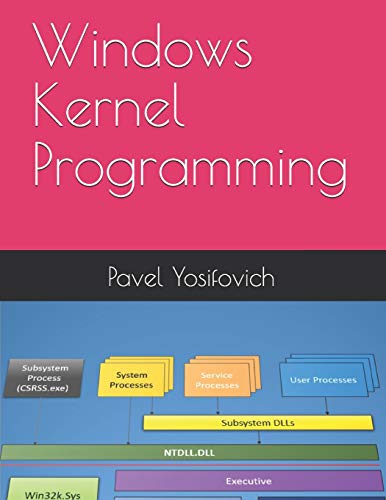
If your work centers on windowing, messaging, and GDI-era user interfaces, the Microsoft Press Programming Windows titles remain a natural anchor. Programming Windows, Fifth Edition and the Developer Reference Kindle edition both sit in that user-mode space. For deeper concerns such as processes, threads, memory management, and object management, Windows System Programming from the Addison-Wesley Microsoft Technology Series frames Windows as a system to be programmed rather than a UI to be designed. If drivers, services, and kernel-mode behavior are the focus, the Windows Kernel Programming titles concentrate exclusively on that layer, which lets you avoid paying for user-mode chapters you will not use. Readers who want a beginner path into the Win32 surface can start with Introduction to Win32 API: A Beginner’s Guide to Native Windows Programming in C and C++ before reaching the Developer References.
Consider C/C++ Emphasis and Native API Coverage
A book that targets C and C++ specifically will spend its pages on the native API surface rather than on managed runtimes. Windows via C/C++ carries that focus in its title and is the clearest example of a Microsoft Press reference designed around native C/C++ code.
Decide Between Print and Kindle Editions
Format matters for a reference that you will read alongside an IDE. Kindle editions of Windows via C/C++, Programming Windows (Developer Reference), Windows Kernel Programming, and Introduction to Win32 API let you search across chapters quickly when looking up a specific API. Paperback and hardcover editions, including the fifth edition Programming Windows paperback, the Addison-Wesley Windows System Programming hardcover, and the 11 x 8.5 inch Windows Kernel Programming print edition, give you large page footprints that fit multi-column code listings and handwritten annotation. Match format to your study habit rather than treating it as an afterthought, and consider Introduction to Windows API programming if you want a compact paperback to carry alongside a larger reference.
Edition Maturity and Release Currency
Microsoft Press titles in this category were often released several years ago, and their continued inclusion comes from the durability of their API coverage rather than from their publication date. Windows via C/C++ was originally released in 2007 and remains a reference-grade volume, while the Developer Reference Kindle reissue of Programming Windows carries a 2013 release date. By contrast, Windows Kernel Programming and its print counterpart reflect a 2023 release that aligns with current kernel APIs, and Introduction to Win32 API: A Beginner’s Guide to Native Windows Programming in C and C++ carries a 2026 release date at the head of the candidate set. Treat edition currency as a complement to depth rather than a substitute for it.
Reference Depth and Series Branding
When two books cover similar ground, series branding can tip the balance. Microsoft Press Developer Reference titles are positioned as long-term reference works with consistent structure. Addison-Wesley Microsoft Technology Series volumes are positioned as system-level references that sit alongside Microsoft Press titles without duplicating their scope. Independent titles can be useful when you want a compact, often shorter volume that targets a narrow topic such as DLL design or API entry points. Pairing one Microsoft Press reference with one focused independent guide is a common way to build a working Windows C/C++ library.
Final recommendation
Windows via C/C++ (Developer Reference) ranks first overall in this specification-based comparison under the published weighted criteria.
The final choice among the best microsoft c/c++ windows programming books depends on the documented features that match your intended use.
Across the ten titles in this guide, Windows via C/C++ (Developer Reference) stands out as the first overall specification-based choice for readers who want the most specification-aligned alignment between the Microsoft Press imprint, the Developer Reference framing, and a C/C++ native focus on Windows. It pairs with Programming Windows, Fifth Edition for user-mode UI depth, with Windows System Programming from the Addison-Wesley Microsoft Technology Series for system-level concerns, with Windows Kernel Programming for driver and service work, and with Introduction to Win32 API for a beginner-native bridge, which together form the spine of the top microsoft c/c++ windows programming books for serious native development.
Frequently Asked Questions
Which book is the most specification-aligned starting point among the best microsoft c/c++ windows programming books?
For most readers, Windows via C/C++ (Developer Reference) is the most specification-aligned starting point because it carries the Microsoft Press Developer Reference framing and explicitly targets C and C++ on Windows. Beginners who want a more gradual ramp into native code can begin with Introduction to Win32 API: A Beginner’s Guide to Native Windows Programming in C and C++ before moving up to the Developer References.
Do I still need the older Programming Windows editions if Windows Kernel Programming is more recent?
The two titles cover different layers, so age alone is not a reason to drop the older editions. Programming Windows, Fifth Edition and the Programming Windows (Developer Reference) Kindle edition focus on user-mode windowing, messaging, and application structure, while Windows Kernel Programming focuses on drivers, services, and kernel-mode behavior. Both layers appear in real native codebases, and the best microsoft c/c++ windows programming books library usually contains at least one title from each layer.
Is a Kindle edition enough, or should I prefer a print Windows programming book?
A Kindle edition is enough when your priority is searchable API lookup and you are comfortable reading code on a screen. A print or hardcover edition is preferable when you want large page footprints for multi-column listings, handwritten annotation, or sustained reading away from a device. Several titles in this guide are available in both formats, so you can match the edition to your study habit.
How does the Addison-Wesley Microsoft Technology Series title fit with the Microsoft Press references?
Windows System Programming from the Addison-Wesley Microsoft Technology Series is best treated as a complement to the Microsoft Press Developer References rather than a replacement. It focuses on the system-programming layer, including processes, threads, and memory management, which gives the best microsoft c/c++ windows programming books list stronger coverage of Windows as a system. Pairing it with a Microsoft Press title such as Windows via C/C++ produces the broadest native coverage without overlap.
Where does a beginner Win32 guide fit next to the Developer References?
A title such as Introduction to Win32 API: A Beginner’s Guide to Native Windows Programming in C and C++ sits one step below the Developer References in scope and serves as the entry point into native code before the reader reaches Microsoft Press titles such as Windows via C/C++. Pairing the beginner Win32 guide with a focused independent paperback like Introduction to Windows API programming gives the microsoft c/c++ windows programming books library a layered structure that moves from beginner to system-level depth.