Buying Guide
The best keyless deadbolts differ less by appearance than by the access methods, connectivity, installation limits, and power arrangements they document. Start with the door, then decide how much smart-home capability you need.
Choose the access method
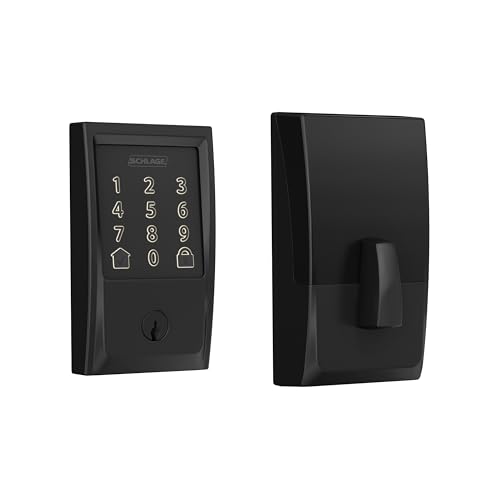
Keypad-only locks are straightforward for family members and guests. The Kwikset SmartCode 270 supports up to 50 user codes and 10 one-time codes, while the TEEHO TE002 stores up to 20 fingerprints and 20 passcodes. These designs avoid app accounts and can suit buyers who want local entry.
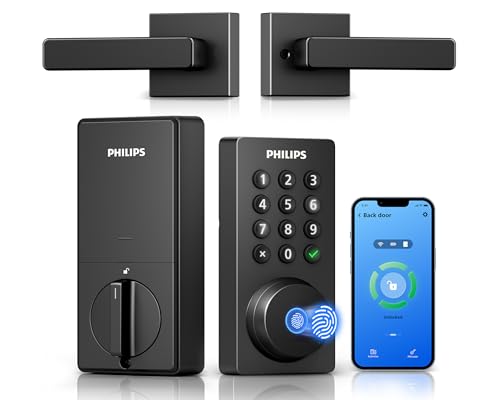
Fingerprint models reduce the need to remember a PIN. The ULTRALOQ Bolt SE stores up to 50 fingerprints, the Philips DDL-241-BK stores up to 50, and the Solity AT10 lists 50 fingerprint scans. Check whether the lock also provides a physical key, one-time codes, or an emergency charging port.
Decide whether remote access matters
Built-in Wi-Fi allows remote locking, unlocking, notifications, or access-history features in several selected products. The Schlage Encode, Schlage Arrive, Philips DDL-241-BK, Philips 4200 Series, eufy C30, and ULTRALOQ Bolt SE document connected controls. Wi-Fi models may require more setup and depend on the stated network conditions.
Some products use an optional gateway instead. The Veise KS02A documents Alexa and Google voice control, remote access, logs, and status monitoring through the G1 Gateway. The gateway is sold separately. ULTRALOQ Matter over Thread functions also require compatible equipment.
Compare code management
Code capacity matters for households, rentals, cleaners, and recurring visitors. Schlage Arrive lists up to 250 access codes, while the Philips DDL-241-BK and Philips 4200 Series document up to 100 passcodes. The ULTRALOQ Bolt SE lists up to 50 codes and supports permanent, scheduled, or temporary sharing.
A large total is not automatically better. One-time and recurring code types may be more useful than a large permanent-code limit. The Philips DDL-241-BK specifically lists permanent, recurring, date-range, and offline one-time passcodes. The Kwikset SmartCode 270 separates user codes from one-time codes, giving the owner a clear way to handle temporary access.
Check door preparation and installation
Listings commonly describe screwdriver installation, but compatibility still needs verification. The Schlage Encode and Arrive specify door thickness and backset ranges. The Philips DDL-241-BK lists doors from 1-3/8 to 2 inches thick and supports either handing. The TEEHO TE002 is more restrictive: its listing says it fits 2-1/8-inch door holes only.
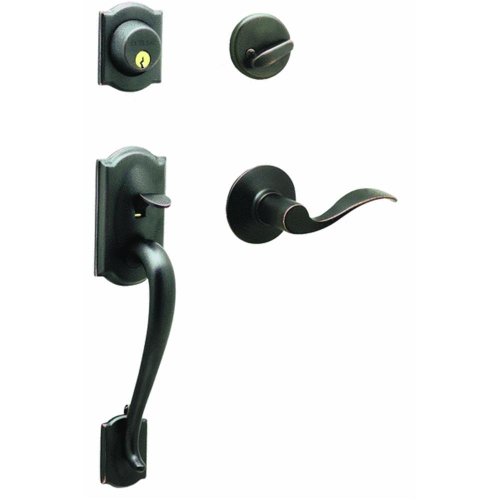
The eufy C30 claims compatibility with most standard deadbolts and a no-drill installation. That claim is not a substitute for measuring your existing deadbolt. Check door thickness, bore diameter, backset, edge clearance, and whether the package replaces only the deadbolt or includes a handle. The Philips 4200 Series includes a matching handle set.
Plan for batteries and emergency entry
Battery requirements vary. The Schlage Encode uses four AA batteries and includes them, while several other selected locks require batteries to be purchased separately. The Philips DDL-241-BK requires eight AA alkaline batteries. The Veise KS02A, Kwikset SmartCode 270, and TEEHO TE002 list approximately one year of battery operation under their stated conditions.
Look for more than a battery-life claim. Low-battery alerts appear on products such as the eufy C30, Veise KS02A, and Philips 4200 Series. Emergency power is another useful safeguard: the Veise KS02A and Solity AT10 list USB-based emergency charging. Physical backup keys are documented for several models, including the Schlage Encode and ULTRALOQ Bolt SE.
Consider weather and security specifications
For exposed doors, compare the documented protection rating rather than assuming electronic locks have identical weather tolerance. The ULTRALOQ Bolt SE lists IP65, the Solity AT10 lists IP55, the Veise KS02A and TEEHO TE002 list IP54, and the eufy C30 lists IPX3. These ratings are specification points, not a guarantee that every installation environment is suitable.
Security-related documentation also varies. Schlage Encode and Arrive list BHMA residential security, durability, and finish certification. Kwikset SmartCode 270 lists Grade 2 BHMA certification, while Veise KS02A and TEEHO TE002 list Grade 3. Some models add incorrect-entry lockouts, intrusion alerts, vacation mode, or anti-peep codes. Confirm which features are active by default.
Final recommendation
The best keyless deadbolts depend on the documented features that match your intended use.
ULTRALOQ Bolt SE Wi-Fi Smart Lock ranks first overall in this specification-based comparison under the published weighted criteria.
Among the top keyless deadbolts, the Schlage Encode is a strong alternative for buyers who value a documented alarm and established door-fit details. Schlage Arrive suits larger access lists because it specifies up to 250 codes. Philips DDL-241-BK is suited to fingerprint households, while eufy C30 emphasizes a simple no-drill installation claim.
For local keypad use, Kwikset SmartCode 270 offers a substantial code allowance without documented Wi-Fi. Veise KS02A and TEEHO TE002 add biometric access, one-time codes, and weather ratings. Solity AT10 is a focused choice for IP55 protection and emergency USB-C charging. Philips 4200 Series makes sense when a matching handle set is part of the planned upgrade.
Frequently Asked Questions
Are the best keyless deadbolts compatible with every front door?
No. Compatibility depends on door thickness, bore size, backset, handing, and the existing hardware layout. The Philips DDL-241-BK lists a 1-3/8- to 2-inch door range, while TEEHO TE002 specifies 2-1/8-inch door holes only. Measure before ordering and compare those measurements with the listing.
Do Wi-Fi deadbolts require a hub?
Not always. Schlage Encode, Schlage Arrive, eufy C30, Philips DDL-241-BK, and Philips 4200 Series document built-in Wi-Fi or direct Wi-Fi connection. Other features may still need additional equipment. Veise KS02A requires the separately sold G1 Gateway for remote access and voice control, and ULTRALOQ Matter over Thread functions require a compatible hub.
Are fingerprint locks better than keypad locks?
They suit different routines. Fingerprint access can reduce PIN use, while a keypad is convenient for visitors who should not be enrolled. ULTRALOQ Bolt SE, Philips DDL-241-BK, Veise KS02A, TEEHO TE002, Solity AT10, and Philips 4200 Series document fingerprint entry. Keypad-focused models such as Kwikset SmartCode 270 and Schlage Arrive may be preferable when shared codes are the main requirement.
What happens if the batteries run low?
Selected products document different backup approaches. Veise KS02A and Solity AT10 list USB emergency charging, while several models include physical keys. Low-battery alerts are documented on eufy C30, Veise KS02A, and Philips 4200 Series. Check the individual product’s battery type, alert method, and emergency-entry procedure before installation.
Should an exterior lock have an IP rating?
An IP rating provides a useful documented reference for dust or water protection, but it should be considered alongside door exposure and installation conditions. ULTRALOQ Bolt SE lists IP65, Solity AT10 lists IP55, Veise KS02A and TEEHO TE002 list IP54, and eufy C30 lists IPX3. Do not assume an unrated model has the same protection.
This is a specification-based comparison, not a hands-on product test. Editorial scores use a published weighted formula: access-method flexibility (25%), smart connectivity and controls (20%), code and user management (15%), installation and door compatibility (15%), battery and power planning (10%), and security and environmental features (15%). A limited non-published marketplace adjustment is applied internally after the editorial formula; its underlying values are not reproduced. Potential limitations are editorial inferences based on documented category-relevant attributes, not observations from hands-on testing.