Buying Guide
Choosing among the best kids’ shorty wetsuits starts with the conditions in which the suit will be used, then moves to fit, closure design, and protection details. A shorty wetsuit normally leaves more of the arms and legs uncovered than a full suit, so it can allow easier movement and simpler changes while still adding torso insulation. The supplied products range from 2mm to 3mm neoprene, with different zipper placements and construction details.
Match neoprene thickness to the activity
Thickness is one of the clearest specification differences in this group. The O’Neill Reactor-2, Hevto Guard Series, Seaskin, and Summshall models list 2mm construction. The Lemorecn, Skyone, ZCCO, and OMGear options list 2.5mm or 3mm materials, while GoldFin lists 3mm. In general, a thicker listed material provides more insulation potential, but thickness alone does not determine comfort or suitability. A child who spends time in relatively mild water may prefer the lighter feel of a 2mm shorty, while repeated snorkeling, diving, or cooler-water use may justify looking at 2.5mm or 3mm options.
The O’Neill listing adds wind-resistant smoothskin for extra insulation and cold protection, and the GoldFin and OMGear listings emphasize 3mm neoprene. Those are useful documented signals for shoppers prioritizing warmth. They are not a substitute for a water-temperature recommendation, because the supplied listings do not provide a consistent temperature range or test data.
Prioritize a close, usable fit
A wetsuit should fit close to the body according to the manufacturer’s size chart. Several listings specifically tell shoppers to check the chart. Do not treat the size shown in a product title as a universal age guide.
A close fit helps the suit perform its intended insulating role, while excessive looseness may allow more water movement inside. Conversely, a child may find an overly tight suit uncomfortable. O’Neill notes that its Reactor-2 uses ultra-stretch neoprene, and Lemorecn describes its 2.5mm model as ultra-stretch. Hevto also describes soft neoprene intended not to restrict movement. These features can make changing and active swimming easier, but the listings do not provide independent fit measurements or test results.
Compare front and back zippers
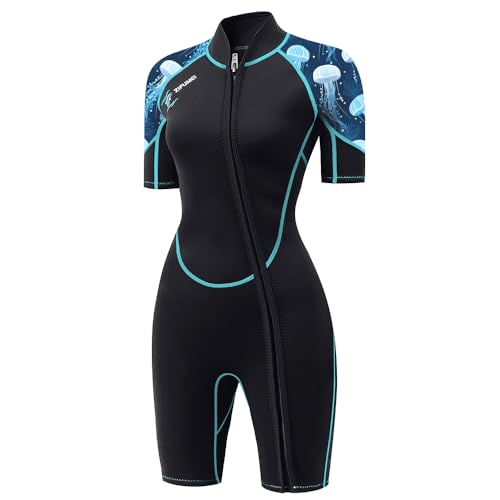
Closure location can affect how easily a child gets dressed. Front zippers appear on the Hevto, Seaskin, GoldFin toddler, ZCCO, and Lemorecn models selected in this comparison. ZCCO specifically documents a long front chest zipper, while Lemorecn lists a front YKK zipper and Hevto describes a front zipper intended to improve ease of use. These details may appeal to families who want a child to participate more in dressing.
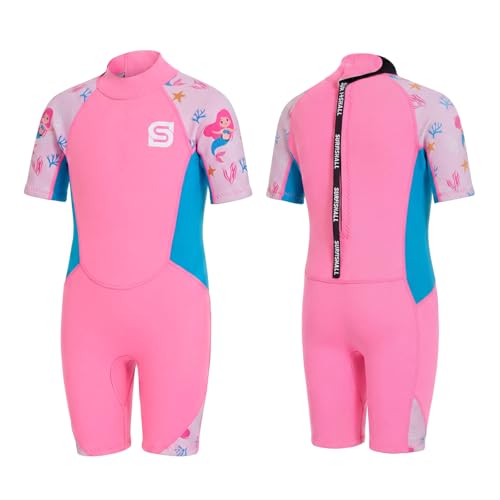
Back zippers are used by O’Neill, Skyone, OMGear, NATYFLY, and Summshall. NATYFLY and Summshall document extra-long pull cords, and O’Neill describes a water-resistant back-zip closure. Back entry can be practical, but the child may need more assistance depending on reach and the zipper’s pull design. The best choice depends on the child’s independence, flexibility, and how often the suit will be put on while wet.
Look for seam and collar details
Listings describe it as helping reduce seam irritation or supporting durability. It is a useful construction detail to compare when a child will wear the suit for lessons or extended water play. The Summshall model instead highlights a binding-free collar and high-stretch underarm panels, while O’Neill identifies seamless paddle zones.
These features address different parts of comfort. A collar can affect neck irritation, underarm panels can help arm movement, and fewer seams may be useful around paddling areas. No supplied evidence establishes that one construction will suit every child, so the child’s sensitivity and preferred range of motion remain important practical considerations.
Consider sun and skin coverage
Many selected listings describe protection beyond warmth. Skyone, ZCCO, and OMGear specify UPF 50+. Lemorecn’s 2.5mm model also specifies UPF 50+, while Hevto, Seaskin, NATYFLY, and Summshall describe UV or sun protection without a numerical rating. Several listings mention protection from abrasions, rocks, jellyfish, or marine irritants. These claims describe intended product features; they do not replace sunscreen, shade, supervision, or local water-safety practices.
If a numeric sun-protection specification matters, prioritize products that explicitly provide one. Also remember that a shorty leaves portions of the limbs uncovered. A child may need separate sun protection for exposed skin, and care instructions should be followed to help preserve the garment’s materials.
Match the suit to water activities
The selected products are generally positioned for more than pool swimming. O’Neill names surfing, diving, paddle sports, lake activities, and beach days. GoldFin, Skyone, OMGear, and ZCCO list combinations of swimming, surfing, diving, snorkeling, kayaking, or paddleboarding. Lemorecn lists swimming, surfing, diving, and kayaking, while Seaskin emphasizes swim lessons, snorkeling, and diving. Summshall focuses on swimming, snorkeling, and paddleboarding.
Choose based on the activity your child actually does. A family seeking a simple pool or lesson layer may not need the broadest activity list. For beach and marine use, protection details and the correct thickness may matter more. For active paddling, movement-oriented features such as O’Neill’s seamless paddle zones or Summshall’s underarm panels may deserve extra attention.
Follow the care instructions
The supplied listings commonly recommend rinsing with fresh or cold water and air-drying, often in shade. Seaskin specifies handwashing in cold water with mild detergent and flat drying. GoldFin recommends rinsing with cold water and hanging to dry. These directions vary, so use the instructions for the exact model purchased rather than assuming all neoprene garments can be handled the same way.
Final Recommendation
Lemorecn 2.5mm Ultra-Stretch Kids Shorty ranks first overall in this specification-based comparison under the published weighted criteria.
The final choice among the best kids’ shorty wetsuits depends on the documented features that match your intended use.
O’Neill Reactor-2 2MM Youth Spring Wetsuit is the highest-scoring returned product and the first overall specification-based choice. Its ultra-stretch neoprene, seamless paddle zones, wind-resistant smoothskin, and back-zip system give it the most balanced documented feature set. Among the top kids’ shorty wetsuits, it is particularly appealing for families combining beach days with paddling, surfing, or diving.
Choose Lemorecn’s 2.5mm Ultra-Stretch model if front YKK entry and UPF 50+ are priorities. Choose GoldFin’s 3mm model or OMGear’s 3mm model when the thicker documented neoprene is the main consideration. Skyone and ZCCO are strong alternatives for shoppers who want explicit UPF 50+ protection, while NATYFLY and Summshall add useful pull-cord or collar details. For younger children, the front-zip Seaskin and Hevto options may be easier to consider. In every case, verify height, chest, and the brand-specific size chart before ordering.
Frequently Asked Questions
Are the best kids’ shorty wetsuits suitable for swimming lessons?
Yes, several selected listings specifically mention swimming lessons or pool use. Seaskin describes its 2mm front-zip shorty for swim lessons, and the broader selection includes models positioned for swimming, beach play, and pool activities. The right choice depends on water temperature, fit, and whether the child needs help with the zipper.
Is 2mm or 3mm better for a child?
Neither thickness is universally better. The 2mm O’Neill, Hevto, Seaskin, and Summshall models may offer a lighter shorty feel, while the 3mm GoldFin and OMGear models provide thicker documented neoprene. Consider the water conditions, activity level, and the child’s comfort. The supplied evidence does not establish a universal temperature cutoff.
Which selected shorty wetsuits have a front zipper?
Hevto, Seaskin, ZCCO, and both selected Lemorecn and GoldFin models document front-zip designs. ZCCO specifies a long front chest zipper, while Lemorecn lists a front YKK zipper. Front access may be useful for children who need a simpler dressing routine, but the fit and zipper pull should still be checked.
Do these wetsuits replace sunscreen?
No. Some products specify UPF 50+ or general UV protection, but a shorty leaves parts of the arms and legs exposed. Use appropriate protection for uncovered skin, follow local guidance, and supervise children around water. A listed UPF feature should be treated as one part of a broader sun-protection plan.
How should a kids’ shorty wetsuit be cleaned?
The supplied listings commonly recommend rinsing with fresh or cold water and air-drying. Some specify mild detergent, shade drying, or avoiding a washing machine and tumble dryer. Follow the care instructions for the exact product, since heat and unsuitable detergents may affect neoprene, stitching, or closures.