Buying Guide
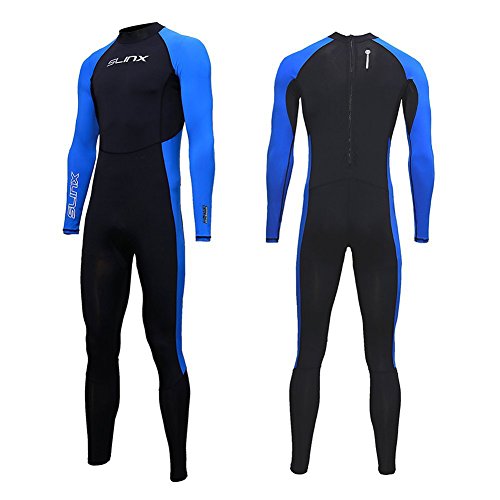
Choosing the best men’s dive skins starts with separating a thin skin suit from a conventional neoprene wetsuit. A dive skin in this comparison is generally a close-fitting, full-body garment using nylon, polyester, spandex, or elastane. These fabrics are documented for stretch, coverage, and movement rather than the thicker insulation associated with a 3mm wetsuit. That distinction matters when deciding whether the garment will be worn alone in warm conditions or underneath another suit.
Match coverage to the activity
Full-body and long-sleeve coverage is the dominant design here. Listings commonly identify protection from UV exposure, jellyfish, sea lice, coral, abrasions, or other ocean irritants. Cressi, for example, specifically describes protection from UV rays, scratches, and jellyfish, while Henderson lists UV and abrasion protection. These statements describe intended protective functions; they are not independent performance tests.
A numerical UPF rating is useful when sun coverage is a priority. COPOZZ, OMGear, DIVE & SAIL, and DiNeop list UPF 50 or UPF 50+ protection. Other products use more general wording such as UV protection without providing a number. If comparing products primarily for sun coverage, favor the listings with the clearest documented rating and still use sunscreen or other appropriate protection for exposed areas.
Choose the zipper position
Front zippers appear on Henderson, Cressi, COPOZZ, OMGear, REALON, DEHAI, and several other selected suits. They are generally presented as helping with donning and removal. A back zipper, used by the DIVE & SAIL back-zip model and Skyone, offers a different entry layout. Neither position is universally better: consider reach, assistance available, and how the zipper will interact with a wetsuit worn over the skin.
The DEHAI listing adds an inner fabric layer inside the zipper, intended to reduce skin contact. Henderson lists thumb loops and heel straps, which are distinctive retention details for users who want a more secure fit beneath other gear. Look for these features when a suit will be used actively or layered, but do not assume they guarantee a particular fit.
Check fabric, thickness, and warmth expectations
Most selected products document lightweight stretch blends. OMGear specifies 80% nylon and 20% spandex; COPOZZ and DEHAI use comparable nylon-spandex compositions, while the two DIVE & SAIL models specify polyester-spandex fabric. REALON identifies a 0.8mm nylon material, and DEHAI identifies a 1mm design. These thickness details help distinguish thin skins from thicker wetsuits, but they do not establish a tested thermal rating.
A thin skin may be more comfortable in warm water and easier to layer. The trade-off is that it may provide less insulation than neoprene. COPOZZ specifically mentions heat-trapping and windproof properties, while Henderson’s listing describes added thermal insulation. Treat these as documented product claims and compare them with your water temperature, layering plan, and activity duration.
Prioritize movement and drying
Stretch and close fit are central to the best men’s dive skins because a loose garment can be distracting in the water. OMGear describes a slim, second-skin fit intended to reduce drag, and several listings emphasize softness, breathability, elasticity, or unrestricted movement. Quick-dry wording appears for OMGear, REALON, DEHAI, Skyone, and the DIVE & SAIL models. That language indicates the intended fabric behavior, not a measured drying time.
For swimming, paddling, or snorkeling, compare stretch with the zipper and cuff design. A suit that is flexible on paper may still feel restrictive if the size is wrong. Read the garment measurements instead of relying only on your usual apparel size.
Treat sizing as a primary specification
Sizing is a recurring caution in this category. The DIVE & SAIL and Skyone listings explicitly say their sizing differs from US standards, and DIVE & SAIL advises reviewing the supplied chart. REALON also recommends selecting the larger size when between measurements. Follow the individual listing’s chart, measure as instructed, and account for whether the intended fit is close to the skin or leaves room for a base layer.
Consider care and durability details
Thin fabrics can need more care around rough rocks, sharp equipment, or abrasive surfaces. DiNeop and Skyone specifically caution against rubbing thin designs on rough or sharp objects. Construction details vary: DiNeop lists four-needle, six-thread sewing; Henderson lists overlock stitching; Skyone describes high stretch and recovery. These features support comparison, but they do not prove a product’s service life. Rinse according to the listing’s care directions and dry the garment appropriately.
Final Recommendation
OMGear Thin Wetsuits Full Body Dive Skin ranks first overall in this specification-based comparison under the published weighted criteria.
The final choice among the best men’s dive skins depends on the documented features that match your intended use.
Henderson Hotskins Classic is the highest-scoring returned product and the first overall specification-based choice. Its documented thumb loops, heel straps, zipper, high-stretch fabric, and full-body protection give it the most complete practical feature set. Among the top men’s dive skins, Cressi is a strong alternative for straightforward wetsuit layering, while OMGear is better suited to shoppers prioritizing a thin, quick-drying, close-fitting design.
Choose COPOZZ when a bright neon-yellow color and UPF current listing information matter. Choose REALON or DEHAI when a lightweight warm-weather layer is the priority, with DEHAI offering a specifically described inner zipper layer. DIVE & SAIL provides both front-zip and back-zip approaches, and DiNeop adds a broad stated size range plus a detailed stitching specification. Whichever model you select, verify measurements before ordering and remember that a thin dive skin is not automatically equivalent to an insulated neoprene wetsuit.
Frequently Asked Questions
Are dive skins the same as neoprene wetsuits?
No. The selected dive skins are primarily thin stretch garments made from nylon, polyester, spandex, or elastane. They emphasize coverage, mobility, and layering. A thicker neoprene wetsuit is a different design intended to provide more insulation. The supplied listings do not establish a universal warmth rating for any of these skins.
What are the best men’s dive skins for wearing under a wetsuit?
Cressi, REALON, DEHAI, and DIVE & SAIL explicitly support use alone or beneath a wetsuit. Cressi calls its product a second layer, while REALON and DEHAI describe warm-weather and under-wetsuit use. Select based on the fabric thickness, zipper layout, and the available size chart rather than assuming every full-body suit layers identically.
Is a front zipper easier than a back zipper?
The listings describe both zipper positions as entry and exit solutions. Front zippers may be easier for some users to reach, while a back zipper can suit shoppers who prefer that layout or already have experience with it. Consider whether you will dress independently and whether another wetsuit will be worn over the skin.
Do all of these dive skins have UPF 50+ protection?
No. COPOZZ, OMGear, DIVE & SAIL, and DiNeop explicitly list UPF 50 or UPF 50+ protection. Other selected products use general UV-protection language without a numerical rating. Compare the exact listing specification if a documented UPF number is important to your purchase.
How should men choose a size?
Use the product-specific size chart and your measurements. Several listings warn that sizing differs from US standards, and some recommend sizing up when between sizes. A close fit is part of the intended design, but the garment should still allow comfortable movement and any planned base layer.