Buying Guide
The best lithium-ion cordless tool battery packs are not interchangeable simply because their voltage numbers look similar. Each pack belongs to a tool ecosystem, and the battery interface, charger, protection electronics, and communication system must match. Start by identifying the exact platform printed on the tool and charger. The selected products cover DEWALT 20V MAX and FLEXVOLT, Milwaukee M18 and 12V, Makita 18V LXT, and CRAFTSMAN V20 systems.
Platform compatibility is the most important filter. The DEWALT 20V MAX products are intended for that system, while the FLEXVOLT DCB606 is documented for 20V MAX, 60V MAX, and 120V MAX platforms. That broader compatibility makes it a special case, but it does not mean every DEWALT tool accepts every FLEXVOLT use case. Confirm the tool and charger requirements before ordering.
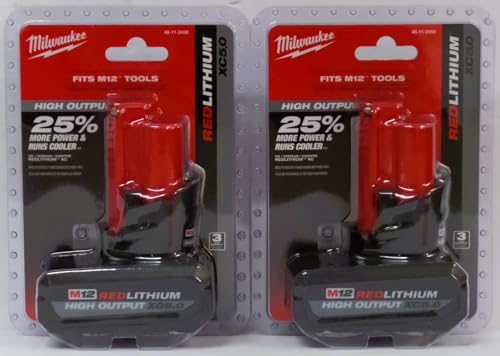
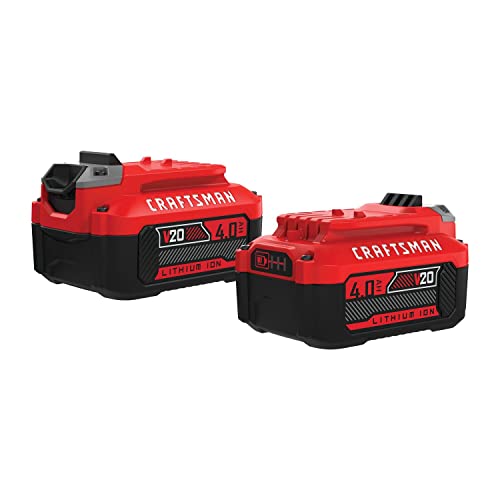
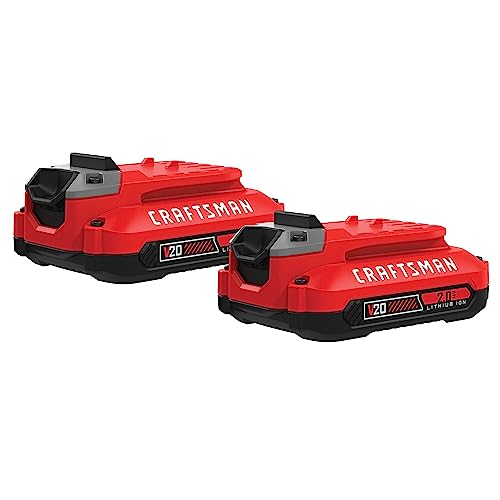
Makita’s BL1860B-2 listing specifically says it is compatible only with Star Protection tools identified by the Star symbol or yellow battery receiver. The BL1850B-2 is also an 18V LXT product, so buyers should verify the same ecosystem details against their equipment. Milwaukee’s selected products are separated by voltage family: the 6Ah XC pair is for M18, while the 5Ah pair is a 12V product. CRAFTSMAN’s two selections are both V20.
Choose capacity for the work
Amp-hour capacity is a useful indicator of stored energy, but it is not a universal promise of runtime. Tool load, operating conditions, and the particular tool all affect how long a pack lasts. Within one platform, a higher Ah rating generally gives a larger capacity option, while a lower rating can be suitable when handling and pack size matter more.
The selected DEWALT and Makita high-capacity pairs are rated at 5Ah or 6Ah per battery. The Milwaukee M18 XC pair also uses 6Ah packs, and its HIGH OUTPUT designation adds a system-specific performance distinction. For lighter CRAFTSMAN V20 use, the 2Ah pair is a smaller-capacity alternative to the 4Ah pair.
Consider pack count and workflow
A two-pack can be more useful than one larger battery when work continues while another pack charges. The DEWALT 20V MAX 6Ah, Milwaukee M18 6Ah, Makita 6Ah, Makita 5Ah, and CRAFTSMAN pairs all support a swap-oriented workflow. Pack count is especially relevant for drills, saws, blowers, and other tools that may remain in use for extended sessions.
A single FLEXVOLT battery can still make sense when one pack needs to move between compatible voltage platforms. The right configuration depends on whether the priority is cross-platform flexibility or having a spare ready. Check the actual included quantity because product titles and package fields are not always formatted consistently.
Look for charge-status visibility
An LED gauge helps you decide when to swap a battery instead of discovering an empty pack during a task. The DEWALT DCB206-2 and DCB205-2c use three-LED fuel or state-of-charge indicators. Both Makita pairs identify integrated LED charge-level indicators, and the CRAFTSMAN pairs document three-LED feedback. These details support more predictable workflow planning.
The Milwaukee M18 listing documents REDLINK communication and overload protection but does not identify a fuel gauge in the supplied evidence. The Milwaukee 12V listing also does not state a charge indicator. That absence is not proof that a product lacks one; it simply means the feature is not used in this comparison. Charge-time information is similarly uneven. Makita lists 55 minutes or less for the 6Ah pair and 45 minutes or less for the 5Ah pair, while the DEWALT 6Ah pair lists 60 minutes.
Evaluate protection and construction details
Battery protection claims vary by listing. Milwaukee’s M18 product describes REDLINK Intelligence and overload protection through communication between the tool, battery, and charger. The Milwaukee 12V pack identifies housing resistance to oils, greases, and solvents and states fade-free power in all weather. DEWALT’s POWERPACK product documents an overmolded base designed for impact resistance.
These are useful design signals, but they should not be treated as guarantees of performance in every environment. Likewise, a warranty can be helpful for ownership planning, but it does not replace checking compatibility or following the manufacturer’s charging instructions. The DEWALT 20V MAX 5Ah pair and both Makita OEM pairs list three-year limited warranties; coverage terms should be confirmed before purchase.
How this comparison was scored
The editorial criteria are platform compatibility at 25%, capacity and runtime evidence at 25%, charging and status usability at 15%, durability and protection features at 20%, and pack configuration utility at 15%. Scores use only the supplied product titles, description points, and specifications. No customer opinions, popularity indicators, marketplace labels, or rating metrics were used in the published criteria. The ordering favors products with clear, category-relevant documentation rather than treating a larger capacity as automatically better.
Final Recommendation
DEWALT 20V MAX XR POWERPACK 4Ah 2-Pack ranks first overall in this specification-based comparison under the published weighted criteria.
DEWALT 20V MAX XR POWERPACK 4Ah 2-Pack is the first overall specification-based choice among the best lithium-ion cordless tool battery packs in this comparison. Its documented 20V MAX compatibility, high-output positioning, impact-resistant base, longer-life claim, and LED indicator give it the most complete feature profile in the supplied evidence.
The DEWALT FLEXVOLT 20V/60V MAX 6Ah Battery is the better fit for users who need documented multi-voltage flexibility. For a conventional high-capacity pair, the DEWALT 20V MAX Premium 6Ah Double Pack is a strong alternative. Milwaukee users can choose between the M18 HIGH OUTPUT XC 6Ah pair for larger-system work and the 12V 5Ah pair for compact tools. Makita buyers have a capacity-focused 6Ah pair and a faster-charging 5Ah pair, while CRAFTSMAN V20 owners can choose between 4Ah jobsite capacity and a lighter 2Ah spare configuration.
Among the top lithium-ion cordless tool battery packs, the most important final check is not the ranking but the platform match. Confirm the exact battery family, charger compatibility, voltage requirements, and included quantity before buying. Specification comparisons can narrow the field, but the tool manufacturer’s compatibility information should control the final decision.
Frequently Asked Questions
Identify the tool platform and charger model first, then compare capacity, pack count, status indicators, and documented protection features within that system. Do not rely on voltage alone. For example, M18, 12V, 18V LXT, V20, and 20V MAX identify different ecosystems even when their listed voltage figures appear close.
Is a higher amp-hour rating always better?
No. A higher Ah rating indicates more stated capacity, but it may not be necessary for short tasks and does not by itself establish runtime in every tool. Higher-capacity packs can be useful for longer work, while lower-capacity options may be preferable when a smaller battery is adequate. Compare the tool’s requirements and the type of work you perform.
Are all DEWALT 20V MAX batteries interchangeable?
The supplied listings identify compatibility within the DEWALT 20V MAX system, and the FLEXVOLT DCB606 additionally documents 20V MAX, 60V MAX, and 120V MAX compatibility. However, buyers should still verify the exact tool and charger requirements. The DEWALT 20V MAX 5Ah listing also includes a caution that it is for outdoor equipment only, so its product-specific guidance deserves attention.
What is the benefit of a two-pack?
Two batteries allow a charged pack to be ready while the other is in use or charging. This can reduce interruptions during longer tasks. A two-pack may also be more practical than one higher-capacity battery if your workflow involves several compatible tools. Check whether the listed capacity applies to each battery or to the package as a whole.
Why do charge indicators matter?
A charge indicator gives a quick estimate of remaining charge before or during a task. The selected DEWALT, Makita, and CRAFTSMAN products document LED status features, while the supplied Milwaukee listings emphasize other system features instead. An indicator improves planning, but it does not replace using the correct charger or following the manufacturer’s battery-care instructions.