Buying Guide
Choosing the best loose leaf oolong tea starts with deciding which information matters most to your cup. Oolong is a broad category: the selected listings include lightly oxidized green-style leaves, medium and charcoal-roasted teas, mountain-grown Taiwanese options, Japanese-grown leaves, and an aromatic milk-ooolong style. Because this comparison uses public listing specifications rather than hands-on testing, the most useful signals are the details that explain what is in the package and how the tea is meant to be prepared.
Start with the leaf style
Green-style oolong is generally presented as lighter, floral, and refreshing in the supplied evidence. Oriarm Anxi Tie Guan Yin is explicitly described as a lightly oxidized green style with a delicate floral aroma. FullChea Alishan is another greener direction, with bright green rolled leaves that open during brewing. YAMASAN KYOTO UJI offers a Japanese-grown alternative with a mild, toasty character and balanced bitterness.
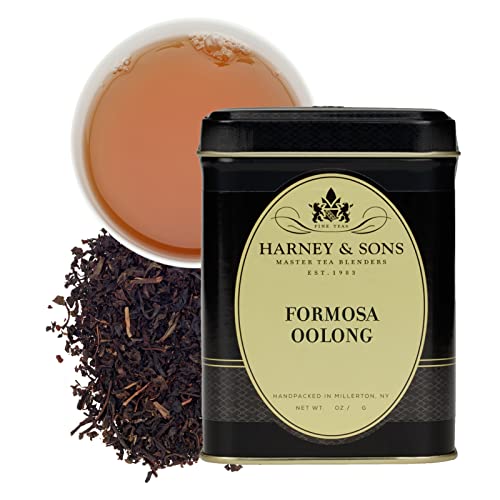
Roasted oolong takes a different route. Harney & Sons Formosa is described as smooth and roasted, while NASLAPH Roasted High Mountain Oolong emphasizes medium charcoal roasting, mellow texture, and layered roasted, orchid, and osmanthus aromas. NASLAPH Da Hong Pao adds Wuyi Mountain identity, tightly rolled leaves, and a rich floral-fruity profile. MODERNOIKOS Dong Ding documents a charcoal-style medium roast and notes of honey, osmanthus, and toasted nut.
Match origin to the profile you want
Origin is not a guarantee of flavor, but it is a useful organizing detail when comparing listings. The selected products identify several distinct growing areas. MODERNOIKOS names Nantou in Taiwan and the Qing Xin Green Heart cultivar. FullChea identifies Alishan, while TEARELAE names Taiwanese Jin Xuan. Oriarm comes from Fujian’s Anxi area, and the two NASLAPH selections identify Wuyi Mountain or a high-mountain roasted style. YAMASAN KYOTO UJI documents Japanese leaves from Gokase Town in Miyazaki Prefecture.
Davidson’s Mountain Copper adds an Indian option, described through its white-tipped leaf and copper brew. It is excluded here because the ranked group offers more detailed evidence for leaf style, processing, or brewing.
Look for whole-leaf and picking details
Whole-leaf language helps distinguish loose leaf from finely broken tea. MODERNOIKOS says its leaves are whole, unfurled, and free of dust or blends. Wu Mountain Tea likewise describes intact whole leaves rather than crushed or dust-grade material. Oriarm identifies whole loose leaves, and the FullChea Alishan listing describes tender leaves picked to a bud-and-two-leaves standard.
These statements are product specifications, not independent verification. Still, they are useful when comparing listings because they explain the intended format. Tight rolling is another recurring design detail: FullChea Alishan, NASLAPH Da Hong Pao, NASLAPH Roasted High Mountain, and TEARELAE all describe rolled or substantial leaves. Such claims can help shoppers identify a traditional loose-leaf presentation, while the actual cup will still depend on water, dose, and steeping.
Check brewing flexibility
Brewing instructions are especially helpful when buying the best loose leaf oolong tea for a new preparation style. YAMASAN KYOTO UJI provides one of the clearest sets of directions: 2–3 grams in 200 milliliters of water at 90–95°C for about 1 minute 30 seconds. MODERNOIKOS gives hot and cold methods, including a hot method at 195°F for three minutes and a cold-steep range of 8–12 hours. It also documents traditional Gongfu preparation.
Wu Mountain Tea and TEARELAE both support hot or cold use. NASLAPH Roasted High Mountain and NASLAPH Da Hong Pao emphasize multiple infusions, while FullChea Alishan states that the leaves can be brewed more than three times. If a listing lacks exact water or time guidance, use that as a comparison limitation rather than assuming a universal recipe.
Package design matters because loose leaves need protection from moisture and odor. Wu Mountain Tea specifies a resealable freshness-protecting bag. Oriarm lists a resealable zipper bag, and MODERNOIKOS provides a package format designed for both loose brewing and its included empty tea bags. Harney & Sons Formosa comes in a decorative 3-ounce tin, while Davidson’s uses a 16-ounce bag.
The supplied evidence does not give a complete storage protocol for every product. NASLAPH Roasted High Mountain is the exception in this group, with the listing connecting charcoal roasting to reduced moisture and resistance to moisture and odor absorption. For any loose tea, keep the package closed and follow the product’s own storage directions when available.
Choose by preparation habit
For traditional loose-leaf sessions, MODERNOIKOS, Wu Mountain Tea, FullChea Alishan, and the NASLAPH teas offer the clearest evidence for whole or tightly rolled leaves and repeat infusions. For straightforward hot-or-cold use, YAMASAN KYOTO UJI and TEARELAE provide explicit flexibility. For a compact tin, Harney & Sons Formosa has the clearest package identity. For a robust, organic profile, Davidson’s gives the most distinctive flavor language.
No listing can determine your personal preference. Use the documented roast, origin, leaf style, flavor description, brewing guidance, and package design to narrow the field, then prepare the tea according to its directions.
Final Recommendation
MODERNOIKOS Roasted Taiwanese Dong Ding Oolong ranks first overall in this specification-based comparison under the published weighted criteria.
MODERNOIKOS Roasted Taiwanese Dong Ding Oolong is the first overall specification-based choice for the best loose leaf oolong tea in this comparison. Its listing supplies more decision-ready detail than the other selected products: single-farm Nantou sourcing, the Qing Xin cultivar, charcoal-style roasting, oxidation information, flavor notes, hot and cold instructions, and included brewing bags. That combination makes it the clearest starting point for shoppers who want to understand how the tea is positioned before brewing.
Wu Mountain Tea is a strong alternative for frequent whole-leaf use and a larger resealable package. YAMASAN KYOTO UJI is the most distinctive Japanese-grown option and provides concrete water and steeping guidance. Choose NASLAPH Roasted High Mountain or NASLAPH Da Hong Pao when roast and repeated infusions are central to your preference. Oriarm and FullChea Alishan suit lighter green-style directions, while TEARELAE focuses on Taiwanese milk oolong aroma. Harney & Sons Formosa offers a simple roasted style in a tin, and Davidson’s provides a robust organic profile. Together, these are practical examples of top loose leaf oolong tea styles documented in the supplied listings.
Frequently Asked Questions
What should I look for in the best loose leaf oolong tea?
Look for a clearly identified tea style, origin, leaf format, processing description, and brewing guidance. Whole-leaf or tightly rolled leaves, named growing regions, roast information, and resealable packaging are useful listing details. MODERNOIKOS and YAMASAN KYOTO UJI provide especially thorough preparation information, while Wu Mountain Tea clearly documents intact leaves and a resealable bag.
Is roasted oolong different from green-style oolong?
The selected listings describe them differently. Oriarm presents Anxi Tie Guan Yin as a lightly oxidized, floral green style. NASLAPH Roasted High Mountain, NASLAPH Da Hong Pao, Harney & Sons Formosa, and MODERNOIKOS Dong Ding describe roasted characteristics. This is a style distinction based on the supplied product descriptions, not a claim about independently tested flavor.
Which selected tea documents cold brewing?
MODERNOIKOS gives a cold-steep method, and both Wu Mountain Tea and TEARELAE describe hot-or-cold use.
Can loose-leaf oolong be steeped more than once?
Several selected listings say so. MODERNOIKOS describes traditional re-steeping, Wu Mountain Tea mentions multiple re-steeps, FullChea Alishan states more than three infusions, and both NASLAPH products emphasize multiple infusions. Actual results will depend on preparation, but these repeated-use claims are present in the supplied evidence.
Are the selected teas flavored?
Most selected products are described through their tea origin, roast, or natural aroma. TEARELAE is presented as a Taiwanese milk oolong with a milk-like aroma, but its supplied listing does not state added flavoring. The selected group does not include the explicitly flavored peach or milk-flavor products from the candidate pool, keeping the comparison focused on documented tea styles and processing.