Buying Guide
White tea sits at the lighter end of the tea spectrum, but the gap between an everyday bag and a single-estate Himalayan lot is wider than many drinkers expect. This guide breaks down what to look for in the best organic white tea using specifications, certifications, and origin details drawn from ten selected options across the 2026 US market.
Understanding Organic Certification Strength
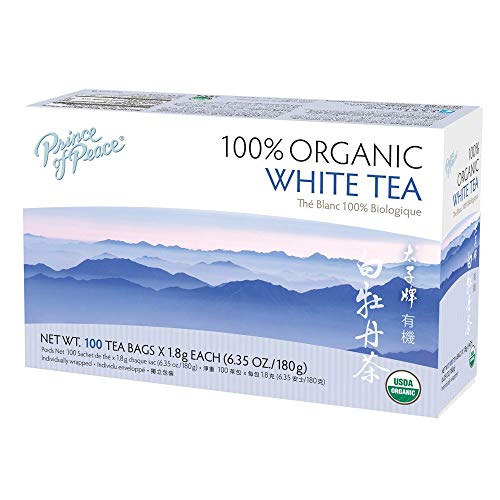
A label that says organic is only as strong as the certifier behind it. USDA Organic, ECOCERT, and Non-GMO Project verification each involve independent audits, while in-house “organic” claims do not. Among the selected picks, FGO Organic White Tea 100 Eco-Conscious Tea Bags carries both USDA Organic and Non-GMO Project seals, and Nepal Tea White Prakash Loose Leaf Organic White Tea is USDA Certified Organic from Nepal’s pioneering certified organic tea garden. Prince of Peace Organic White Tea 100 Tea Bags is certified by ECOCERT ICO USA, which is another widely recognized third-party program. When choosing between bags, checking for one or more of these third-party marks is the simplest specification-based filter for the best organic white tea candidates.
Leaf Grade and Processing
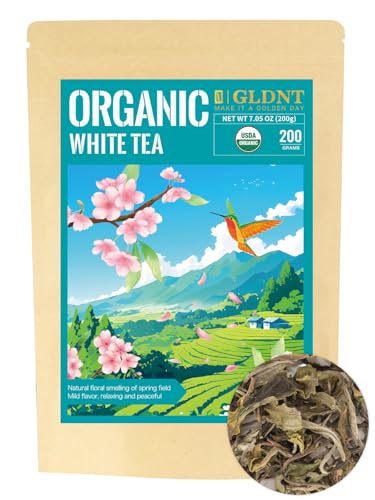
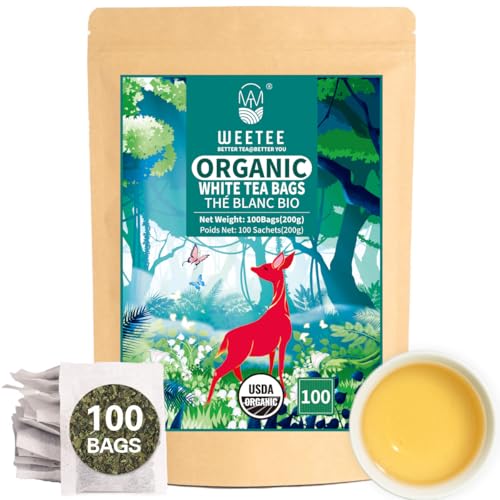
White tea ranges from buds-only Silver Needle to bud-and-leaf Bai Mu Dan and Zhenghe-style pressed leaf. The leaf grade and the way leaves are handled largely shape the cup. Loose leaf picks tend to preserve more leaf integrity, which is why Nepal Tea White Prakash Loose Leaf Organic White Tea and Davidson’s Organics Himalayan White Loose Leaf Tea 16 Ounce can yield fuller, more nuanced infusions than most bagged options. WT WEETEE Organic White Tea Bags 100 ct explicitly mentions Zhenghe-style processing for a richer aroma and fuller body, which is a meaningful specification-based edge for a bagged tea. GLDNT Organic White Tea Loose Leaf 7 Ounce uses whole spring leaves, supporting a cleaner infusion than chopped blends.
Origin and Terroir
Climate and elevation interact with white tea leaves more than with many other styles. Two of the most specification-aligned terroir specifications in the selected list come from different regions: Nepal Tea White Prakash Loose Leaf Organic White Tea is cultivated at 4,500 to 6,000 feet in the Nepal Himalayas, and Davidson’s Organics Himalayan White Loose Leaf Tea 16 Ounce draws from Davidson’s own Indian farms.
Format is one of the most concrete specification differences between picks. Loose leaf buyers care about resealable pouches, pack size, and leaf integrity, while bag buyers focus on individual wrapping, bag material, and total count. FGO Organic White Tea 100 Eco-Conscious Tea Bags uses abacá hemp fiber paper bags free of dyes, adhesive, glue, and chlorine bleach, packed in a foil-lined kraft pouch. Bulk buyers might prefer Legends of China Organic White Tea 100 Bags (Pack of 2) for its 200-bag total, or Davidson’s Organics Himalayan White Loose Leaf Tea 16 Ounce for steady loose leaf supply.
Flavor Complexity and Brewing Flexibility
White teas are usually described in soft terms, but the documented flavor notes vary widely across the list. Nepal Tea White Prakash Loose Leaf Organic White Tea describes vanilla, buttercream, and floral notes brewed into a golden infusion.
Sustainability and Sourcing Transparency
Several picks go beyond a generic organic label to describe how the tea reaches the cup. Nepal Tea White Prakash runs a vertical supply chain from the Nepal estate through on-site packaging, with documented awards and community contributions. Davidson’s Organics Himalayan White Loose Leaf Tea 16 Ounce highlights vertically integrated control from cuttings to infusion.
Final Recommendation
Nepal Tea White Prakash Loose Leaf Organic White Tea ranks first overall in this specification-based comparison under the published weighted criteria.
After weighting certifications, leaf grade, origin, format, flavor complexity, and sustainability, Nepal Tea White Prakash Loose Leaf Organic White Tea is the first overall specification-based choice for the best organic white tea in this roundup. It pairs USDA organic certification with a documented single-estate Himalayan terroir, hand-plucked loose leaf, vertical supply chain, and a track record of international awards. For very high bag counts, Legends of China Organic White Tea 100 Bags (Pack of 2) gives 200 sachets, and for large loose leaf supply, Davidson’s Organics Himalayan White Loose Leaf Tea 16 Ounce covers a 1-pound bag. Together, these picks represent a balanced view of the top organic white tea options available in the US for 2026, across origins and formats.
Frequently Asked Questions
What is the best organic white tea for someone new to white tea?
Drinkers who want to taste a few profiles can also start with Organic Positively Tea Company White Tea Sampler, 4 Ounce, 3 Pack.
How does Fujian white tea compare with Himalayan white tea in this list?
Himalayan options like Nepal Tea White Prakash Loose Leaf Organic White Tea and Davidson’s Organics Himalayan White Loose Leaf Tea 16 Ounce use high-elevation leaves that lean toward fresh, floral notes with a clear terroir story.
What should I check on the label before buying a bagged organic white tea?
For the best organic white tea in bag form, look for independent organic certification such as USDA Organic or ECOCERT, plus details on bag construction. FGO Organic White Tea 100 Eco-Conscious Tea Bags documents abacá hemp fiber bags without dyes or bleach, while WT WEETEE Organic White Tea Bags 100 ct describes Zhenghe-style processing for richer aroma and body.
How should I store loose leaf organic white tea to keep it fresh?
Most picks in this list arrive in resealable pouches. Davidson’s Organics Himalayan White Loose Leaf Tea 16 Ounce, GLDNT Organic White Tea Loose Leaf 7 Ounce, and Nepal Tea White Prakash Loose Leaf Organic White Tea are best stored in their original foil-lined packaging, away from heat, sunlight, and moisture, since white tea leaves are more delicate than black teas.
Is caffeinated organic white tea still a low-caffeine choice?
Most white teas are naturally lower in caffeine than black or green tea, though they are not caffeine-free.