Buying Guide
Choosing the best usda organic white tea starts with separating certification evidence from general marketing language. In the supplied listings, some products explicitly say USDA certified organic, while others identify themselves as organic without naming a USDA certification. That distinction matters if certification is a firm requirement. The comparison therefore rewards clear certification wording while preserving useful organic white-tea options whose listing evidence is less complete.
Certification language
Look for wording that identifies USDA certification directly. Nepal Tea White Prakash, Teabloom White Ginger Pear, Fermentaholics White Peony Tea, FGO Organic White Tea Bags, Numi Organic White Rose Tea, Davidson’s White Peony Loose Leaf, Davidson’s Himalayan White, and Organic Positively White Champagne Raspberry all include explicit USDA-related language in the supplied evidence. These products make the certification claim easier to evaluate from the listing itself.
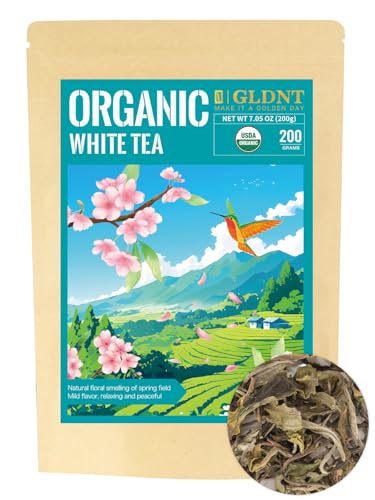
iMoZai’s listing says USDA Certified Organic, so it receives strong certification evidence here. GLDNT Organic White Tea Loose Leaf is different: its title and description identify the product as organic, but the supplied text does not name USDA certification. It remains relevant to an organic white-tea comparison, but shoppers requiring a specific USDA claim should verify the package certification before relying on that designation.
Loose leaf or tea bags
Loose leaf gives the brewer more control over serving size and steeping strength. Nepal Tea White Prakash documents long leaves and white buds, while Davidson’s White Peony Loose Leaf and Davidson’s Himalayan White provide large packages for repeated preparation. GLDNT also identifies its product as whole leaf and uses a resealable foil-lined pouch. Fermentaholics White Peony Tea is loose leaf as well, with the unusual option of using it for kombucha.
Tea bags are simpler for single cups and travel. FGO offers 100 bags in a resealable bag and describes its Abacá hemp fiber paper. iMoZai individually wraps all 100 bags, which can help with portioning and storage. Numi’s three 16-count units use larger-leaf bags and add rosebuds for a floral profile. The right format depends on whether adjustability or convenience is more important in your routine.
Plain, floral, or fruit-forward profiles
Plain white tea is represented by the straightforward leaf-focused options. Nepal Tea White Prakash lists vanilla, buttercream, and fresh-flower notes. Davidson’s White Peony has nut-like, chocolate, and floral descriptions, while Davidson’s Himalayan White is crisp, subtly floral, and sweet. GLDNT describes a delicate, fresh, floral profile with a sweet aftertaste.
Flavored products change the character of the cup. Teabloom White Ginger Pear adds pear, ginger, blackberry leaves, and mallow flowers. Numi adds rosebuds to white tea, and Organic Positively White Champagne Raspberry lists champagne, berry, and floral notes along with safflowers. These blends may be preferable when you want a more pronounced flavor, but they are not the same as an unflavored white-tea leaf.
Several listings support both hot and iced preparation. Nepal Tea White Prakash includes cold-brew directions, Teabloom describes its blend as suitable hot or iced, and GLDNT mentions hot, cold, and room-temperature brewing. Numi, FGO, and iMoZai are more focused on tea-bag convenience, while the loose-leaf options allow more control over the amount used.
Caffeine descriptions vary in precision. Fermentaholics, GLDNT, Numi, Teabloom, and Organic Positively Tea Company use terms such as low or lightly caffeinated. iMoZai gives a typical range of 15–20 milligrams per cup. These statements are listing claims, not independent measurements, so they should be treated as guidance rather than a fixed amount.
Packaging and quantity
Package size affects how practical a product is for your drinking pattern. FGO, iMoZai, and GLDNT offer 100-count or 7-ounce formats, while Nepal Tea White Prakash and Teabloom provide roughly 3.5-ounce loose-leaf canisters or packages. Fermentaholics supplies 2 ounces, and Numi’s listing specifies three 16-count packs. Davidson’s products are the largest loose-leaf formats in this selection at 16 ounces and one pound.
Packaging details also vary. Teabloom uses a reusable and recyclable canister, GLDNT uses a resealable foil-lined pouch, and FGO uses a foil-lined kraft bag. Numi documents biodegradable tea bags and no added microplastics. These are specification-level distinctions, not hands-on packaging tests.
Final Recommendation
Nepal Tea White Prakash ranks first overall in this specification-based comparison under the published weighted criteria.
Nepal Tea White Prakash is the highest-scoring returned product and the first overall specification-based choice for the best usda organic white tea. Its USDA certification language, Himalayan farm source, visible leaf-and-bud description, named flavor notes, and hot-or-cold preparation guidance create an especially complete evidence profile in this comparison.
For a top usda organic white tea in bags, FGO Organic White Tea Bags offers the clearest high-count convenience details, while Numi Organic White Rose Tea adds rosebuds and extensive bag-material information. Davidson’s White Peony Loose Leaf and Davidson’s Himalayan White are better aligned with frequent loose-leaf brewing, and Teabloom White Ginger Pear or Organic Positively White Champagne Raspberry suit shoppers who want fruit or floral flavor accents.
If certification wording is the deciding factor, prioritize products whose supplied listing explicitly says USDA certified organic. GLDNT Organic White Tea Loose Leaf has detailed leaf, origin, flavor, and packaging evidence, but its supplied listing does not specify USDA certification, so that detail should be confirmed separately.
Frequently Asked Questions
What makes the best usda organic white tea different from a general organic tea?
The key distinction is the certification wording. A product may be described as organic, but a USDA-focused choice should provide explicit USDA certification evidence in its listing or on its packaging. In this comparison, the clearest examples include Nepal Tea White Prakash, Teabloom White Ginger Pear, FGO Organic White Tea Bags, and Davidson’s White Peony Loose Leaf.
Is loose leaf better than tea bags for white tea?
Neither format is universally better. Loose leaf can provide more control over the amount brewed and is used by Nepal Tea White Prakash, Fermentaholics White Peony Tea, Davidson’s White Peony Loose Leaf, Davidson’s Himalayan White, and GLDNT Organic White Tea Loose Leaf. Tea bags are more convenient for individual servings, as shown by FGO, iMoZai, and Numi.
Which selected products have the clearest flavor descriptions?
Nepal Tea White Prakash lists vanilla, buttercream, and fresh flowers. Davidson’s White Peony Loose Leaf describes nut-like, chocolate, and floral character. Teabloom White Ginger Pear identifies pear and ginger alongside its white-tea base, while Organic Positively White Champagne Raspberry lists champagne, berry, and floral notes. These descriptions help match a product to a preferred flavor direction.
Can white tea be brewed iced?
Yes, several selected listings explicitly mention cold or iced preparation. Nepal Tea White Prakash provides cold-brew guidance, Teabloom White Ginger Pear is described for hot or iced tea, and GLDNT Organic White Tea Loose Leaf lists hot, cold, and room-temperature options. Follow the preparation directions supplied for the specific product rather than assuming every tea will behave the same way.
Which option provides the most packaging detail?
FGO describes Abacá hemp fiber paper and a foil-lined kraft bag. Teabloom specifies a reusable and recyclable canister. GLDNT lists a resealable foil-lined pouch, while Numi documents biodegradable bags and no added microplastics. These details describe the supplied packaging specifications and do not represent independent packaging testing.