Buying Guide
Teens exploring machinery and tools often move from general curiosity about how things work to specific interests like engines, simple machines, or hands-on building. The best machinery tools books for teens meet readers at whichever stage they happen to be in, balancing explanations, illustrations, and opportunities for practical application. The picks below were compared with a focus on specification-backed evidence, not on what any individual teen might prefer.
Match the Book to the Reader’s Stage
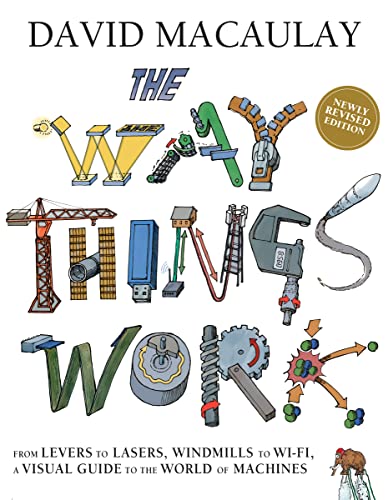
Younger or brand-new readers typically benefit from illustrated overviews such as The Way Things Work or The Everyday Workings of Machines. These rely on large trim sizes and detailed cutaway art to introduce mechanical concepts. Books like Discover How Things Work with 100,000 Whys use a question-and-answer style to keep reluctant readers engaged, while Engineering: How the Six Simple Machines Support the World narrows the focus to the six classical machines for teens who want a clear foundation before moving on.
Readers who already understand the basics may be ready for books that show how machines are built or used. Girls Garage leans into project-led tool use, Moving Heavy Things applies mechanical principles to real rigging situations, and The Boys’ Book of Engine-Building (Classic Reprint) walks through steam, hot air, and gas engines. These books tend to be more prescriptive and may assume access to tools or workshop space, which is worth considering before purchase.
Each format supports a different kind of learning. Reference books like The Way Things Work and The Everyday Workings of Machines are large, heavy hardcovers designed for browsing and shared reading. Workbook-style titles such as Mark Twain Simple Machines Science Workbook structure exercises around force, motion, and energy, which can complement classroom curricula. Project-driven books like Girls Garage and Moving Heavy Things turn the reader into a builder, often with guidance that may require adult support.
Physical specifications matter as well. A 10.88 x 8.44 inch hardcover weighing nearly 4 pounds signals a coffee-table reference, while a 11 x 8.5 inch paperback workbook weighing around 0.45 pounds is easier to carry to class. Library binding titles like Amazing Feats of Mechanical Engineering and Machines through the Ages are built for repeated handling, which may matter for shared family or classroom use.
The most specification-aligned titles in this category explicitly focus on machines, tools, or the engineering that connects them. Engineering: How the Six Simple Machines Support the World is the most narrowly focused on machines, while The Way Things Work and The Everyday Workings of Machines widen the lens to everyday objects and historical technology. Books like The Teen Who Invented Television, while inspirational, sit more in biography than in machinery content, so they may be better as supplementary reading rather than primary machinery tools references.
Use Visuals and Illustrations as a Guide
Illustrations are central to how machinery is taught. Titles that mention cutaways, cross sections, or color illustrations tend to communicate mechanical relationships more clearly than text-only books. The Everyday Workings of Machines explicitly advertises close-ups and cutaways, and Amazing Feats of Mechanical Engineering includes color illustrations and a frontispiece. Books without those features may still be useful, but they may take longer for visual learners to parse.
Consider Hands-On Project Value
Project-led books reward readers who already have access to tools, a workspace, or adult supervision. Girls Garage is the most project-driven title in this list, while Moving Heavy Things focuses on applied mechanical techniques. Reference books such as The Way Things Work and The Everyday Workings of Machines offer fewer direct projects, but they can be paired with a workbook such as Mark Twain Simple Machines Science Workbook to balance theory with practice.
Final Recommendation
The Way Things Work: Newly Revised Edition ranks first overall in this specification-based comparison under the published weighted criteria.
The final choice among the best machinery tools books for teens depends on the documented features that match your intended use.
The Way Things Work: Newly Revised Edition stands out as the first overall specification-based choice because its large hardcover format, revised edition date, and broad coverage of mechanisms and tools give it the most specification-aligned combination of machinery focus, visual reference quality, and physical specifications in the list. For teens who want narrower foundations, Engineering: How the Six Simple Machines Support the World is a strong alternative, and for project-led learning, Girls Garage is the most actionable of the top machinery tools books for teens. Readers exploring the broader field of top machinery tools books for teens will also find strong options in The Everyday Workings of Machines, Mark Twain Simple Machines Science Workbook, and The Boys’ Book of Engine-Building (Classic Reprint).
Frequently Asked Questions
Most of the titles in this list are designed for middle grade and young adult readers, typically ages 10 through 16, based on their trim sizes, reading level implied by the subtitles, and series framing.
Girls Garage is the most structured entry point because its subtitle explicitly frames the book around using any tool and tackling any project. For a more visual introduction before picking up tools, The Way Things Work and The Everyday Workings of Machines provide broad exposure to how machines work, which can reduce the learning curve once a teen starts building.
Do any of these books include hands-on projects or experiments?
Yes. Girls Garage centers on tool-based projects, Mark Twain Simple Machines Science Workbook includes scientific experiments on force, motion, and energy, and Moving Heavy Things focuses on real mechanical techniques. These titles pair well with reference books that focus more on explanation than on building.
Are these books suitable for classroom or homeschool use?
Several titles are well suited to structured learning environments. Engineering: How the Six Simple Machines Support the World belongs to the Inquire and Investigate series, which is designed around inquiry, and Mark Twain Simple Machines Science Workbook is explicitly part of the Expanding Science Skills Series. Library binding titles like Amazing Feats of Mechanical Engineering and Machines through the Ages are built for repeated handling in shared spaces.
How do I choose between a hardcover reference and a paperback workbook?
Hardcover references like The Way Things Work, The Everyday Workings of Machines, and Amazing Feats of Mechanical Engineering are better for browsing and long-term reference. Paperback workbooks such as Mark Twain Simple Machines Science Workbook and Discover How Things Work with 100,000 Whys are lighter, easier to transport, and better for active note-taking and exercises. The choice depends on whether the teen needs a book to read or a book to write in.