Buying Guide
Choosing among the best metric depth gauges starts with identifying the measurement rather than the brand. A machinist checking a blind hole, a fabricator checking a step, and a driver checking tire tread need different reference surfaces and contact designs. The products in this comparison are selected from public listing specifications. They were not hands-on tested, and the ranking does not represent customer sentiment.
Match the gauge type to the job
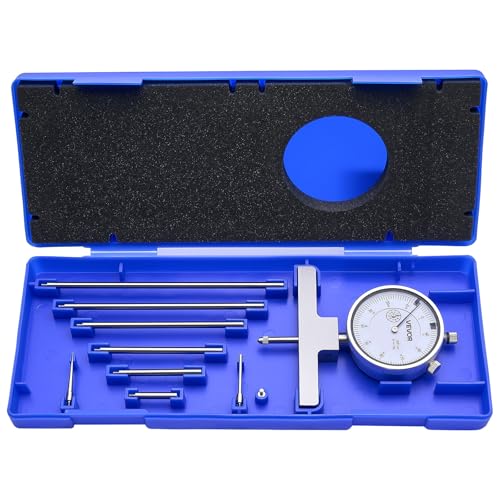
Micrometer-style tools are the most adaptable choice for grooves, holes, steps, and other workpieces that need a stable base. The Mitutoyo 129-109 uses interchangeable rods and a hardened steel base, while the VEVOR mechanical and digital sets add multiple rods and anvils for longer depths. These designs are useful when a fixed ruler would not reach far enough or when different contact faces are helpful.
Electronic gauges are useful when direct metric display matters. The VEVOR digital set offers a large LCD, one-button unit switching, and zero setting. The iGaging 400-D69 also displays metric readings and adds center or side indicator mounting. Accusize provides a digital indicator with a carbide ball contact point. Look for a stated metric resolution, but distinguish resolution from accuracy: a small display increment does not by itself prove a matching measurement error.
Ruler-style instruments are simpler. Groz combines a 6-inch dual-scale rule with a protractor, which suits layout work involving both depths and angles. PRECISE uses a metric ruler and a slim 5 mm profile for narrow openings.
Check metric resolution and accuracy separately
The most specification-aligned documented metric figures vary across the list. Mitutoyo lists 0.01 mm resolution, while the VEVOR digital micrometer lists 0.01 mm resolution and ±0.02 mm accuracy. Accusize lists 0.01 mm resolution and ±0.03 mm accuracy. The GODESON digital tire gauge lists 0.01 mm accuracy. By contrast, Groz, Steelman, and PRECISE describe metric scales but do not provide numeric accuracy or resolution in the supplied evidence.
When a listing gives only an imperial resolution, treat metric capability cautiously. The VEVOR mechanical set lists 0.001-inch resolution but does not state a metric resolution. It can still be relevant to buyers who need a metric-capable workflow elsewhere, but it is not as directly specified as a gauge with a stated millimeter increment. Also verify whether a listed range applies to the exact model or to an entire product series; this matters for the Mitutoyo entry.
A broad, prepared base helps establish a reference across a workpiece, but the evidence differs by design. Accusize specifically describes a hardened, ground, and microlapped 4-inch base. Mitutoyo lists a 63.5 mm by 16 mm base and hardened steel construction.
Automotive tread gauges use a different contact arrangement and are not substitutes for long-range workshop depth micrometers. GODESON, Steelman, and similar tire tools are compact and limited to approximately 25 mm of tread depth. That range is appropriate for tread checks but not for deep holes or machining steps. The iGaging depth caliper occupies another category: it is a 0-6-inch depth instrument with a caliper-style format, metric mode, and data output.
Review range, rods, and attachments
A fixed 6-inch rule is adequate for many layout tasks, but extension rods offer more flexibility. The iGaging 400-D69, Accusize, and both VEVOR sets use six rods to reach a stated 22-inch capacity. The Mitutoyo uses interchangeable rods adjusted in 25 mm increments, with the listing describing both a 0-50 mm item and a 0-150 mm series. Confirm the exact supplied range before ordering.
Anvils and feeler points affect the kinds of surfaces a tool can contact. VEVOR includes four anvils, while iGaging lists four feeler points. Accusize documents a removable carbide ball point for small-hole work. If your application changes frequently, a set with several contacts may be more useful than a single fixed probe. If portability is the priority, Steelman’s compact dual-scale design or a digital tire gauge may be more appropriate.
Decide whether electronics help
Digital displays can make millimeter readings quick to interpret, especially on the VEVOR digital micrometer, iGaging 400-D69, and GODESON tread gauge. Electronics also introduce batteries and display-dependent operation. The Accusize listing explicitly notes that a battery may not be included, so inspect package contents when comparing electronic models.
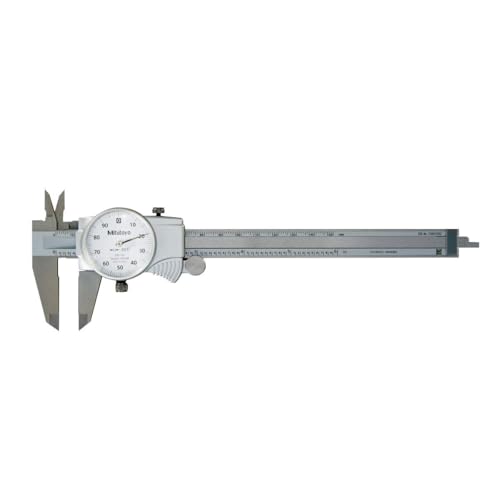
Mechanical and ruler gauges avoid those battery considerations. Mitutoyo’s vernier and micrometer-style design uses a ratchet stop and rod clamp, while Groz and PRECISE provide direct graduated scales.
Final Recommendation
VEVOR Digital Depth Micrometer 0-22 Inch ranks first overall in this specification-based comparison under the published weighted criteria.
Mitutoyo 129-109 Vernier Depth Gauge is the first overall specification-based choice among these best metric depth gauges because it combines 0.01 mm listed resolution, interchangeable rods, a hardened base, and controlled micrometer-style operation. Its range description should be verified for the exact item.
For a long-range electronic set, the VEVOR Digital Depth Micrometer offers metric conversion, zero setting, six rods, and four anvils. The iGaging 400-D69 is a strong alternative when multiple display modes, flexible indicator mounting, and data output matter. Accusize is worth considering for its prepared base and small-hole carbide contact.
For layout work, Groz adds a protractor to its dual-scale depth tool, while PRECISE is the more basic slim ruler option. Automotive buyers should stay with purpose-built top metric depth gauges such as GODESON for a digital millimeter display or STEELMAN for a compact manual dual-scale check. These tire tools should not be treated as replacements for workshop depth micrometers.
Frequently Asked Questions
What are the best metric depth gauges for machining?
The Mitutoyo 129-109 is the most directly specified machining-oriented option in this comparison, with a vernier scale, 0.01 mm resolution, interchangeable rods, and a hardened steel base. The VEVOR digital and Accusize sets are alternatives when longer rod capacity and multiple anvils or contact points are more important.
Is a digital depth gauge more accurate than a mechanical one?
Not automatically. A digital display may make metric readings easier to see, but accuracy depends on the stated specification and the instrument’s design. The VEVOR digital micrometer and Accusize list both resolution and accuracy figures. The Mitutoyo lists fine resolution and mechanical control features. Always compare the supplied accuracy information rather than assuming a display type determines performance.
Are tire tread gauges included in this category?
They are included here because the selected Steelman and GODESON products independently measure depth in millimeters, but their application is limited to tire tread. Their approximately 25 mm ranges and compact contact designs differ from the rods, bases, and anvils used for machining or general inspection.
What does a 0.01 mm resolution mean?
Resolution is the smallest displayed or graduated increment stated by the listing. It is not the same as accuracy. For example, several selected electronic products list 0.01 mm resolution, while some also provide a separate accuracy figure. Use both specifications when the measurement tolerance is important.
Should I choose a ruler-style or rod-based gauge?
Choose a rod-based gauge such as Mitutoyo, VEVOR, or Accusize when you need interchangeable extensions, longer reach, or multiple contact arrangements. The correct choice depends on the workpiece and required measurement range.