Buying Guide
Choosing the best metric thickness gauges starts with understanding how you actually measure gaps, foils, and thin materials. The products in this guide cover three core design types: classic tapered steel feeler sets, plastic feeler strips, and dial thickness gauges. Each one handles a different kind of measurement, so the right pick depends on whether you spend more time on engines, on precision shims, or on delicate surfaces that cannot tolerate scratches.
Understanding Measurement Range and Resolution
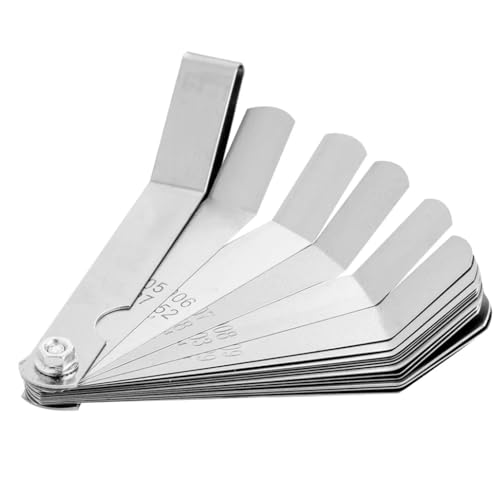
The first specification to compare is the metric range covered by each set. Wider ranges like the 0.04 to 5.0 mm span on the Starrett 467M Tempered Steel Thickness Gage let you measure everything from fine spark plug gaps to thicker paper and shim stock, while tighter ranges like the 0.127 to 0.508 mm span on the LANBEAUTIFY 16-Blade Tapered Feeler Gauge focus on fine increments for valve and bearing work. Among feeler gauges, resolution depends on how many blades are included and how evenly their thicknesses are spaced. A 32-blade set with both metric and imperial markings, such as the Handook 32-Blade SAE/Metric Offset Feeler Gauge, gives finer step sizes than a 17-blade set that covers the same range.
Blade Material and Build Quality
Most best metric thickness gauges use either manganese steel or stainless steel leaves, with some sets adding a brass blade for electronic ignition work. The GEARWRENCH 161D 32-Blade SAE/Metric Feeler Gauge includes a dedicated 0.010 brass blade alongside its steel set, which is helpful when working with sensitive ignition systems. Hardened and tempered construction, as documented for the Handook 32-Blade SAE/Metric Offset Feeler Gauge and the Spurtar 32-Blade Tapered Feeler Gauge, helps blades hold their calibration under repeated use. Anti-rust oil coatings are common, so wiping blades before first use is a practical step several listings mention directly.
Marking Clarity and Dual-Unit Sets
Etched or laser-etched markings tend to outlast stamped or printed numbers, which is why sets like the Hotop 25-Blade Steel Feeler Gauge and Spurtar 32-Blade Tapered Feeler Gauge specify etched sizes on each leaf. If you regularly switch between metric and imperial specifications, dual-marked sets such as the Handook 32-Blade SAE/Metric Offset Feeler Gauge, GEARWRENCH 161D 32-Blade SAE/Metric Feeler Gauge, and Hotop 25-Blade Steel Feeler Gauge save time and reduce conversion errors. For metric-only workflows, the Hotop 17-Blade Metric Feeler Gauge keeps each blade uncluttered and easy to read at a glance.
Design Type: Tapered vs Straight vs Plastic vs Dial
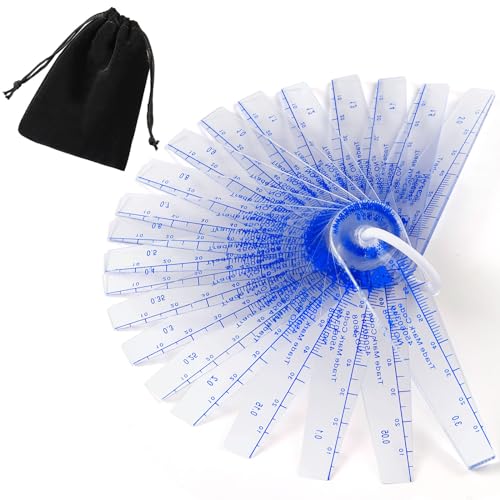
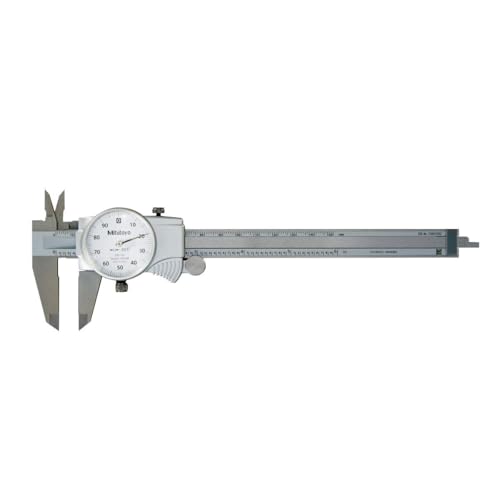
Tapered feeler gauges like the Spurtar 32-Blade Tapered Feeler Gauge and Hotop 25-Blade Steel Feeler Gauge let you slide into angled or recessed gaps where straight blades cannot reach. Straight blade sets like the uxcell Metric Filler Feeler Gauge shine when you need to reach deep into narrow slots. Plastic feeler gauges, led by the Trandraft 21-in-1 Plastic Feeler Gauge, protect delicate surfaces where metal feelers would scratch, making them a strong fit for 3D printing beds, guitar saddles, and similar applications. Dial thickness gauges such as the SHARS 303-4312 Pocket Dial Thickness Gauge read continuously from 0 to 10 mm with 0.01 mm graduation, which is useful for paper, film, leather, and thin sheet QC rather than parallel gap checks.
top metric thickness gauges for Specific Needs
For broadest metric range, the Starrett 467M Tempered Steel Thickness Gage stands out with its 0.04 to 5.0 mm span and individually tested tempered steel leaves. For dual-unit tapered work, the Handook 32-Blade SAE/Metric Offset Feeler Gauge is a strong all-rounder with both metric and imperial markings. For metric-only clarity, the Hotop 17-Blade Metric Feeler Gauge keeps the workflow simple. For non-marring plastic feelers, the Trandraft 21-in-1 Plastic Feeler Gauge is the most extensive plastic option in the comparison, and for dial-readout QC work, the SHARS 303-4312 Pocket Dial Thickness Gauge offers a continuous 0-10 mm range with 0.01 mm resolution.
Final Recommendation
Handook 32-Blade SAE/Metric Offset Feeler Gauge ranks first overall in this specification-based comparison under the published weighted criteria.
The Starrett 467M Tempered Steel Thickness Gage is the first overall specification-based choice among the top metric thickness gauges in this guide, based on the published weighted criteria for metric range coverage, blade resolution and count, build and material, marking clarity, design and access, versatility and use cases, and portability and storage.
The final choice among the best metric thickness gauges depends on the documented features that match your intended use. After comparing range, blade count, material, marking clarity, and design access, the Starrett 467M Tempered Steel Thickness Gage is the first overall specification-based choice among the metric thickness gauges in this guide, thanks to its wide 0.04 to 5.0 mm span, individually tested tempered steel leaves, and lockable blade holder. The Handook 32-Blade SAE/Metric Offset Feeler Gauge is the most versatile runner-up for users who need a strong mix of metric and imperial ranges in a tapered offset format, while the SHARS 303-4312 Pocket Dial Thickness Gauge is the specification-based choice for users who prefer a dial readout over blade stacks. This combination gives you the broadest metric coverage, the most complete dual-unit set, and the most precise dial option among the metric thickness gauges profiled here.
Frequently Asked Questions
What are the best metric thickness gauges for general automotive use?
For general automotive work, the best metric thickness gauges are dual-marked steel feeler sets that span at least 0.04 to 1.0 mm, such as the Handook 32-Blade SAE/Metric Offset Feeler Gauge and the GEARWRENCH 161D 32-Blade SAE/Metric Feeler Gauge. The GEARWRENCH 161D also includes a brass blade designed for electronic ignition service, which is a useful specification for vehicles with electronic ignitions. Always confirm the metric range matches the typical valve, spark plug, or bearing gaps in your application before choosing.
Are plastic feeler gauges accurate enough for precision work?
Plastic feeler gauges such as the Trandraft 21-in-1 Plastic Feeler Gauge provide accurate metric thickness readings for non-critical and surface-sensitive applications like 3D printer beds, guitar saddles, and electronic shimming. They may deform under heavy load, so they are not ideal for forcing into tight metal gaps the way steel feelers can. For tight mechanical measurements, steel feeler gauges remain the specification-based choice.
How does a dial thickness gauge differ from a feeler gauge?
A feeler gauge uses a stack of pre-cut blades to match a gap, while a dial thickness gauge like the SHARS 303-4312 Pocket Dial Thickness Gauge uses a spring-loaded plunger and 0.01 mm graduated dial to display a continuous reading. Dial gauges are well suited for measuring compressible materials like paper, film, leather, and thin metal sheets, where a direct numeric readout is preferred. Feeler gauges are better for parallel mechanical gaps, such as valve clearances and spark plug gaps.
Which metric thickness gauges cover the widest range?
The Starrett 467M Tempered Steel Thickness Gage covers 0.04 to 5.0 mm across 13 leaves, making it the widest metric range in this comparison. The SHARS 303-4312 Pocket Dial Thickness Gauge extends the metric range further, from 0 to 10 mm, but through a dial readout rather than individual blades. The right choice depends on whether you need blade-by-blade gaps or continuous measurements.
Do metric thickness gauges include imperial markings too?
Many do, including the Handook 32-Blade SAE/Metric Offset Feeler Gauge, GEARWRENCH 161D 32-Blade SAE/Metric Feeler Gauge, Hotop 25-Blade Steel Feeler Gauge, Spurtar 32-Blade Tapered Feeler Gauge, and LANBEAUTIFY 16-Blade Tapered Feeler Gauge. Sets like the Hotop 17-Blade Metric Feeler Gauge are listed as metric-only, which simplifies the on-blade labels and avoids confusion when metric readings are the priority. Pick a dual-marked set if you regularly switch between metric and imperial specifications.