Buying Guide
This guide compares the best outside micrometers using documented range coverage, resolution and graduation, measuring face quality, force control mechanism, frame and finish durability, reading system clarity, and included accessories and storage.
What defines the best outside micrometers for a US shop
The best outside micrometers combine a verifiable range, an explicit graduation figure, a documented measuring-face material, and a force-control mechanism that supports repeatable readings. Because outside micrometers are used to size cylindrical parts, sheet stock, and turned components, specification details such as carbide-tipped measuring faces, ratchet-stop or friction-thimble design, and satin-chrome graduation finishes matter as much as the headline range figure.
Matching range and graduation to the work
Start by defining the largest outside diameter you expect to measure. Single-range tools such as a 0-1 inch model cover a very common inspection segment, while multi-range sets in three, four, or six pieces extend coverage to 3, 4, or 6 inches without anvil swaps. Once the range is set, the graduation figure dictates how finely readings can be resolved. Vernier 0.0001 inch graduations support finer readings than 0.001 inch direct scales, and digital LCD readouts can offer resolution figures such as 0.00005 inch on a 0-1 inch digital micrometer.
Mechanical, digit-counter, and digital reading systems
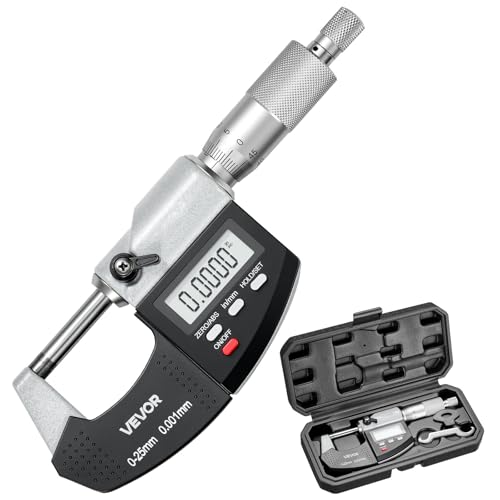
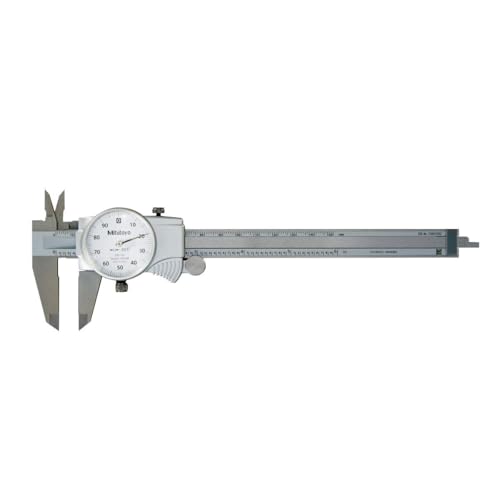
Three reading systems appear in this comparison. Mechanical thimble micrometers rely on a graduated sleeve and thimble with an optional vernier scale. Digit-counter outside micrometers add a mechanical counter to reduce misreading. Digital Digimatic micrometers and standalone digital micrometers replace the thimble with an LCD screen and often add features such as inch-millimeter switching, zero-set, and data hold. Each system has specification trade-offs in terms of battery needs, frame complexity, and reading clarity.
Force control: ratchet stop versus friction thimble
A ratchet-stop thimble slips once a set torque is reached, which supports uniform pressure between operators. A friction thimble relies on operator feel and is specified on several premium and digital models in this comparison. Buyers should look at which mechanism the listing documents, because force consistency directly affects repeatability on small-difference tolerances.
Measuring face material and durability
Carbide-tipped spindle and anvil faces are the most common specification across these listings, while tungsten carbide is documented on at least one Starrett entry. Carbide faces are specified to maintain geometry under repeated contact, which matters when the tool is used daily on hardened stock. Frame finish also varies, with baked-enamel, hammertone enamel, and satin-chrome combinations specified across the comparison.
Sets versus single micrometers
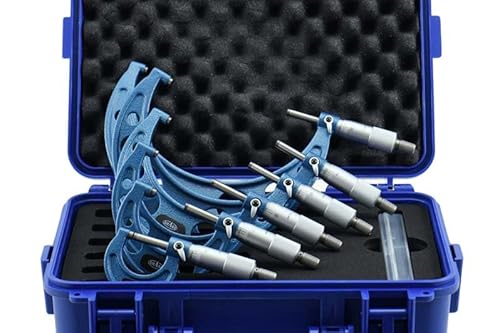
Multi-piece outside micrometer sets share specifications across the included tools and typically ship in fitted cases with adjusting wrenches, and sometimes with calibration standards. Single micrometers are easier to carry to a specific job and may pair more naturally with a digital or digit-counter model. Buyers should match the set or single-micrometer decision to how many ranges they actually need to span.
Standards, cases, and accessories
Several listings specify included calibration standards, which support in-shop verification between traceable references. Most models also ship in fitted cases, either plastic or wood, and many include an adjusting wrench. These accessories do not change the measurement itself, but they support day-to-day usability and storage.
Final recommendation
Shars 0-6 inch Precision Enamel Frame Set (6 pcs) ranks first overall in this specification-based comparison under the published weighted criteria.
For a specification-based first overall choice, the Mitutoyo 103-217 Outside Micrometer stands out because it pairs a 2-3 inch range with 0.0001 inch graduation, carbide spindle and anvil faces, a ratchet stop, and a satin-chrome finish on a baked-enamel frame, anchoring the larger-range segment of the best outside micrometers comparison. Buyers who need a wider sweep can step up to a matched set such as the Accusize three-piece set, the Mitutoyo 103-931 four-piece set, or the Shars six-piece set, while those preferring a digital readout can choose between the Mitutoyo MDC-Lite Digimatic 293-831-32 and the VEVOR 0-1 inch digital micrometer. Together, these tools represent a balanced view of the top outside micrometers currently available in the US market.
Frequently Asked Questions
What graduation should I look for when choosing the best outside micrometers?
Look for vernier graduations of 0.0001 inch or 0.01 mm when you need fine readings, or 0.001 inch direct graduations for general shop use. Digital micrometers often publish both a stated accuracy figure and a resolution figure, and the best outside micrometers in this comparison document one or both.
Are carbide measuring faces important on an outside micrometer?
Yes. Carbide-tipped spindle and anvil faces are specified across most of the returned micrometers because they resist wear and help maintain flatness and parallelism over time.
How does a ratchet stop differ from a friction thimble?
A ratchet stop slips at a set torque, producing more uniform pressure between operators, while a friction thimble relies on operator feel. Both appear across the comparison, with ratchet stops specified on models such as the Mitutoyo 103-217, Mitutoyo 103-137, Accusize, and Shars sets, and friction thimbles specified on the Mitutoyo 193-211 and the Mitutoyo MDC-Lite Digimatic.
Should I buy a single micrometer or a multi-piece set?
A single micrometer suits a focused 0-1 inch or similar small range, while a multi-piece set covers several inches with matched specifications. The best outside micrometers in set form in this guide include the Accusize three-piece set, the Mitutoyo 103-931 four-piece set, and the Shars 0-6 inch six-piece set.
Do any of these outside micrometers ship with calibration standards?
Yes. Several listings specify supplied standards, including the Mitutoyo 103-931 set and the Mitutoyo 104-137 interchangeable anvil set. Standards support in-shop verification between traceable references and can extend the usable life of the top outside micrometers in a calibration-managed workflow.