Buying Guide
The best padded camera cases are easiest to compare by protection, capacity, weather coverage, and carrying comfort. A case can have substantial padding but still be a poor fit if the interior is too short for the lens attached to your camera. Start with the equipment you normally carry, then decide whether you need a soft bag for access or a hard case for stronger environmental protection.
Match the case type to the trip
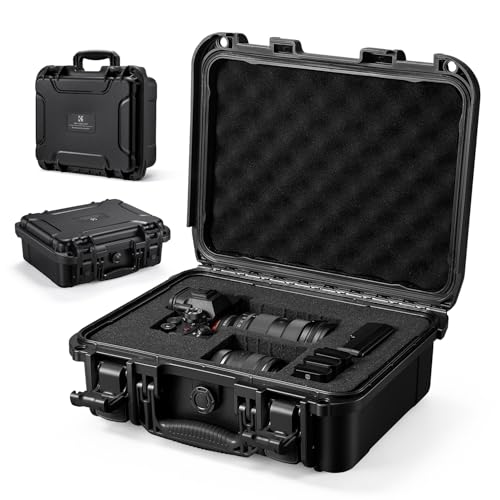
Hard cases are the most protection-oriented choices in this selection. The NANUK 935, Pelican Vault V525, Pelican Vault V100, STARTRC VCR, and K&F CONCEPT hard case document rigid or impact-resistant construction. Larger models suit transport, storage, and equipment kits that need firm external protection. The V100 is the compact hard-case option, while the NANUK 935 and Pelican V525 add wheels and retractable handles for moving heavier loads.
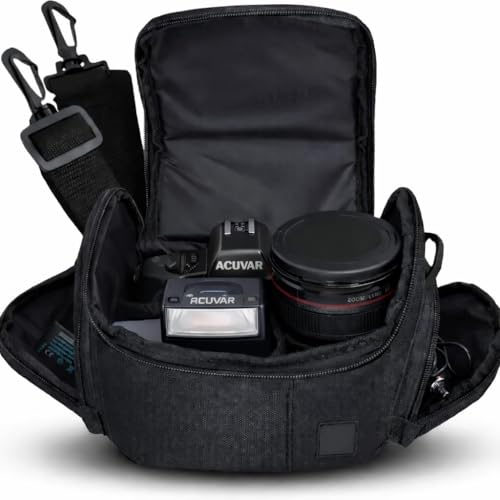
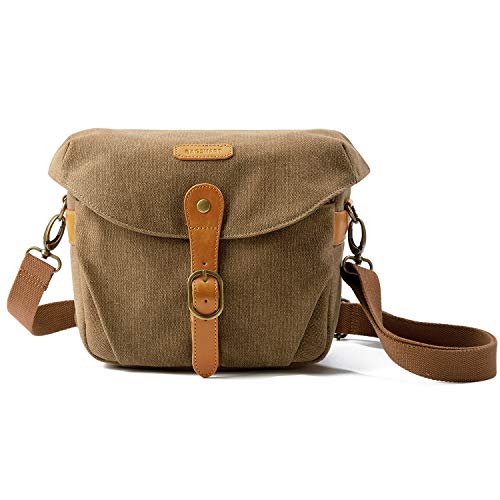
Soft shoulder, crossbody, and sling cases generally make more sense for everyday shooting. The eCostConnection bag, BAGSMART Canvas Crossbody, TAAOKA sling, Besnfoto case, and ProCase case are easier to carry by hand or over the shoulder. They also tend to provide quicker access than a sealed rolling case. Their listings describe weather features as water-resistant, splash-resistant, or rain-cover protection rather than the IP-rated sealing documented by some hard cases.
Check padding and shell construction
Padding separates the camera body, lenses, and accessories so they do not strike one another during movement. The eCostConnection bag lists thick foam padding and adjustable dividers. The BAGSMART case lists 10 mm padding, and the TAAOKA bag lists thickened foam with a soft velvet lining. These details support routine travel and day-trip use.
For more rigid external protection, consider a hard shell. The NANUK 935 lists a crushproof NK-7 resin shell, while both Pelican Vault cases list high-impact polymer construction. The K&F CONCEPT case uses an impact-resistant reinforced frame and thickened shell. The Besnfoto combines an EVA exterior with a detachable padded inner sleeve, placing it between a soft bag and a large equipment case.
Do not treat every protective claim as interchangeable. A padded divider protects against contact and movement inside the case, but it does not establish that the shell is waterproof. Likewise, a hard exterior does not automatically mean the interior layout will suit every camera. Use the documented shell, lining, padding, and closure information together.
Evaluate weather protection carefully
If rain, dust, or wet ground is part of the plan, prioritize a documented seal or a separate weather layer. The NANUK 935 and K&F CONCEPT case list IP67 protection. The STARTRC VCR also lists an IP67 waterproof rating. Those specifications are more precise than general wording such as water-resistant fabric.
Soft cases can still be useful in ordinary weather. A rain cover can add useful coverage, but it may need to be deployed before exposure and does not turn a shoulder bag into a sealed hard case.
Plan the interior around your actual kit
Adjustable dividers are useful when equipment changes. The NANUK 935, Pelican V525, Pelican V100, eCostConnection bag, Besnfoto, TAAOKA, BAGSMART, and ProCase document movable or adjustable divider systems. These allow the camera body and lenses to be separated and can reduce unused space.
Foam offers a different approach. The K&F CONCEPT case uses a two-layer pick-and-pluck foam system that can be customized around particular equipment. This can produce a close-fitting layout, but it is less convenient if you regularly change camera bodies or lenses. Partition boards, as described for the STARTRC VCR, provide another changeable option.
Check listed internal dimensions rather than relying only on labels such as medium or large. The NANUK 935 lists a 20.5 x 11.3 x 7.5-inch interior, while the Pelican V525 lists 19.9 x 10.6 x 7.3 inches. In contrast, the BAGSMART case is designed around one DSLR and one to two exchange lenses, and the TAAOKA bag lists one DSLR plus two to three lenses within stated size limits.
Consider carrying and access
Wheels are useful when a case is loaded, but they add weight and bulk. The NANUK 935 and Pelican V525 include wheels and retractable handles. Hard cases without wheels rely on hand carrying, so confirm that the listed case weight is acceptable before adding equipment.
For walking and quick shooting, shoulder and sling designs are more convenient. The TAAOKA case includes a crossbody strap, tripod holder, and luggage strap. The eCostConnection bag has a shoulder strap and padded handle. The BAGSMART case uses a detachable, adjustable padded shoulder strap. The ProCase also lists an adjustable shoulder strap, while the Besnfoto includes both a top handle and detachable padded shoulder strap.
Access features matter when changing lenses outdoors. Zippered openings and clamshell designs generally allow quick access, while hard cases emphasize closure and protection. Pockets for memory cards, batteries, chargers, and cables are useful, but they should not be confused with padded camera compartments. Keep delicate equipment inside the divided main section whenever possible.
Final recommendation
NANUK 935 Hard Camera Case ranks first overall in this specification-based comparison under the published weighted criteria.
NANUK 935 Hard Camera Case is the first overall specification-based choice among the best padded camera cases in this comparison.
It combines IP67 protection, a crush-resistant shell, padded adjustable dividers, wheels, and a retractable handle. For a smaller hard case, the K&F CONCEPT IP67 Hard Case with Foam provides strong sealing and customizable foam. The Pelican Vault V525 is another substantial carry-on-oriented option, while the Pelican V100 is easier to manage for smaller kits.
Among soft cases, the eCostConnection Medium Camera Bag is the most balanced choice for padded organization and everyday carrying. Choose the TAAOKA Waterproof Camera Sling Bag for quick crossbody access and tripod transport, or the BAGSMART Canvas Crossbody for a compact day-trip setup with a rain cover. The Besnfoto and ProCase options suit photographers who want compact cases with a firmer exterior than a conventional shoulder bag. These top padded camera cases differ mainly in shell rigidity, weather sealing, storage volume, and carrying style.
This is a specification-based comparison using public listing data. It does not represent hands-on testing and does not summarize customer opinions or marketplace popularity.
Frequently Asked Questions
What should I look for in the best padded camera cases?
Check the interior dimensions first, then compare padding, divider adjustability, shell construction, weather protection, and carrying hardware. A case should fit the camera with its intended lens attached without compressing controls or leaving excessive movement. If you carry several lenses, prioritize a case with documented internal dimensions and adjustable compartments. If you work in wet or dusty conditions, look for a specific protection rating such as IP67 rather than relying only on general water-resistant wording.
Is a hard camera case better than a padded shoulder bag?
Neither design is universally better. Hard cases such as the NANUK 935 and Pelican Vault V525 provide rigid shells, more extensive documented environmental protection, and, in some models, wheels. They are suitable for transport and storage but are heavier. Shoulder and sling bags such as the TAAOKA and eCostConnection models are lighter and easier to access while walking. Their documented weather protection is generally less extensive than an IP-rated hard case.
Are adjustable dividers or pick-and-pluck foam easier to use?
Adjustable dividers are generally more adaptable when equipment changes because they can be repositioned. Pick-and-pluck foam, as listed for the K&F CONCEPT hard case, can create a close-fitting custom layout for a stable kit. Foam may be less convenient to revise after it has been cut. Partition boards, such as those described for the STARTRC VCR, provide another changeable option.
Can a compact case hold a DSLR and extra lenses?
Some can, but capacity depends on the camera body, attached lens, and lens dimensions. The BAGSMART listing specifies one DSLR plus one to two exchange lenses, while TAAOKA lists one DSLR plus two to three lenses within stated size limits. Compact cases such as the ProCase and Besnfoto are better suited to smaller setups. Measure your equipment and compare it with the listed internal dimensions before choosing.
Do padded camera cases protect accessories too?
Many selected cases document accessory storage, but the level varies. The eCostConnection bag lists pockets for memory cards, batteries, filters, and cables. The TAAOKA bag includes pockets and SD card storage, and the NANUK 935 uses padded dividers that can be configured around equipment. Small accessories should be kept in dedicated pockets or separated compartments so they do not move against the camera or lenses.