Buying Guide
The best travel camera cases are not all built for the same kind of trip. A rolling hard case can make a large kit easier to move through an airport, while a sling or shoulder bag keeps a smaller camera accessible during a day of sightseeing. Start by identifying the equipment you will carry, then compare the case’s internal dimensions, protection system, and carry method.
Match the case to your camera kit
First, list the camera body, attached lens, spare lenses, flash, batteries, charger, memory cards, and any tablet or tripod you expect to pack. A case that fits the body alone may not leave enough room for the attached lens or accessories. The NANUK 935 and Pelican Vault V525 offer large interiors with padded dividers for more substantial kits. The CADeN D6 also documents capacity for one body, four lenses, a flash, an iPad, and a tripod.
Smaller kits have different needs. The L LTGEM CS1591 has an 8.6 x 6 x 3.1-inch interior and three movable dividers, while the ProCase provides a compact shell-style format with adjustable dividers. The TAAOKA sling lists a specific camera-width and lens-length limit, so shoppers should treat those measurements as a fit requirement rather than relying only on camera-brand compatibility lists.
Choose hard or soft protection
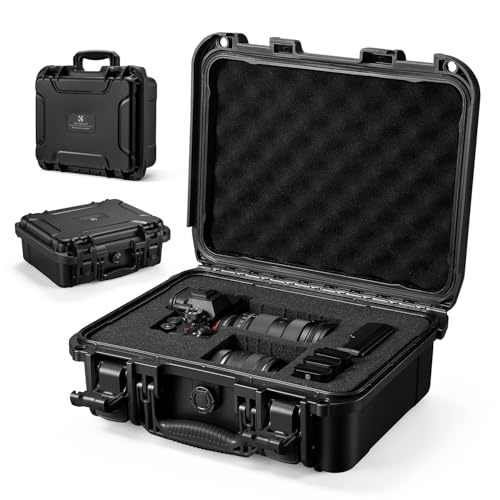
Hard cases provide a rigid barrier around equipment and are generally the more appropriate design when luggage may be compressed or exposed to impacts. The NANUK 935 uses a crushproof NK-7 resin shell, and the Pelican Vault V525 uses high-impact polymer. The K&F CONCEPT Waterproof Hard Case adds a reinforced shell and customizable pick-and-pluck foam.
Soft cases and bags usually prioritize lower weight, access, and comfort. The Domke F-10 uses cotton canvas with an open-cell foam liner in the bottom. The K&F CONCEPT sling uses 10mm EPE padding, and the MOSISO and CADeN backpacks use padded inserts or layered padding. These designs can be easier to carry around a city, but the supplied evidence does not establish the same crush resistance as the selected hard cases.
Check weather protection carefully
Weather terminology varies. An IP67 rating is a specific technical claim documented for the NANUK 935 and K&F CONCEPT Waterproof Hard Case. The Pelican Vault V525 is described as sealed against moisture and dust and weather resistant. Other selections use terms such as waterproof fabric, splash-resistant exterior, or water-resistant canvas.
Do not interpret these descriptions as permission to submerge a soft bag or expose any case to conditions beyond its listing. For rainy destinations, look for the most specification-aligned documented weather specification that fits your budget and equipment. Also remember that zippers, openings, and accessory pockets can remain potential exposure points even when the main material resists water.
Consider how you will move through transit
A rolling case is convenient when the kit is heavy, but wheels and handles add bulk and weight. The NANUK 935 and Pelican Vault V525 both include wheels and retractable handles. Their listed dimensions are suitable for travelers comparing carry-on fit, but airline policies can vary, so verify the current rules before departure.
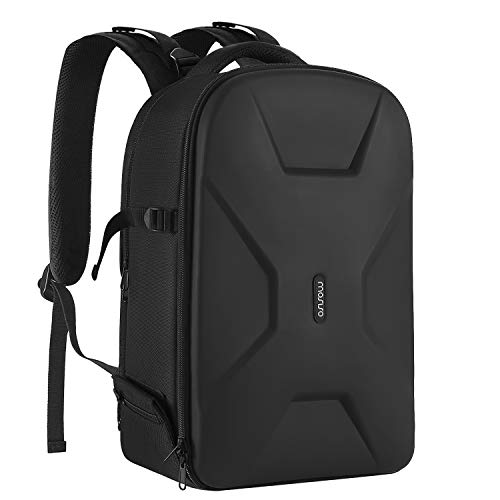
Backpacks distribute weight across both shoulders and leave the hands free. The MOSISO Camera Backpack includes a trolley belt, tripod holder, and multiple compartments. The CADeN D6 similarly includes backpack straps, a tripod location, and storage for a bottle or umbrella. These features are useful when moving between transportation and walking routes.
Slings and shoulder bags can offer faster access than backpacks. The MOSISO sling is designed to turn from back to front, while the TAAOKA and K&F CONCEPT slings use adjustable straps. The Domke F-10 includes a non-slip strap and a removable hand-carrying strap. Choose the format that fits how often you expect to take the camera out while traveling.
Look for adaptable organization
Movable dividers let you change the layout when you switch from one lens to several smaller accessories. The L LTGEM CS1591, TAAOKA sling, ProCase, MOSISO bags, and K&F CONCEPT sling all document adjustable or removable interior sections.
Pick-and-pluck foam works differently. The K&F CONCEPT hard case lets you shape the foam around a defined kit, which can create a close fit. It is less convenient when the equipment changes frequently because the foam layout is intentionally customized. Mesh pockets are useful for flat accessories such as cards and cables, and several selected cases document this type of storage.
Confirm dimensions before ordering
Camera compatibility lists are helpful, but they are not a substitute for measuring your equipment. Compare the camera body width, lens length, and any attached plate or cage with the internal dimensions supplied for the case. Allow room for padding and dividers rather than assuming the maximum interior measurement is usable without adjustment.
For a tripod, check the attachment limits. The K&F CONCEPT sling lists a maximum tripod diameter of 2.99 inches, while the TAAOKA and backpack listings describe tripod holders without providing the same numeric limit. For airline travel, compare the full outside dimensions, not just the interior storage area.
Final recommendation
NANUK 935 Hard Case ranks first overall in this specification-based comparison under the published weighted criteria.
The final choice among the best travel camera cases depends on the documented features that match your intended use.
NANUK 935 Hard Case is the highest-scoring returned product and the first overall specification-based choice. It offers the most complete documented mix of crush-resistant construction, IP67 protection, adjustable padded dividers, wheels, and a retractable handle. Travelers with a large kit who want a rolling case should also compare the Pelican Vault V525, while the K&F CONCEPT Waterproof Hard Case is a better fit for those who prefer customizable foam in a smaller footprint.
For hands-free travel, the MOSISO Camera Backpack and CADeN D6 provide extensive compartment layouts and tripod storage. The K&F CONCEPT and TAAOKA slings are more suitable when quick access and moderate capacity matter more than maximum equipment volume. Lightweight travelers may prefer the Domke F-10, L LTGEM CS1591, or ProCase, provided the softer or smaller formats match their protection and fit requirements. These top travel camera cases cover distinct carrying styles, but every purchase should be checked against the actual camera-and-lens measurements.
Frequently Asked Questions
How do I choose among the best travel camera cases for air travel?
Start with the outside dimensions and total packed weight. The NANUK 935 and Pelican Vault V525 are rolling cases with listed carry-on-related dimensions, but airline limits can change. A backpack or sling may be easier to keep with you, while a hard case may provide a more rigid protective barrier. Confirm the current carrier rules and measure the fully packed case before leaving.
Are IP67 camera cases better for rainy travel?
An IP67 rating is a more specific protection claim than general wording such as water resistant or splash resistant. The NANUK 935 and K&F CONCEPT Waterproof Hard Case document IP67 protection. That does not mean every accessory pocket or open case configuration has the same protection, so keep the case closed and follow the manufacturer’s stated use conditions.
Which selected case is best for a small camera kit?
The L LTGEM CS1591 and ProCase are compact options with adjustable dividers, while the Domke F-10 is a lightweight shoulder bag with a removable divider and cushioned bottom. Compare internal dimensions with the camera and attached lens before choosing.
Do camera bags with dividers fit every lens combination?
No. Dividers make the interior more adaptable, but they cannot expand the case beyond its internal dimensions. Measure the camera body, lens length, and accessory volume. The TAAOKA listing provides explicit body-width and lens-length limits, and the K&F CONCEPT sling gives a tripod-diameter limit. Treat these specifications as boundaries rather than general suggestions.
Is a backpack or sling better for walking trips?
A backpack generally distributes a larger load across both shoulders and can include space for personal items. A sling can provide faster access and may be more convenient for a smaller kit. The MOSISO Camera Backpack documents a trolley belt and tripod holder, while the MOSISO, TAAOKA, and K&F CONCEPT slings document adjustable carrying systems. Choose according to kit size, access needs, and walking duration.