Buying Guide
The best camera cases with straps should match the camera’s dimensions, the equipment carried with it, and the way you expect to move. A fitted wrist case can be appropriate for a small compact camera, while a shoulder bag or sling is better when the kit includes a spare lens, batteries, cards, or a charger. The entries above include both styles, so compare the stated interior measurements rather than relying on the word “camera” in a listing title.
Start with camera fit
Fit is the first screening step. The Besnfoto Small Hard Shell Camera Case lists an interior of about 9.84 by 7.09 by 4.72 inches externally with a padded sleeve and dividers, making it adaptable for several bodies and standard lenses. The K&F CONCEPT Everyday Camera Sling Bag lists a 10.6 by 6.7 by 4.1-inch interior and a 6-liter format. These are more flexible than the model-specific Rieibi G7 X Vintage Leather Camera Case, which is designed around three named compact-camera versions.
For a point-and-shoot, smaller cases may avoid unnecessary bulk. The Amazon Basics Large Point-and-Shoot Camera Case lists a 5.2 by 3.2 by 1-inch interior. The ALKOO Digital Camera Case with Wrist Strap accepts cameras up to 4.5 by 3.2 by 1 inch, while the Elonbo KODAK PIXPRO FZ Camera Carrying Case is built around several specific compact models. Measure the camera with any installed accessories that will remain attached, then compare those measurements with the case’s internal size.
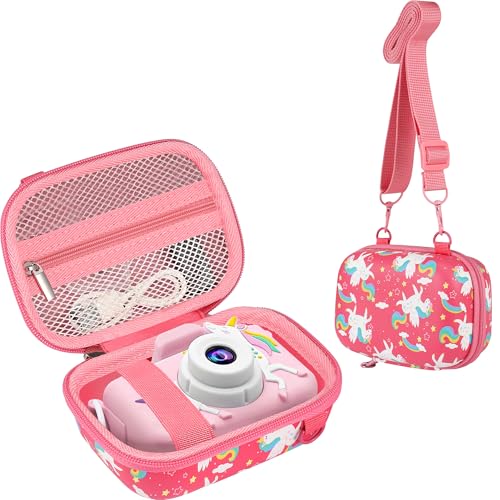
Hard-shell cases provide a more structured enclosure. Besnfoto uses a shockproof EVA exterior and a detachable padded sleeve. The Elonbo case also specifies hard EVA material with velvet lining, while the Leayjeen Kids Camera Case uses an EVA shell with a soft lining. A hard shell can be useful when the case will be placed inside another bag or handled around other objects, but the supplied listings do not establish protection under every impact or travel condition.
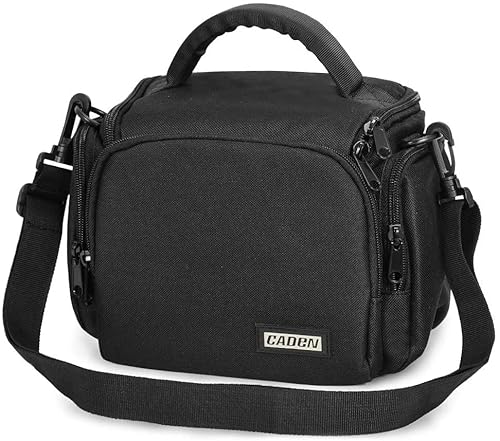
Soft-sided bags emphasize padding and adaptable organization. The CADeN Compact Camera Shoulder Crossbody Bag documents 10 mm padding and reinforced stitching. The L LTGEM Customizable Camera Case uses three movable dividers, and the K&F CONCEPT sling uses a flexfold divider with 10 mm shock-proof cotton. These layouts can make it easier to separate a body, lens, and small accessories, although a divider does not guarantee a precise fit for every setup.
The Rieibi cover follows a different design. Its two-piece construction stays on the camera, has a suede interior, and includes a bottom opening for battery access. That can suit a user who wants a fitted cover rather than a separate storage bag. It will not replace a larger case for carrying multiple accessories.
Evaluate strap and carry options
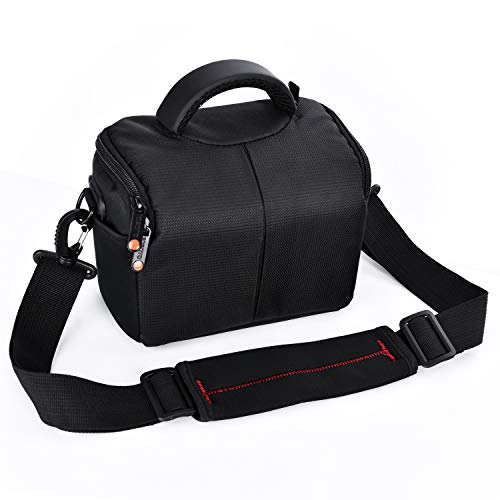
Strap design affects how quickly the camera can be accessed and how much equipment can be carried. The K&F CONCEPT sling has an adjustable strap from 34.25 to 55.1 inches and supports several carry orientations. The CADeN bag lists a shoulder strap adjustable from 65 to 130 cm, plus a top handle. The FOSOTO Waterproof Crossbody Camera Bag also uses an adjustable shoulder strap and protective overlap closure.
For a smaller camera, wrist carry may be more suitable. The ALKOO case has a detachable wrist strap, the Elonbo case includes a detachable wristband, and the Leayjeen case provides a detachable wrist strap. These options are compact and easy to carry, but they offer less shoulder support when the case contains a larger camera or several accessories. The Amazon Basics case adds a belt loop, giving it a second carry method beyond its adjustable shoulder strap.
Check weather and material details
Weather language varies considerably between listings. FOSOTO includes a rain cover and describes a sealed zipper, but its listing expressly says it is not an underwater case. The K&F CONCEPT sling uses weatherproof recycled nylon with a double PU coating. CADeN specifies waterproof and wear-resistant 600D nylon, while the Leayjeen case lists a water-resistant exterior.
These descriptions support protection from particular environmental exposure, not unlimited water resistance. If a rain cover is important, confirm that it can be fitted while the strap is in use. If dust or splashes are the concern, examine the zipper and closure details alongside the fabric or shell description. The K&F CONCEPT hard case is not included in this list because the supplied evidence does not document a strap, even though it specifies IP67 construction.
Consider storage and access
Accessory storage can determine whether a case remains useful outside the home. Besnfoto provides five dividers and a mesh lid pocket. CADeN lists front, side, and interior zipper pockets. L LTGEM includes an interior mesh pocket, while the K&F CONCEPT sling lists front, back, internal zipper, side, and open pockets. These layouts are suited to batteries, cards, cables, and cleaning items when the listed space is sufficient.
Small fitted cases take a simpler approach. ALKOO and Elonbo both document mesh storage for small accessories, and Leayjeen identifies room for an SD card and charging cable. Rieibi prioritizes camera access, including battery changes and tripod use without removing the half case. Decide whether quick access or larger accessory capacity matters more for your routine.
Final recommendation
K&F CONCEPT Everyday Camera Sling Bag ranks first overall in this specification-based comparison under the published weighted criteria.
The final choice among the best camera cases with straps depends on the documented features that match your intended use.
Besnfoto Small Hard Shell Camera Case is the first overall specification-based choice. It combines a hard EVA exterior, padded sleeve, five dividers, accessory storage, and a detachable padded shoulder strap without being limited to one named camera model. For a flexible everyday design, the K&F CONCEPT Everyday Camera Sling Bag is one of the top camera cases with straps because its adjustable carry system and pocket layout support varied routines.
Choose CADeN if a compact shoulder bag with extensive pockets is the priority. FOSOTO is a practical selection when the included rain cover matters, while L LTGEM suits users who want movable dividers in a smaller case. Rieibi, ALKOO, Elonbo, and Leayjeen are more specialized fitted or wrist-carry options. Amazon Basics is the straightforward choice for a point-and-shoot camera with minimal accessories. In every case, confirm the internal dimensions and compatibility before selecting a carry format.
Frequently Asked Questions
What should I measure before choosing the best camera cases with straps?
Measure the camera body, attached lens, and any grip or accessory that will stay installed. Compare those measurements with the listed internal dimensions, not just the external dimensions. Also check whether the case is designed for a specific model family, as with the Rieibi and Elonbo cases, or supports a broader layout through dividers, as with Besnfoto and L LTGEM.
Are hard-shell cases better for camera protection?
A hard shell provides a more structured exterior, and the Besnfoto and Elonbo cases document EVA construction. Soft-sided models such as CADeN and the K&F CONCEPT sling rely on padding and fabric. The better format depends on how much structure and organization your equipment needs; the supplied specifications do not establish a universal result for every impact or travel situation.
Which strap style works for a small compact camera?
A wrist strap can keep a small case close without the bulk of a shoulder bag. ALKOO, Elonbo, and Leayjeen document wrist-carry designs, while Amazon Basics adds both a shoulder strap and belt loop. For a camera with a spare lens or several accessories, a shoulder or sling strap generally provides a more suitable carrying format based on the documented layouts.
Does a rain cover make a camera case waterproof?
Not necessarily. FOSOTO includes a rain cover and sealed zipper but clearly states that the case is not for underwater use. Other listings describe weatherproof, waterproof, or water-resistant materials with different levels of detail. Treat those terms as specific construction claims, and check the closure design and stated limitations before exposing the case to wet conditions.