Buying Guide
The best panoramic tripod heads should match the camera load, the way you compose, and whether you want manual or powered movement. The selected products cover several documented designs: gimbal heads for balancing larger camera-and-lens combinations, ball heads for flexible positioning, geared heads for fine corrections, fluid heads for video movement, and motorized heads for remote rotation.
Start with your camera and lens load
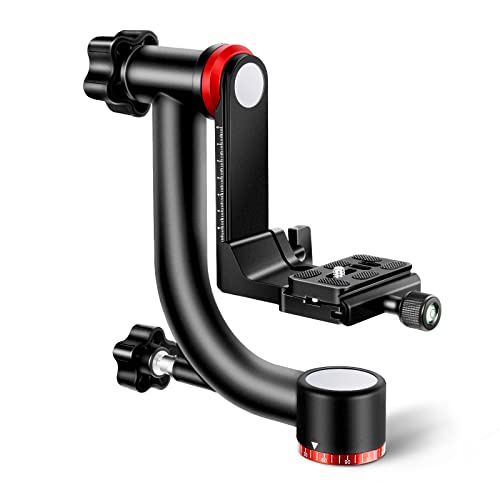
Load support is the first specification to check. The K&F CONCEPT KF31.033 lists support up to 20kg/44lb, while the NEEWER GM101 lists 30lb/13.6kg. Both are gimbal-style options with vertical and horizontal movement. Their design emphasis is balancing and repositioning the camera rather than simply locking a ball in place.
The ARTCISE KB44 and INNOREL N52 each list support up to 66lb/30kg. Those figures are substantial, but a stated maximum should not be treated as a recommendation for every tripod or mounting surface. Complete-system stability still depends on the tripod, connection, camera plate, and equipment arrangement.
The NEEWER TH15 lists support up to 13.2lb/6kg, and the IFOOTAGE Komodo MP30 lists a 22lb payload. The NEEWER 360-Degree Panoramic Ball Head lists up to 17.6lb/8kg. The LEFTFOTO and Andoer listings do not provide a specific maximum payload, so buyers should confirm suitability for their equipment before use.
Choose the movement style
A gimbal design can be useful when a camera and telephoto lens need balanced movement around more than one axis. The K&F CONCEPT model documents a platform that can position the lens and camera center of gravity, and the NEEWER GM101 documents a bearing structure plus a height scale on the swinging arm.
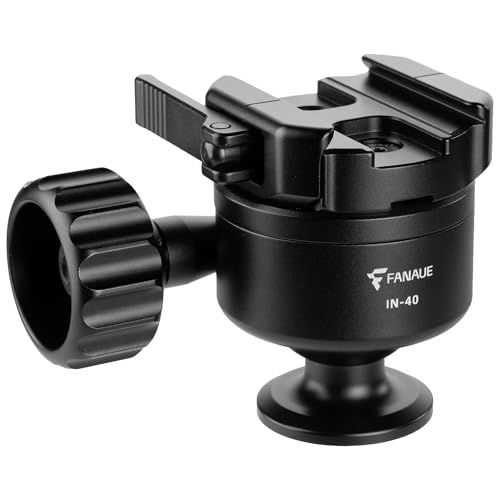
Ball heads are more general-purpose. The ARTCISE KB44 uses a low center of gravity and a double U-notch for switching between horizontal and vertical orientations. The INNOREL N52 documents four 90-degree positions with five-degree scale markings. The IFOOTAGE Komodo MP30 adds panoramic plates on both the top and bottom for landscape and portrait rotation.
A geared head is useful when small framing changes matter more than rapid repositioning. The NEEWER TH15 documents three axes, retractable controls, scale markings, damping friction control, and counterbalance. That combination is relevant to macro, product, and carefully aligned landscape work, although its listed load limit is lower than the largest ball and gimbal options.
Fluid heads suit video-oriented movement. The LEFTFOTO model documents an independent fluid chamber, fixed friction damping, a handle, and broad tilt adjustment. Fluid damping is a design feature, not a promise of a particular result, so confirm that the head’s unspecified payload is suitable for your equipment.
Motorized heads support a different workflow. The Soonpho M4 documents wireless control, eight rotation speeds, 360-degree horizontal movement, tilt adjustment, and a built-in battery. It can accept cameras, camcorders, and smartphones with the listed connections and clip. This makes it relevant to remote operation and time-lapse setups, but the supplied listing does not state a payload.
Check panoramic scales and leveling aids
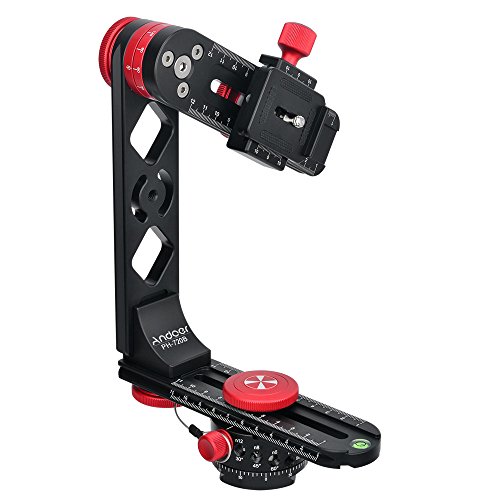
Panoramic photography benefits from repeatable angular movement. The Andoer head documents five stop steps from 15 to 90 degrees and three independently adjustable arms. The K&F CONCEPT, NEEWER GM101, and NEEWER 360-Degree Panoramic Ball Head document scales or index markings for rotation or positioning. The INNOREL N52 documents five-degree scale markings.
Leveling is another useful specification. The K&F CONCEPT, NEEWER TH15, NEEWER 360-Degree Panoramic Ball Head, and INNOREL N52 list bubble or spirit levels. These aids can make setup easier to check, but they do not replace careful alignment of the complete tripod system.
Confirm the mounting system
Most selected products use a 1/4-inch camera screw and a 3/8-inch base connection, but the arrangement varies. The NEEWER GM101, NEEWER TH15, ARTCISE KB44, INNOREL N52, IFOOTAGE Komodo MP30, and LEFTFOTO models document Arca-type or Arca Swiss-compatible quick-release arrangements.
The INNOREL N52 lists two quick-release plates, and the IFOOTAGE Komodo MP30 lists a bottom 3/8-inch thread. The Soonpho M4 uses 1/4-inch top and bottom connections and includes a phone clip. Compare the plate style with the camera cage or support equipment already in use. Compatibility claims should be checked against the specific plate dimensions and safety features of existing gear.
Consider weight and portability
Portability involves more than the head’s maximum load. The NEEWER 360-Degree Panoramic Ball Head, IFOOTAGE Komodo MP30, INNOREL N52, and LEFTFOTO listings provide relatively low listed weights for their respective designs. These specifications may suit travel-oriented kits, but a lightweight head can have a different handling style from a larger gimbal or geared model.
The K&F CONCEPT and NEEWER GM101 list heavier bodies, which may be more appropriate for buyers prioritizing documented load support and gimbal structure over minimum carry weight. The NEEWER TH15 sits between compact ball heads and heavier gimbal choices by combining geared controls with a documented 6kg capacity.
Final recommendation
INNOREL N52 Low-Profile Ball Head ranks first overall in this specification-based comparison under the published weighted criteria.
Among the top panoramic tripod heads, the returned products differ in panoramic control, documented load support, positioning range, mounting compatibility, leveling aids, and portability.
INNOREL N52 Low-Profile Ball Head is the first overall specification-based choice in this comparison.
The K&F CONCEPT KF31.033 is another strong choice among the best panoramic tripod heads, combining 20kg/44lb support, gimbal balance adjustment, 360-degree two-axis movement, a calibrated scale, and a bubble level. The NEEWER GM101 is a suitable alternative for heavy telephoto work, while the ARTCISE KB44 and INNOREL N52 emphasize high documented capacity in low-profile ball-head formats.
Choose the NEEWER TH15 when geared fine adjustment is the priority. The Andoer is the most purpose-built option for stop-based panoramic sequences. For powered operation, the Soonpho M4 documents the most relevant remote features. The IFOOTAGE Komodo MP30 is a compact dual-plate choice, the NEEWER 360-Degree model is a general ball head, and the LEFTFOTO is the clearest video-oriented fluid option in this group. These are specification-based recommendations, not hands-on performance rankings.
Frequently Asked Questions
Which of the best panoramic tripod heads is suited to heavy telephoto equipment?
The K&F CONCEPT KF31.033 and NEEWER GM101 are directly supported by the supplied evidence for heavy camera and lens combinations because both use gimbal structures and document high load capacities. The ARTCISE KB44 and INNOREL N52 list even higher maximum capacities, but they are ball heads rather than gimbals. Confirm the full support system before mounting heavy equipment.
Are geared heads useful for panoramic photography?
Yes. A geared head can help when controlled, small framing changes are more important than fast repositioning. The NEEWER TH15 documents three geared axes, scale markings, damping friction control, counterbalance, 360-degree pan, and two bubble levels. Its listed 6kg capacity makes it a better fit for appropriately sized camera systems than for the heaviest combinations in this guide.
What is the advantage of a motorized panoramic head?
A motorized head can provide powered rotation and remote operation. The Soonpho M4 documents wireless control, eight speed levels, 360-degree horizontal rotation, tilt adjustment, and a built-in battery. It may be useful for time-lapse or creator workflows, but the supplied listing does not state a maximum payload, so camera compatibility should be confirmed before use.
Should I choose a ball head or a fluid head?
Choose a ball head when flexible still-photo positioning and quick orientation changes are central. Choose a fluid head when controlled video movement and a handle are more important. The selected IFOOTAGE, ARTCISE, INNOREL, and NEEWER ball-head designs document different panoramic or positioning features, while the LEFTFOTO documents fluid damping, a detachable handle, and broad tilt adjustment.
Why do panoramic scales and bubble levels matter?
Scales can help repeat angular or positional adjustments, while bubble levels help check whether the camera platform is balanced. The K&F CONCEPT, NEEWER GM101, NEEWER TH15, INNOREL N52, and NEEWER 360-Degree Panoramic Ball Head document some combination of scales, markings, or levels. They support a more deliberate setup, but they do not replace checking the complete tripod and camera alignment.