Buying Guide
The best photography tripod heads differ mainly in how they position, balance, and lock a camera. A geared head favors deliberate composition; a ball head offers fast angle changes; a fluid head is designed around controlled pan-and-tilt movement; and a gimbal head helps balance long lenses. Start with the movement style your work requires, then check capacity, mounting standards, and the physical size of the head.
Choose the head design first
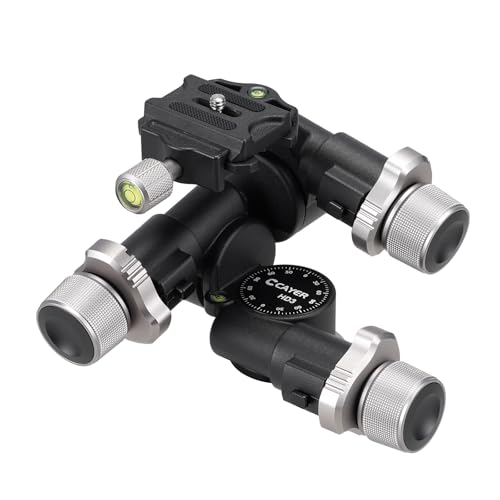
A geared head is the most directly documented option for fine framing. The NEEWER TH15 and Cayer HD3 both use three-axis gearing, with controls for larger positioning changes and finer adjustments. That arrangement is useful for architectural, macro, product, landscape, and astrophotography compositions where small corrections matter. The TH15 also lists damping friction control and counterbalance, while the HD3 includes a short center column for ultra-low positions.
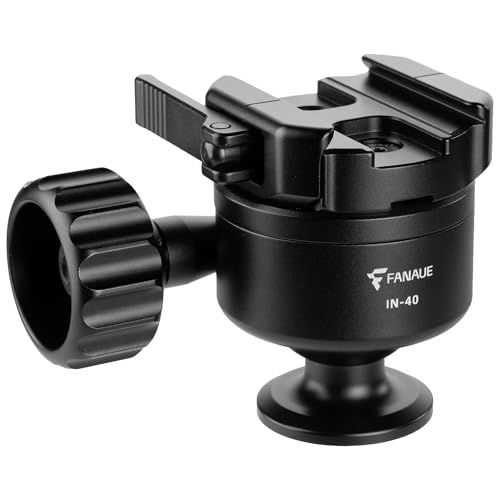
A ball head is generally a more compact approach to flexible still photography. The ARTCISE KB55 uses a large 55mm ball and micrometer drag adjustment, while the FANAUE IN-40T uses a low-profile 40mm ball with a quick-lock lever. These designs can change camera angle quickly, but their documented feature sets differ: the KB55 emphasizes drag control and drop notches, while the IN-40T emphasizes portability, panoramic rotation, and a high stated capacity.
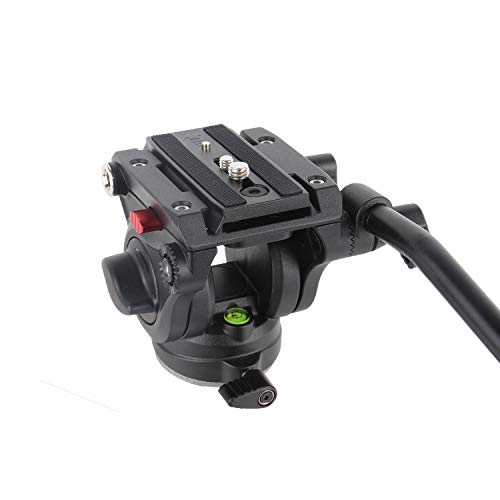
Fluid heads are the relevant design when smooth panning and tilting are central. The NEEWER GM001 includes counterbalanced tilt, a scaled pan base, and a removable handle that can be positioned from either side. The K&F CONCEPT FH-03 is a smaller fluid design with a removable telescopic handle and a broad plus-or-minus 90-degree tilt range. The Avella V501 adds a two-section pan bar, fluid damping, and a -50 to 90-degree tilt range.
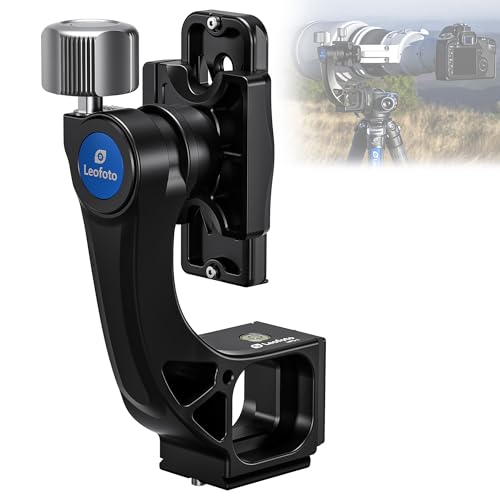
Gimbal heads are aimed at camera-and-telephoto combinations. The Leofoto MPG-02, K&F CONCEPT 20kg Gimbal Tripod Head, and NEEWER GM102 each document high load capacities and movement through a rotating base or arm. The Leofoto model adds dual Arca-type bases, large knobs, scales, and a spirit level. The GM102 combines a swing arm, three-axis adjustment, and a hollowed design. These are specialized choices rather than general-purpose compact heads.
Match capacity to the complete setup
Do not compare a head’s capacity only with the camera body. Include the lens, cage, microphone, monitor, telescope, or other equipment that will remain attached during positioning. The supplied listings range from the FH-03 and V501 at 5kg to the ARTCISE KB55 at 40kg. The NEEWER GM102 lists 15kg, the FANAUE IN-40T lists 20kg, and the Leofoto MPG-02 lists 22kg.
A higher listed capacity can provide more equipment headroom, but it can also accompany a larger structure. The ARTCISE KB55 lists a 1.3-pound weight, whereas the K&F CONCEPT gimbal lists 3.15 pounds and the Leofoto listing does not provide a product weight. For a travel kit, the FH-03 lists 484g, the GM001 lists 0.69kg, and the IN-40T lists 430g. Use the supplied weight data as a way to compare carrying demands, not as a prediction of field performance.
Check the mounting system
The base connection is commonly a 3/8-inch thread in this selection. Several heads also include a 1/4-inch adapter or multiple top connection options. Confirm that the head matches the tripod, monopod, slider, or dolly you intend to use.
Quick-release compatibility is equally important. Arca-type or Arca-Swiss plates appear across the TH15, GM102, FH-03, MPG-02, and IN-40T listings. The GM001 uses a safety-pin quick-release system, and the V501 listing identifies compatibility with Manfrotto 501HDV release plates. A matching plate standard can reduce the need to change plates between supports, but the supplied evidence does not establish universal compatibility beyond the systems named in each listing.
Consider movement range and controls
Look for the specific range rather than relying on a general label. The TH15 documents both frontal and lateral tilt ranges as well as 360-degree panning. The GM001 documents -70 to 90-degree counterbalanced tilt, while the V501 documents -50 to 90 degrees. Ball heads in this selection provide 360-degree rotation and tilt through drop notches or U-shaped grooves.
Control details can affect how a head fits your workflow. Bubble levels appear on the TH15, GM102, ARTCISE KB55, and FANAUE IN-40T. Scales appear on the TH15, GM102, and K&F CONCEPT gimbal. Detachable or reversible handles are documented on the GM001, FH-03, and V501. These features are worth prioritizing when level alignment, repeatable positioning, or left- and right-handed operation is part of your setup.
Final recommendation
FANAUE IN-40T Low-Profile Ball Head ranks first overall in this specification-based comparison under the published weighted criteria.
The NEEWER TH15 is the first overall specification-based choice among these best photography tripod heads because it combines three-axis geared precision, a 6kg capacity, broad tilt and pan ranges, an Arca-type plate, and two bubble levels. For telephoto work, the Leofoto MPG-02 and NEEWER GM102 document the most relevant gimbal features. The K&F CONCEPT FH-03 and NEEWER GM001 are the more compact fluid-head directions, while the ARTCISE KB55 and FANAUE IN-40T cover high-capacity ball-head use. Together, these are top photography tripod heads for distinct documented shooting requirements rather than interchangeable designs.
Frequently Asked Questions
What should I look for in the best photography tripod heads?
Begin with the design type, then compare the complete equipment load, movement range, mounting thread, quick-release standard, adjustment controls, and listed weight. Geared heads suit fine composition, fluid heads suit controlled pan and tilt, gimbal heads suit telephoto systems, and ball heads suit flexible still-camera positioning.
Are geared heads suitable for macro and product photography?
The supplied evidence supports that use for both the NEEWER TH15 and Cayer HD3. Each documents three-axis geared control and fine adjustment, while the TH15 specifically lists macro and product photography applications. The HD3 adds a short center column for ultra-low shooting positions.
Which selected head is designed for long telephoto lenses?
The Leofoto MPG-02, K&F CONCEPT 20kg Gimbal Tripod Head, and NEEWER GM102 are the clearest documented matches. Their listings identify gimbal designs, high load capacities, and use with telephoto or outdoor camera systems. The Leofoto and GM102 also list control details such as large knobs, scales, or a spirit level.
Do fluid heads work for still photography?
The selected fluid-head listings document still-photography uses alongside video or panoramic movement. The K&F CONCEPT FH-03 lists photography and panorama functions, while the NEEWER GM001 and Avella V501 document broad tilt and pan ranges. Their fluid damping and handle-based designs are most directly suited to controlled pan-and-tilt movement.
Why does quick-release compatibility matter?
A matching plate standard can make it easier to move a camera between compatible supports without changing the camera attachment. Arca-type or Arca-Swiss systems are documented on several selected heads, while the Avella V501 listing identifies Manfrotto 501HDV compatibility. Confirm the exact plate system before combining equipment.