Buying Guide
The best portable monopods are defined by more than maximum height. A useful comparison needs to balance folded length, carry weight, camera support, mounting hardware, surface contact, and the way the monopod is adjusted. The products above are ranked from supplied public listing information. No hands-on testing, customer sentiment, or marketplace popularity data was used.
Start with the way you shoot
A basic single-leg monopod is generally the most travel-friendly format. The ULANZI TB12, NEEWER TP41, K&F CONCEPT model, and Manbily E-222 all document compact folded lengths, lightweight construction, and adjustable sections. These designs are appropriate when the monopod mainly needs to provide a point of support while you keep control of the camera.
A footed monopod is a different design. The SIRUI AM-MDP02, NEEWER Professional model, IFOOTAGE Cobra 3, COMAN M1mini-A32, and Manbily A-222 include bases or feet that can add support and, depending on the model, allow swiveling or tilting. These features may be useful for video, low-angle work, or uneven ground. They do not turn every monopod into a hands-free tripod. The Manbily A-222 listing specifically says its base is for increased stability and is not recommended as a tripod.
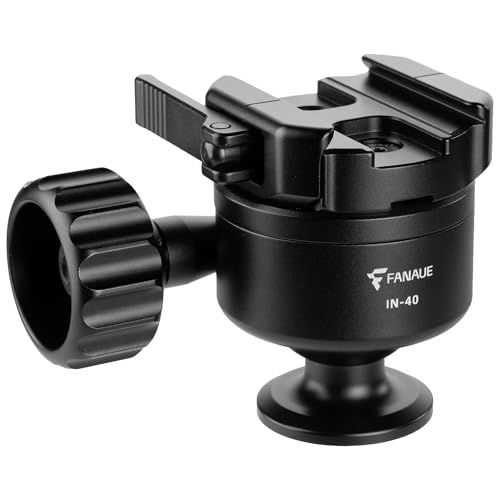
For video movement, look closely at the head rather than only the pole. SIRUI and NEEWER document fluid heads with pan and tilt ranges. The IFOOTAGE Cobra 3 uses a pedal-controlled base and a quick-release system, while the COMAN M1mini-A32 provides a detachable ball head. Those features address different needs: fluid heads are aimed at controlled camera movement, whereas a ball head is more focused on quick positioning and orientation.
Compare folded length and listed weight
Folded length matters when the support must fit in a backpack, suitcase, or camera bag. Among the selected products, the ULANZI TB12 folds to 16.9 inches, the K&F CONCEPT and NEEWER TP41 fold to 17 inches and 17.3 inches, and the INNOREL RM325C folds to 18.5 inches. These measurements are useful for packing, but actual bag fit also depends on the head, feet, and accessories attached.
Listed weight creates a similar trade-off. The ULANZI TB12, K&F CONCEPT, NEEWER TP41, and INNOREL RM325C are all listed below the current price. By contrast, footed video models carry more hardware: the SIRUI is listed at the current price, the NEEWER Professional model at the current price, and the IFOOTAGE at the current price. A heavier design may provide more functions, but it can be less convenient to carry between locations.
Carbon fiber appears in the INNOREL RM325C, COMAN M1mini-A32, and IFOOTAGE Cobra 3. Aluminum appears in the ULANZI, K&F CONCEPT, SIRUI, NEEWER, and Manbily selections. The supplied listings establish the material but do not provide independent durability testing, so material alone should not be treated as proof of real-world performance.
Match load support to the camera setup
Check the stated maximum load against the complete setup, including the camera, lens, head, microphone, monitor, or other attached equipment. The COMAN listing states 15kg, the INNOREL lists 12kg, and the IFOOTAGE lists the current price. K&F CONCEPT documents 10kg, while the ULANZI TB12 lists 5kg. These figures are product claims from the supplied listings, not test results.
A higher load number does not automatically make a monopod the better travel choice. The camera connection, section diameter, base design, and head compatibility also matter. The INNOREL has interchangeable 1/4-inch and 3/8-inch screws. The COMAN provides a dual-purpose adapter stud, and the IFOOTAGE documents an auto-convertible screw. Those details can reduce compatibility concerns when switching between cameras, heads, and video accessories.
Consider the adjustment system
Section count and lock style affect how the height is set. The ULANZI and Manbily E-222 use five sections, the K&F CONCEPT uses five sections, and the Manbily A-222 uses five sections. More sections can help reduce folded length, but the listing data alone does not establish which system adjusts faster or feels more rigid.
The COMAN M1mini-A32 stands apart with a one-button lifting system. The IFOOTAGE uses an ergonomic locking buckle, while the K&F CONCEPT documents a plate-lock mechanism. NEEWER TP41 lists flip locks and four height positions. These are meaningful specification differences for shoppers who prioritize setup style, but they should not be presented as measured speed or handling results.
Rubber feet are suited to hard surfaces in the supplied descriptions, while metal spikes are described for grass, sand, dirt, or other soft ground. The K&F CONCEPT, NEEWER TP41, INNOREL, Manbily A-222, and several other selected models document both types. This is a practical feature for outdoor photographers who move between pavement and natural terrain.
Base movement is more specialized. SIRUI documents 360-degree swiveling and 36-degree tilting, NEEWER documents 360-degree swivel and 45-degree tilt, and COMAN documents a 360-degree rotating and 45-degree tilting adjustable base. IFOOTAGE documents a pedal-controlled base and low-angle tripod mode. These features may increase positioning options, but the listings do not support claims that any model will remain upright without user control in every environment.
Check included accessories and compatibility
The supplied listings identify several useful inclusions: the ULANZI has a wrist strap and one-year warranty, the Manbily E-222 includes a carry bag, the INNOREL includes an Allen key and wrist strap, and the NEEWER TP41 includes a wrist strap and rubber handgrip. SIRUI, NEEWER Professional, and IFOOTAGE document quick-release plates or systems. COMAN documents an Arca quick-release plate and a built-in safety latch.
Before choosing, confirm that the mounting thread matches the camera or head. A 1/4-inch screw is common for cameras, while a 3/8-inch interface can be useful for larger heads and video equipment. Listings may describe broad compatibility, but the final setup should still be checked against the exact device and accessory combination.
Final Recommendation
COMAN M1mini-A32 Carbon Fiber Monopod ranks first overall in this specification-based comparison under the published weighted criteria.
COMAN M1mini-A32 is the highest-scoring returned product and the first overall specification-based choice among these best portable monopods. Its one-button adjustment, detachable ball head, adjustable base, multiple modes, and stated 15kg capacity give it the broadest documented feature set in this comparison.
For video specialists, the IFOOTAGE Cobra 3 and SIRUI AM-MDP02 are the more focused alternatives. IFOOTAGE adds pedal control and a 17.6-pound stated load, while SIRUI supplies a fluid head and a 74-inch maximum height. The NEEWER Professional model is another fluid-head option with a 70.5-inch reach.
For a lighter travel kit, consider the INNOREL RM325C, K&F CONCEPT, NEEWER TP41, ULANZI TB12, or Manbily E-222. INNOREL is the high-capacity carbon-fiber option; K&F CONCEPT emphasizes dual-surface feet; NEEWER TP41 and ULANZI emphasize compact carry; and Manbily E-222 adds a walking-stick role. The Manbily A-222 is a sensible choice when a detachable base and interchangeable feet matter more than minimum weight. Together, these are the top portable monopods for different documented combinations of portability, camera support, terrain adaptability, and shooting control.
Frequently Asked Questions
How do I choose among the best portable monopods for travel?
Start with folded length and listed weight, then confirm the stated load capacity and mounting thread. The ULANZI TB12, K&F CONCEPT, NEEWER TP41, and INNOREL RM325C all document short folded lengths and low listed weights. If you need feet, a head, or a larger base, expect a heavier or longer package.
The supplied evidence does not support a general hands-free guarantee. Footed products such as the COMAN M1mini-A32, SIRUI AM-MDP02, NEEWER Professional, IFOOTAGE Cobra 3, and Manbily A-222 document added base support, swiveling, or tilting. However, the Manbily listing specifically says its base is not recommended for use as a tripod. Treat these designs as added support and follow the manufacturer’s guidance.
Do I need a fluid head on a portable monopod?
A fluid head is most relevant when controlled panning and tilting are important. SIRUI and NEEWER Professional list fluid heads with documented movement ranges. For still photography or quick camera repositioning, the ball head on COMAN M1mini-A32 or a simple mounting platform may be sufficient based on the supplied features.
What load capacity should a camera monopod have?
Choose a documented capacity above the weight of the complete camera setup, not just the camera body. Include the lens, head, microphone, monitor, and other attached equipment. The selected products list capacities from 5kg on the ULANZI TB12 to 15kg on COMAN M1mini-A32, but these are listing specifications rather than independently verified measurements.
Are aluminum or carbon-fiber monopods better for carrying?
The material label alone does not answer the question. Carbon-fiber models in this selection include INNOREL, COMAN, and IFOOTAGE, while many others use aluminum. Compare the actual listed weight, folded length, maximum height, capacity, feet, and head. The INNOREL, for example, combines carbon fiber with a listed 1.1-pound weight and 18.5-inch folded length, while the aluminum ULANZI lists the current price and a 16.9-inch folded length.