Buying Guide
Choosing among the best remote programmable thermostats starts with the heating and cooling equipment already installed. Remote access is useful only when the thermostat can control the correct system safely, so treat compatibility and wiring as the first filters rather than afterthoughts. The products in this comparison include general 24-volt HVAC models, high-voltage electric-heating controls, and a floor-heating specialist.
Confirm the HVAC system and voltage
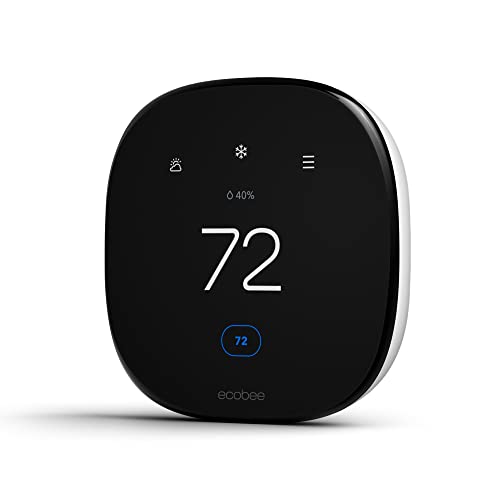
Most general smart thermostats here are intended for 24-volt equipment. The ecobee Smart Thermostat Enhanced lists conventional gas, oil, and electric systems, heat pumps, dual-fuel equipment, forced air, and boilers. The ecobee Smart Thermostat Essential covers a similar range, although its listing states compatibility with 85% of systems rather than the Enhanced model’s 90% figure. Honeywell Home’s RTH9585WF also lists forced air, hot water, steam, and heat-pump applications.
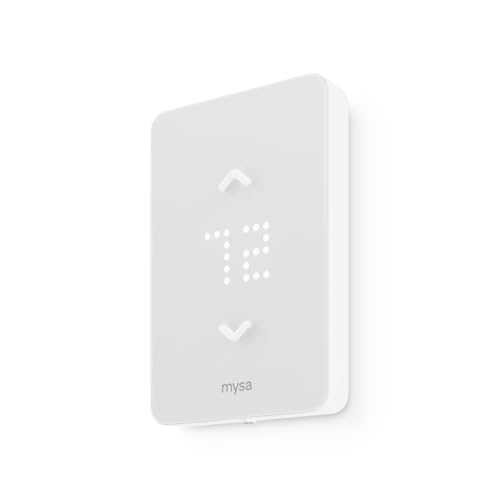
Do not assume that every thermostat works with every heating system. The Mysa Smart Thermostat LITE is for 120V, 208V, and 240V electric baseboard, fan-forced, wall, and convector heaters. The SunTouch SunStat CommandPlus is designed around electric floor heating and includes floor-sensing controls. Those specialized designs are useful precisely because ordinary 24-volt thermostats are not universal replacements for high-voltage or radiant systems.
Check the C-wire and installation requirements
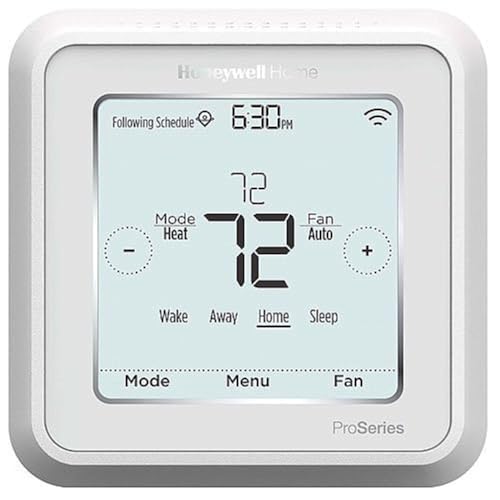
A C-wire, or common wire, supplies continuous power to many connected thermostats. Honeywell Home RTH9585WF, Honeywell Home T5, Sensi Touch, Honeywell Home Lyric T6 Pro, and the vine thermostat all state C-wire requirements or adapter requirements.
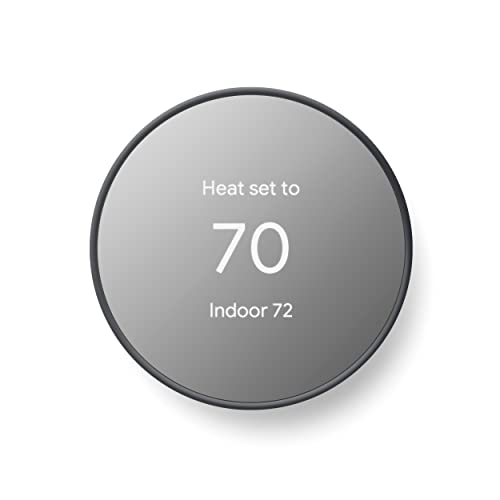
The Google Nest Thermostat is more flexible in some homes and is designed to work without a C-wire in many installations. However, its listing specifically warns that heating-only, cooling-only, zone-controlled, and some heat-pump systems may need a C-wire or compatible power accessory. The ecobee Smart Thermostat Essential can use a separately sold Power Extender Kit, while the Enhanced model includes one. Verify the terminals, system type, and accessory needs before ordering.
Compare programming styles
Seven-day programming is useful when weekdays and weekends follow different routines. The Honeywell Home RTH9585WF, Honeywell Home T5, Sensi Touch, vine, Mysa, and SunTouch listings all document seven-day scheduling. The vine model goes further by listing eight periods per day, while the SunTouch adds an away feature for its floor-heating application.
If your schedule changes with your location, look at geofencing or automatic home-and-away functions. The Honeywell Home T5 and Honeywell Home Lyric T6 Pro document geofencing, and the T5 also lists automatic home-and-away behavior. Google Nest uses app-created schedules and turns itself down when you leave. These approaches can reduce manual adjustments, but they depend on app setup and compatible system operation.
The Lyric T6 Pro is a good fit for households that want several conventional schedule formats. It documents seven-day, 5-2, 5-1-1, one-week, and non-programmable modes. That variety can be more useful than a single advanced automation feature if different household members prefer different routines.
Evaluate remote control and smart-home support
Remote control generally comes through a manufacturer app, with some models also supporting voice platforms. Google Nest works with Google Home and Matter-certified voice assistants. ecobee Essential and Enhanced list Apple HomeKit, Google Assistant, and Alexa. Mysa also lists all three major platforms, while Honeywell Home Lyric T6 Pro supports Apple HomeKit and Alexa.
The vine thermostat lists both the Vine Thermostat App and Smart Life App, plus Alexa and Google Home. The Honeywell Home T5 and RTH9585WF focus on app-based control and scheduling. Sensi Touch uses the Sensi mobile app for remote temperature changes and provides reports and alerts. Before choosing, consider whether the thermostat’s platform fits the smart-home system you already use.
ENERGY STAR certification appears in the listings for Honeywell Home RTH9585WF, Honeywell Home T5, Sensi Touch, Google Nest, ecobee Essential, and the vine thermostat. Several models also document energy reporting or monitoring. Honeywell Home RTH9585WF provides monthly energy reports, the T5 provides energy tracking, and Sensi Touch provides usage reports and equipment alerts.
Maintenance reminders can be useful for routine HVAC care. Google Nest lists HVAC monitoring alerts and maintenance reminders. Sensi Touch lists equipment alerts and filter-replacement reminders, while vine lists temperature alerts, filter reminders, and child lock. These are documented management features, not guarantees of lower utility bills or improved equipment life.
Match the display to daily use
A clear local interface matters when someone needs to adjust the temperature without opening an app. Honeywell Home RTH9585WF uses a bright touchscreen, Sensi Touch has a large color display, and SunTouch offers a 4.3-inch capacitive touchscreen.
For room-level comfort, ecobee Enhanced supports SmartSensors and includes occupancy detection through built-in radar. ecobee Essential supports SmartSensor accessories sold separately. Mysa’s design is more room-oriented because it can provide per-room runtime reports when used in suitable electric-heating installations.
Final Recommendation
ecobee Smart Thermostat Enhanced ranks first overall in this specification-based comparison under the published weighted criteria.
The ecobee Smart Thermostat Enhanced is the highest-scoring returned product and the first overall specification-based choice among these best remote programmable thermostats. Its combination of documented HVAC coverage, occupancy detection, schedule learning, humidity adjustments, remote app control, smart-home compatibility, and included Power Extender Kit gives it the broadest feature balance in this comparison.
The SunTouch SunStat CommandPlus is the better match for compatible electric floor heating because it adds floor and air sensing, floor limits, SmartStart, and remote access. Mysa Smart Thermostat LITE is the more appropriate specialist for electric baseboard and other listed high-voltage heaters. For conventional systems, Honeywell Home RTH9585WF, Honeywell Home T5, Sensi Touch, and vine offer different combinations of display design, scheduling, geofencing, alerts, and app control.
Among the top remote programmable thermostats, Google Nest is especially appealing for Google Home users and homes that may not have a C-wire, while ecobee Essential supplies many core smart features in a compact design. The Lyric T6 Pro remains useful when multiple schedule formats and geofencing matter more than extensive energy reporting. Regardless of rank, confirm system voltage, stages, heat-pump accessories, and wiring before installation.
Frequently Asked Questions
What should I check before buying the best remote programmable thermostats?
Check whether your system is 24-volt, high-voltage electric, radiant floor heating, or another design. Then verify stages, heat-pump requirements, C-wire availability, and the manufacturer’s compatibility guidance. A thermostat such as Mysa LITE or SunTouch CommandPlus is intended for a specialized heating type, while ecobee, Honeywell Home, Google Nest, Sensi, and vine target documented 24-volt applications.
Can I control these thermostats away from home?
The selected models document remote control through a phone app, tablet, laptop, or compatible smart-home platform. Google Nest lists control from a phone, laptop, or tablet. ecobee, Sensi, Honeywell Home, vine, Mysa, and SunTouch also document app-based remote access. Internet, Wi-Fi, account, and system-compatibility requirements still apply.
Which selected thermostat works with electric baseboard heat?
Mysa Smart Thermostat LITE is the clearest match because its listing specifically supports 120V, 208V, and 240V electric baseboard, fan-forced, wall, and convector heaters. The Honeywell Home RTH9585WF explicitly does not work with 120-240V electric baseboard heat. Always compare the heater wiring with the thermostat’s installation requirements.
Do all remote programmable thermostats require a C-wire?
No. Google Nest states that it is designed to work without a C-wire in most homes, though some systems need one or a compatible power accessory. Several other selected models require a C-wire or adapter. ecobee Enhanced includes a Power Extender Kit, whereas ecobee Essential lists its kit as sold separately. Verify your wiring before purchase.
Are the rankings based on hands-on testing or customer opinions?
No. This is a specification-based comparison using supplied public listing data. The rankings consider documented HVAC compatibility, remote-control support, programming, installation information, interface details, and system-management tools. They do not represent hands-on test results or a summary of customer sentiment.