Buying Guide
Choosing the best ripping circular saw blades starts with matching the blade to the saw and the cut. Ripping follows the grain, so the blade normally needs fewer teeth than a fine-finish blade. In this comparison, 24-tooth designs are the clearest dedicated ripping choices, while 40-tooth options offer a compromise between speed and a cleaner surface. Sets that include 24T, 40T, and 60T blades can cover more tasks, but they are not automatically better for a user who only needs fast longitudinal cuts.
Match the diameter and arbor
Diameter is a hard compatibility requirement. The selected products cover 6-1/2-inch, 7-1/4-inch, and 8-1/4-inch formats. A 6-1/2-inch blade belongs on a saw designed for that size, while an 8-1/4-inch model requires a compatible larger saw. The common 7-1/4-inch format appears most often in the supplied listings, but the saw’s manual remains the deciding authority.
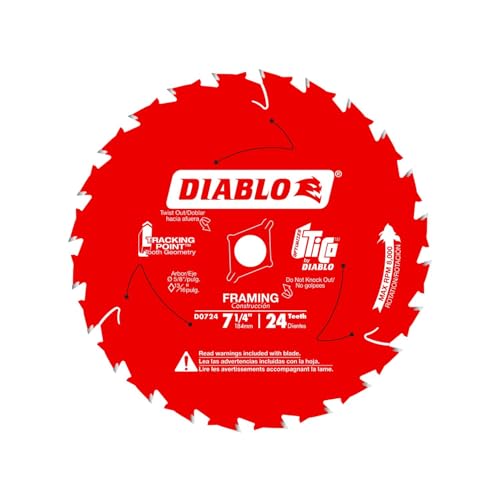
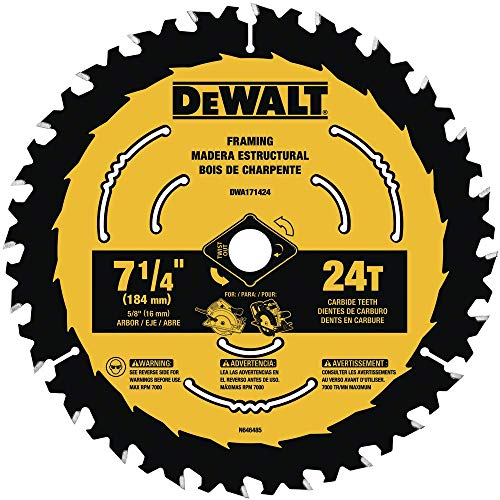
Arbor size matters just as much. Several products specify a 5/8-inch arbor, including the Diablo D0724A, DEWALT DWA171424, SawWorks SW-Wd6.5-24ATB, and Revvstark set. Do not assume that a blade fits simply because its diameter matches; confirm the arbor opening, guard clearance, and permitted blade type.
Use tooth count as a cutting-speed choice
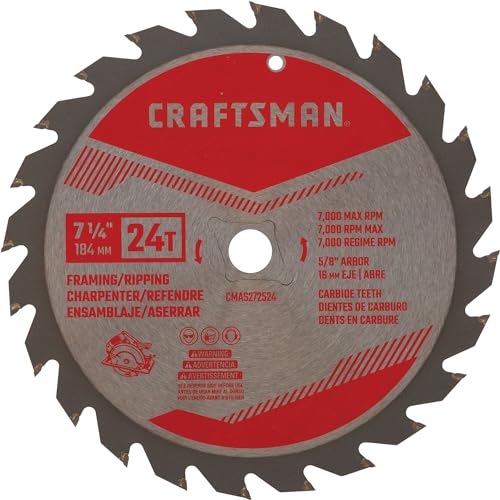
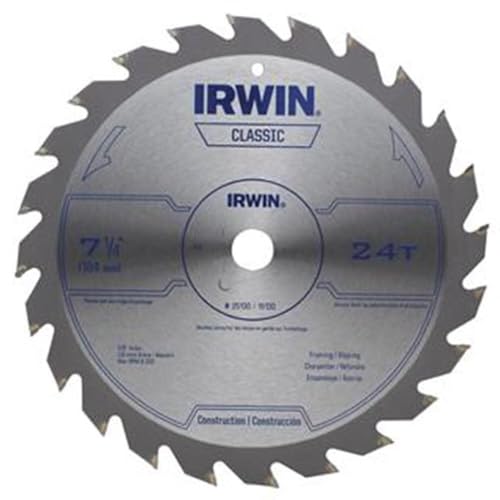
A lower tooth count generally leaves larger gullets to clear material during a rip. The 24-tooth blades in this guide are therefore the most focused choices for framing and ripping. Diablo D0724A, DEWALT DWA171424, IRWIN MARATHON 24030, CRAFTSMAN CMAS272524, and IRWIN Classic 25130 all document 24-tooth configurations and clear framing or ripping applications.
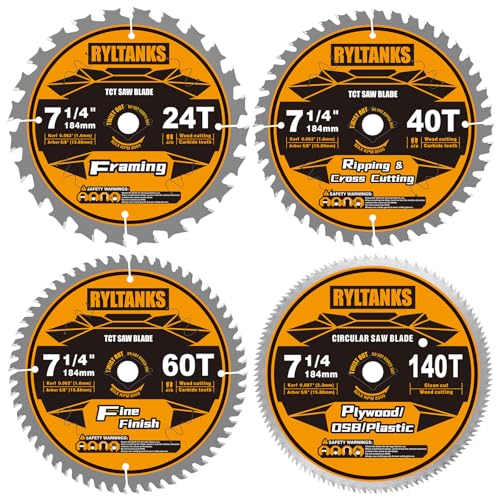
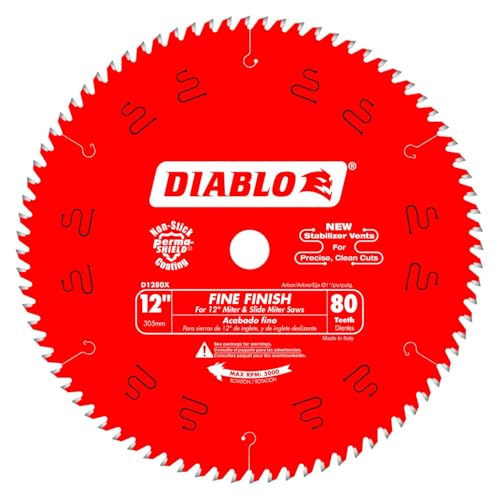
A 40-tooth blade can be useful when one blade must handle both ripping and crosscutting. The SawWorks 6-1/2-inch 40-tooth option and the multi-blade sets document this middle-ground role. Higher tooth counts, such as the 60T and 140T blades in the Revvstark and Ryltanks sets, are better treated as separate finishing or panel-cutting choices rather than substitutes for a dedicated ripper.
Consider kerf and motor load
Kerf is the width of the cut made by the blade. A thin kerf removes less material per pass and may reduce the amount of work required from a saw, but the exact effect depends on the tool, material, feed rate, and blade design. The Diablo D0724A and SawWorks SW-Wd6.5-24ATB provide useful thin-kerf documentation. The Revvstark set also describes a super-thin laser-cut kerf, while the Ryltanks listings provide different kerf figures for different blade configurations.
Do not compare a thin-kerf label without checking the rest of the specification. Plate thickness, tooth geometry, arbor fit, and the saw’s recommended blade range all matter. A thin blade is not a universal performance guarantee, and the supplied evidence does not support claims about actual cut speed or battery runtime beyond the manufacturers’ stated design descriptions.
Look for carbide and body features
Carbide teeth are widely documented among the selected options. DEWALT lists high-density tungsten carbide, Diablo lists TiCo or high-density carbide, IRWIN MARATHON lists construction-grade carbide, and SawWorks specifies tungsten carbide tips. These descriptions support durability-oriented comparisons, but they do not establish a measured service life.
Body features can help explain why designs differ. Diablo’s laser-cut stabilizer vents, IRWIN MARATHON’s heat vents and expansion slots, and Revvstark’s noise-reducing perforations and thermal expansion grooves are all documented design features. CRAFTSMAN and IRWIN Classic emphasize precision-ground teeth and corrosion-resistant coatings instead. Choose based on which information is important for your work, while remembering that listing specifications are not hands-on test results.
Match the material list to the project
Most selected blades are aimed at wood, but their documented ranges vary. DEWALT’s DWA171424 is listed for pressure-treated wood, 2X lumber, plywood, and hardwood. Diablo D0724A includes pressure-treated wood, plywood, hardwoods, and softwoods. SawWorks lists plywood, MDF, laminate, melamine, hardwood, and softwood. The multi-blade bundles expand coverage to OSB, panels, plastic, or vinyl siding.
Material coverage does not remove the need to check the saw and blade instructions. Embedded nails, laminated panels, and plastic can place different demands on a blade. The DEWALT options specifically document reinforced-shoulder or broad wood-cutting applications, while the bundle listings identify their higher-tooth blades for particular materials. Use the blade configuration intended for the material rather than treating every blade in a set as interchangeable.
Check maximum RPM and cutting setup
Where a maximum speed is supplied, it provides an important safety reference. SawWorks lists 9,000 RPM for its 6-1/2-inch 24-tooth blade, Revvstark lists 8,000 RPM, and Ryltanks lists 8,000 or 9,000 RPM depending on the size and configuration. The DEWALT, Diablo, CRAFTSMAN, and IRWIN listings supplied here do not provide a comparable maximum RPM figure.
The blade’s maximum rating should meet or exceed the saw’s operating speed, and the diameter and arbor must be correct. Install the blade according to the saw manufacturer’s instructions, inspect it before use, and stop if the blade or machine shows an unsafe condition. The buying decision should be based on documented fit and design, not an assumption that one feature guarantees a particular result.
Final Recommendation
Diablo D0724A 7-1/4-Inch 24-Tooth Framing Blade ranks first overall in this specification-based comparison under the published weighted criteria.
The Diablo D0724A is the first overall specification-based choice among the best ripping circular saw blades in this comparison. Its 7-1/4-inch format, 24-tooth profile, thin kerf, tracking design, carbide construction, stabilizer vents, and coating give it the most complete documented package for general ripping and framing.
Choose the DEWALT DWA171424 if a reinforced shoulder and nail-embedded-wood application are priorities. The IRWIN MARATHON 24030 is another focused 24-tooth option with clear plate, carbide, coating, and vent details. For a smaller saw, SawWorks SW-Wd6.5-24ATB offers unusually specific kerf and speed information.
The top ripping circular saw blades are not all dedicated single-purpose products. Revvstark and Ryltanks are better suited to buyers who want several tooth counts for different operations, while CRAFTSMAN CMAS272524 and IRWIN Classic 25130 keep the design simpler. Confirm diameter, arbor, RPM, and intended material before ordering; those checks matter more than a generic claim of performance.
Frequently Asked Questions
Among the best ripping circular saw blades, what tooth count is best for ripping wood?
A 24-tooth blade is the clearest starting point for fast ripping and framing in this comparison. The Diablo D0724A, DEWALT DWA171424, IRWIN MARATHON 24030, and CRAFTSMAN CMAS272524 all use 24 teeth and document framing or ripping applications. A 40-tooth blade may be more suitable when you also want a cleaner crosscut surface, but tooth count alone does not determine the result.
Are thin-kerf blades suitable for cordless circular saws?
They may be suitable when the blade diameter, arbor, and RPM rating match the saw. Diablo D0724A and SawWorks SW-Wd6.5-24ATB document thin-kerf designs, and the SawWorks listing specifically discusses handheld circular saw compatibility. The saw manufacturer’s instructions should take priority because compatibility and permitted blade dimensions vary.
Should I buy a single ripping blade or a set?
Buy a single 24-tooth blade when your work is mainly framing or ripping and you already know the correct size. A set such as Revvstark’s 24T/40T/60T selection is more useful when the same saw will perform ripping, crosscutting, and finishing. Ryltanks adds a 140-tooth option for listed panel, plastic, and siding applications, but unused blade types can make a set less practical for a narrowly defined job.
Can a 7-1/4-inch blade fit an 8-1/4-inch circular saw?
Do not assume so. Diameter, guard clearance, arbor fit, and the saw’s approved blade range all need to be checked. The DEWALT DWA181424 is specifically an 8-1/4-inch blade, while the DEWALT DWA171424 is 7-1/4-inch. These sizes should be treated as separate formats unless the tool manufacturer expressly permits the substitution.
What should I check before using a ripping blade on treated lumber?
Check that the blade listing identifies the material and that the blade is compatible with your saw. DEWALT DWA171424, Diablo D0724A, and IRWIN MARATHON 24030 document pressure-treated-wood applications or related coating features. Inspect the blade, follow the saw’s operating instructions, and use the correct tooth configuration for the work rather than relying on a general-purpose label.