Buying Guide
Choosing among the best thin-kerf circular saw blades starts with the saw, not the tooth count. A blade must match the tool’s diameter, arbor, and operating speed before its cutting profile becomes relevant. The selected products cover 6-1/2-inch, 7-1/4-inch, and 8.25-inch formats, so measure or check the saw specification rather than relying on a visual fit.
Match the diameter and arbor
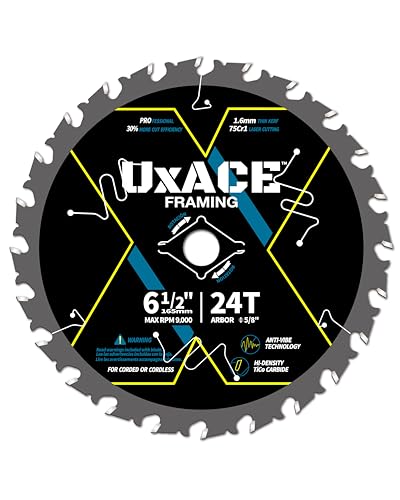
The 6-1/2-inch options include the WEN BL6556 6.5-Inch 56T Track Saw Blade, CRALY 6-1/2-Inch 60T Thin-Kerf 2-Pack, FOXBC 6-1/2-Inch 40T Fine Finish, UXACE 6-1/2-Inch 24T Thin-Kerf Blade, CMT 273.165.56H ITK Plus 6-1/2-Inch, and Revvstark 6-1/2-Inch 24T and 60T Set. Several list a 5/8-inch arbor, while the CMT 273.165.56H lists a 20 mm bore. That difference matters: confirm the arbor measurement and any permitted insert or knockout arrangement before ordering.
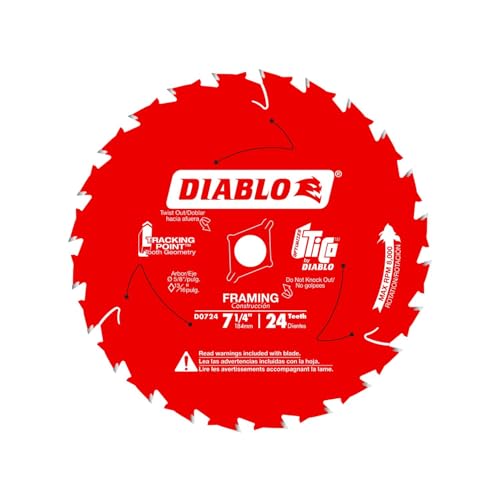
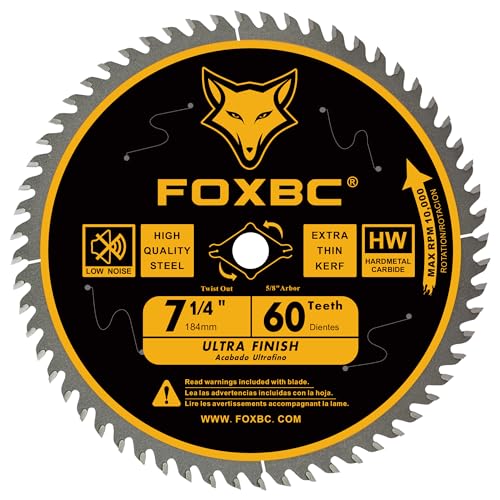
The 7-1/4-inch group includes the CMT P07060 7-1/4-Inch 60T ITK Plus and Diablo D0724A 7-1/4-Inch 24T Framing Blade. The FOXBC 7-1/4-Inch 60T Ultra Fine Finish also lists a 5/8-inch arbor and diamond knockout. The WEN BL0860 8.25-Inch 60T Blade is intended for compatible 8.25-inch jobsite and table saws, so it belongs to a different size class.
Choose teeth for the material and cut
Tooth count is a practical starting point. The Diablo D0724A and UXACE blade use 24-tooth configurations for framing and general wood-composite work. These profiles are aimed at pressure-treated wood, 2X lumber, plywood, MDF, OSB, and related materials. They prioritize a faster-cutting application profile over the finest edge described in the listings.
The FOXBC 6-1/2-Inch 40T Fine Finish sits between coarse framing and high-tooth-count finish blades. Its listed materials include softwood, hardwood, plywood, MDF, OSB, and laminated wood. That broad coverage makes it a reasonable general woodworking profile when one blade needs to handle varied stock.
For finish-oriented work, look at the 56- and 60-tooth choices. The CMT P07060, FOXBC 7-1/4-Inch 60T Ultra Fine Finish, CRALY 6-1/2-Inch 60T Thin-Kerf 2-Pack, and WEN BL0860 all use higher tooth counts and are described for smooth, fine, or finish cutting. The CMT P07060 is specifically positioned for melamine, wood, and plywood crosscuts, while the FOXBC 7-1/4-inch model names oak, melamine, veneer plywood, and delicate molding.
The Revvstark set is different because it supplies both 24T and 60T profiles. That arrangement can make sense when a project includes rougher cuts and finish work, but it does not eliminate the need to choose the correct blade for each task.
Consider kerf and power demands
A thin kerf removes a narrower strip of material than a thicker kerf, and the supplied listings commonly connect that design with reduced material waste or cutting resistance. The CMT P07060 lists a 0.069-inch kerf, the FOXBC 6-1/2-Inch 40T lists 0.059 inch, and the FOXBC 7-1/4-Inch 60T lists 0.063 inch. The WEN BL6556, CRALY, and UXACE list 1.5 or 1.6 mm measurements, while the WEN BL0860 lists 2.0 mm.
A narrower kerf may be especially relevant to cordless tools because less material is removed per pass. However, the blade still needs to be appropriate for the saw and stock. Kerf alone does not determine finish quality, tooth durability, or cutting speed. Treat listed runtime or power-saving claims as manufacturer-provided specifications rather than independent test results.
Check stability and surface-control features
Several selected blades document features intended to manage heat, vibration, or pitch. The CMT P07060 and Diablo D0724A list coatings, while the CRALY blade lists Black Ice anti-stick protection and a laser-cut expansion slot. FOXBC models use laser-cut stabilizer vents, and the Revvstark set lists noise-reducing perforations and thermal expansion grooves.
These features are useful comparison points, but the evidence does not establish a universal performance ranking for them. A coating may be more relevant when cutting resinous or laminated material, whereas stabilizer vents or expansion features may matter to shoppers prioritizing the blade’s stated stability design.
Verify speed and machine type
Never use a blade above the saw or blade’s rated speed. Compare the blade rating with the tool’s no-load speed and follow the saw manufacturer’s instructions.
Machine type also deserves attention. The WEN BL6556 is described for 6.5-inch track saws, while the CMT P07060 is listed for portable and cordless circular saws. The CMT 273.165.56H includes miter, table, portable, and cordless machines. Those descriptions are not interchangeable; confirm that the intended blade guard, arbor, and saw format accept the product.
Final Recommendation
CMT P07060 7-1/4-Inch 60T ITK Plus ranks first overall in this specification-based comparison under the published weighted criteria.
CMT P07060 7-1/4-Inch 60T ITK Plus is the highest-scoring returned product and the first overall specification-based choice. Its documented kerf, tooth geometry, finish applications, bore, and coating provide the clearest all-around specification case for smooth crosscuts in plywood, wood, and melamine.
For framing, the Diablo D0724A 7-1/4-Inch 24T Framing Blade is the more targeted pick because its listing names 2X lumber, treated wood, plywood, and remodeling work. For a compact general-purpose choice, the FOXBC 6-1/2-Inch 40T Fine Finish combines a 1.5 mm kerf with broad material coverage. For fine molding and veneer work, the FOXBC 7-1/4-Inch 60T Ultra Fine Finish is more specifically aligned with the stated application.
The top thin-kerf circular saw blades are not identical substitutes. Select the diameter and arbor first, then choose the tooth profile and coating features that match the stock and finish required. The best thin-kerf circular saw blades in this comparison are specification-based recommendations, not hands-on test winners.
Frequently Asked Questions
What does thin kerf mean on a circular saw blade?
Thin kerf describes a blade designed to remove a relatively narrow strip of material. The supplied listings associate thin-kerf designs with reduced material waste or cutting resistance. Exact kerf values differ, such as 0.059 inch for the FOXBC 6-1/2-Inch 40T Fine Finish and 0.069 inch for the CMT P07060 7-1/4-Inch 60T ITK Plus.
Is a 24-tooth or 60-tooth blade better?
Neither is universally better. The Diablo D0724A 7-1/4-Inch 24T Framing Blade and UXACE 6-1/2-Inch 24T Thin-Kerf Blade are aimed at framing and general wood-composite work. The CMT P07060, CRALY 6-1/2-Inch 60T Thin-Kerf 2-Pack, and WEN BL0860 8.25-Inch 60T Blade are oriented toward fine-finish cutting. Match tooth count to the desired balance between rough cutting and edge finish.
Can any 6-1/2-inch blade fit any 6-1/2-inch saw?
No. Diameter is only one compatibility check. Arbor size, blade guard clearance, saw format, and rated speed also matter. Most selected 6-1/2-inch products list a 5/8-inch arbor, but the CMT 273.165.56H ITK Plus 6-1/2-Inch lists a 20 mm bore. Check the saw and blade specifications together.
Are thin-kerf blades suitable for cordless circular saws?
Several selected products explicitly state compatibility with cordless saws, including the FOXBC 6-1/2-Inch 40T Fine Finish, CRALY 6-1/2-Inch 60T Thin-Kerf 2-Pack, UXACE 6-1/2-Inch 24T Thin-Kerf Blade, and CMT P07060 7-1/4-Inch 60T ITK Plus. Thin kerf may reduce the amount of material removed per pass, but the listing evidence does not replace tool-specific instructions or independent runtime testing.
What should I check before buying the best thin-kerf circular saw blades?
Confirm the blade diameter, arbor, maximum RPM, tooth count, and intended material. Then check whether the listing names your saw type. A 7-1/4-inch blade such as the CMT P07060 is not a substitute for an 8.25-inch blade such as the WEN BL0860, and a track-saw product such as the WEN BL6556 should be verified for the intended machine.