Buying Guide
The best stainless steel circular saw blades should be selected by fit first and tooth construction second. A blade can have an appropriate diameter but still be unsuitable if its arbor, maximum RPM, or intended saw type does not match the tool. The supplied listings span compact 6-1/2-inch blades, common 7-1/4-inch models, 8-inch and 10-inch formats, and a specialized 14-inch option.
Confirm the saw size and arbor
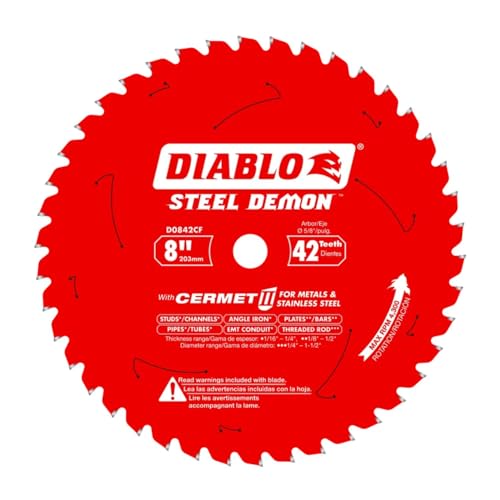
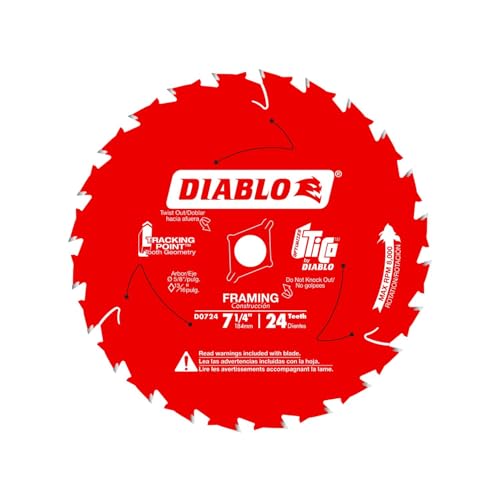
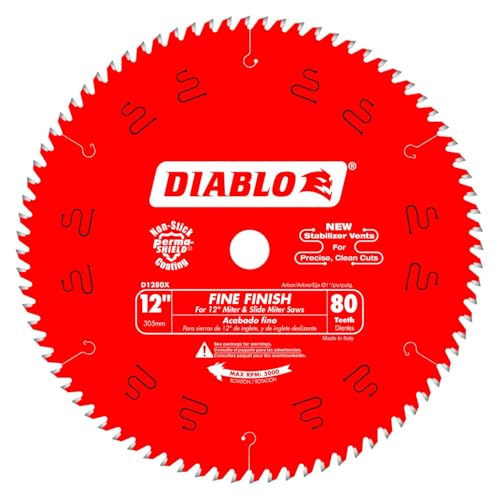
Start with the blade diameter specified by the saw manufacturer. The 6-1/2-inch FOXBC and KURSTOL products are compact choices, while the 7-1/4-inch FOXBC, HOJR, and Diablo models fit a more common metal-cutting format. The 8-inch FOXBC and Diablo options require a saw designed for that diameter. The 10-inch FOXBC is intended for a lower-speed machine, and the Xmnbl 14-inch blade uses a 1-inch center shaft.
Arbor details deserve equal attention. Several selected blades specify a 5/8-inch arbor. KURSTOL uses a 20mm arbor and includes a 15.87mm washer, while the 10-inch FOXBC uses a 1-inch arbor with a 5/8-inch bushing. Do not assume a reducer or knockout makes every blade compatible with every saw; compare the exact arbor arrangement and guard clearance before installation.
Match maximum RPM to the machine
A blade’s maximum RPM is a compatibility check, not a performance target. The 7-1/4-inch FOXBC and HOJR listings state 5,800 maximum RPM. The 6-1/2-inch FOXBC also lists 5,800 maximum RPM, while the 8-inch FOXBC specifies 4,300 RPM and the 10-inch model specifies 3,000 RPM. The 14-inch Xmnbl listing specifies 1,600 RPM. KURSTOL separately recommends no more than 3,000 RPM for solid rods and metal pipes.
These figures show why diameter alone is not enough. A larger blade commonly belongs on a lower-RPM metal-cutting saw, but the listing and tool manual should control the final decision. Never exceed either the saw’s or blade’s stated limit.
Evaluate tooth material and geometry
Cermet and carbide-tipped construction appears throughout this selection. FOXBC describes ceramic and metallic teeth, HOJR identifies ceramic-tipped teeth, Diablo uses Cermet II, and KURSTOL specifies tungsten-carbide teeth. These materials are presented in the listings as metal-cutting designs, but this comparison does not independently test durability or cutting speed.
Tooth count and geometry also differ. The selected 7-1/4-inch products range from 48 to 70 teeth. The 6-1/2-inch choices use 48 teeth, the 10-inch FOXBC uses 52 TCG teeth, and the 14-inch Xmnbl uses 90 TCG teeth. TCG or triple-chip geometry is documented on several models. Treat tooth count as a design specification rather than a guarantee of a particular finish or speed.
Consider kerf, heat, and vibration features
Kerf can help distinguish closely matched blades. The FOXBC 7-1/4-inch 48-tooth model lists a.075-inch kerf, the 6-1/2-inch model lists.07 inch, and the 10-inch model lists.0787 inch. HOJR lists a.075-inch kerf, while Xmnbl gives a.094-inch cutting width. These measurements may matter when planning clearance and tool load, but they should not be treated as a promise of faster cutting.
Several products document laser-cut stabilizer vents or grooves. HOJR also lists a thermal-adhesion-resistant coating, and KURSTOL describes laser grooves. These are useful design distinctions when comparing the best stainless steel circular saw blades, although the supplied data does not establish which design performs best in every material.
Check the material boundaries
The most direct stainless-steel references appear on the FOXBC 6-1/2-inch and 7-1/4-inch models, HOJR, Xmnbl, and Diablo’s 7-1/4-inch listing. Other selected products describe steel, ferrous metals, thick metal, pipes, plates, bars, or broad metal applications without naming stainless steel as directly. That difference is reflected in the ranking and scores.
Material thickness matters too. The compact FOXBC listings describe studs and tubing from 1/16 to 1/4 inch wall thickness, plates and bars from 1/8 to 1/2 inch, and rods from 1/4 to 1-1/2 inches. The 10-inch FOXBC lists larger ranges, including plates up to 1 inch and rods up to 2 inches. Use those supplied ranges as selection guidance, not as a substitute for the saw’s operating instructions.
Choose the design for the actual job
For routine stainless and steel profile work on a standard saw, the 7-1/4-inch FOXBC 48-tooth blade has the most complete specification package. HOJR is a logical alternative when its coating and stated medium-metal application fit the job. A compact saw user can focus on the 6-1/2-inch FOXBC or KURSTOL, while larger low-RPM equipment points toward the 8-inch, 10-inch, or 14-inch formats.
Keep the workpiece supported and follow the blade and saw safety instructions. The listings provide product specifications, but they do not document hands-on testing, actual service life, noise levels, burr results, or customer experience. Those unknowns are reasons to compare documented fit carefully rather than rely on broad marketing claims.
Final recommendation
FOXBC 7-1/4-Inch 70-Tooth Cermet Blade ranks first overall in this specification-based comparison under the published weighted criteria.
FOXBC 7-1/4-Inch 70-Tooth Cermet Blade ranks first in this specification-based comparison under the published weighted criteria.
The FOXBC 7-1/4-Inch 48-Tooth Cermet Blade is a strong specification-based choice among these best stainless steel circular saw blades. It directly names stainless-steel cutting, provides a standard 5/8-inch arbor, lists 5,800 maximum RPM, and documents tooth construction, kerf, stabilizer vents, and application limits. HOJR is an alternative for its specified anti-sticking coating, while the FOXBC 6-1/2-inch model is better aligned with a smaller compatible saw.
For larger equipment, the Xmnbl 14-inch blade is a specialized choice because its diameter, 90-tooth TCG design, 1-inch arbor, and machine compatibility are all stated. The FOXBC 10-inch blade is an option when the job involves the larger plates, profiles, and rods listed in its specifications. Buyers comparing the top stainless steel circular saw blades should make the final decision from diameter, arbor, RPM, tooth design, and the actual material range rather than from a brand name alone.
Frequently Asked Questions
Among the best stainless steel circular saw blades, are these blades all explicitly labeled for stainless steel?
No. FOXBC’s selected 6-1/2-inch and 7-1/4-inch listings, HOJR, Xmnbl, and Diablo’s 7-1/4-inch listing directly reference stainless steel or stainless steels. KURSTOL, the 8-inch Diablo, and the larger FOXBC models use broader metal, steel, ferrous-metal, or thick-metal language in the supplied evidence. That distinction is reflected in their scores and verdicts.
Can a 7-1/4-inch blade fit any circular saw?
Not necessarily. Diameter, arbor, maximum RPM, guard clearance, and the saw’s intended use all matter. The selected FOXBC and HOJR 7-1/4-inch listings specify a 5/8-inch arbor, but buyers should still compare those details with the saw manual. A blade’s physical diameter alone does not establish compatibility.
TCG means triple-chip grind, a tooth geometry identified in several supplied listings, including FOXBC, Xmnbl, and Diablo products. It is a design description, not a guarantee of a particular finish, speed, or service life. The workpiece, saw, feed technique, and blade condition can all affect the result.
Which blade is suited to a larger workpiece?
The 10-inch FOXBC listing documents plates up to 1 inch and rods up to 2 inches, while the 14-inch Xmnbl is a large-machine stainless-steel option. Those products require compatible saws with the correct arbor and RPM. The stated ranges should be checked against the tool’s operating instructions before use.
Why do some listings mention stabilizer vents or grooves?
FOXBC, HOJR, Diablo, and KURSTOL describe vents or grooves intended to manage vibration, noise, stability, or blade movement. These features can help buyers distinguish designs, but the supplied evidence does not provide independent testing to rank their real-world effect. They should be considered alongside arbor fit, RPM, tooth design, and material documentation.