Buying Guide
Choosing the best metal miter saw blades starts with identifying the metal, the saw diameter, the arbor, and the machine’s permitted blade speed. A blade intended for mild steel is not automatically suitable for aluminum, and a blade labeled for aluminum should not be treated as a general ferrous-metal blade. The products above divide naturally into ferrous-metal blades and non-ferrous-metal blades, with a few specifications that make matching easier.
Match the blade to the material
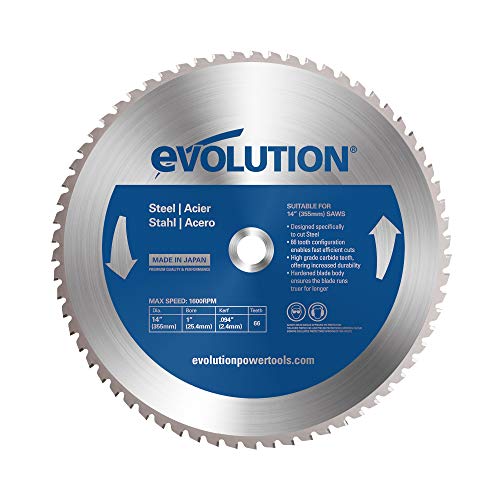
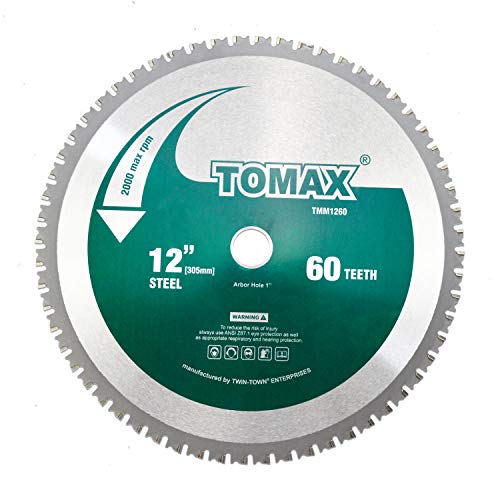
The Evolution 14BLADEST is the most narrowly defined option in this comparison. Its listing says mild steel only and specifically excludes galvanized, hardened, and high-carbon steel. That limitation matters: it gives the blade a clear application rather than suggesting universal metal compatibility. The FOXBC 14-inch blade and TOMAX 12-inch steel blade cover a wider selection of steel profiles, including studs, tubing, pipe, angle iron, channels, conduit, and bars.
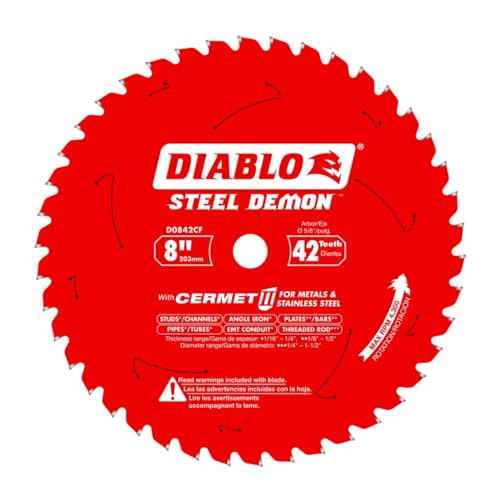
For thick metal, the Diablo Steel Demon Cermet II is the only selected product whose supplied title directly emphasizes that application. Its 8-inch diameter and 42-tooth TCG configuration should still be checked against the saw before purchase because the evidence supplied here does not include its arbor size or maximum RPM.
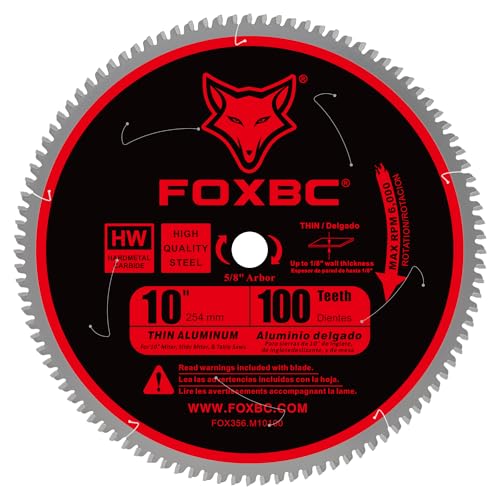
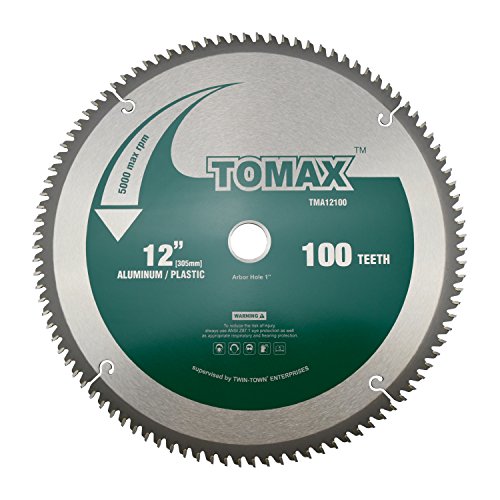
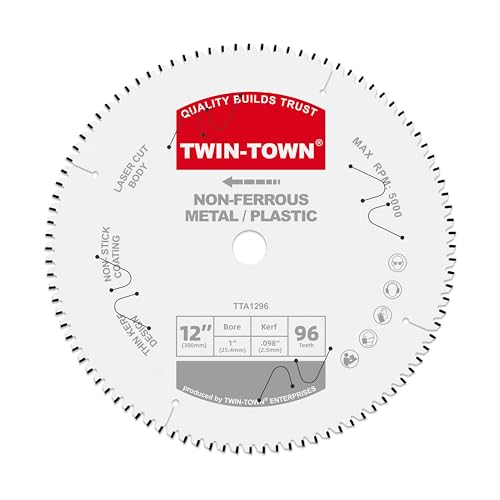
The remaining selected blades are intended mainly for aluminum, plastics, and other non-ferrous metals. FOXBC, TOMAX, TWIN-TOWN, KEENTECH, and MASTEC all document aluminum or non-ferrous applications. FOXBC’s 10-inch and 12-inch blades provide especially useful thickness ranges. KEENTECH is specifically described for medium-wall aluminum tubing and extrusions, while the TOMAX and TWIN-TOWN listings emphasize broader non-ferrous and plastic use.
Check diameter and arbor size
Diameter alone does not establish compatibility. The 10-inch products in this comparison use a 5/8-inch arbor, including the FOXBC 10-inch and MASTEC blades. The 12-inch choices generally use a 1-inch arbor, including the TOMAX, FOXBC, TWIN-TOWN, and KEENTECH models. The Evolution and FOXBC 14-inch steel blades also use a 1-inch arbor.
Confirm both measurements against the saw manual or the existing blade. Also verify that the machine is designed for the blade type. The Evolution listing refers to chop saws and low-speed metal-cutting equipment, while several aluminum blades list miter, slide miter, table, or circular saw compatibility. A physically matching arbor does not by itself confirm that the saw’s speed and guarding are appropriate.
Understand tooth count and TCG geometry
Tooth count is useful, but it should be considered with material and blade diameter. The selected aluminum blades use high counts from 96 to 100 teeth, while the ferrous-metal choices range from 42 to 72 teeth. These figures are listing specifications, not a guarantee of a particular finish or cutting speed.
TCG, or Triple Chip Grind, appears throughout the supplied evidence. It is documented on the Evolution, FOXBC, TOMAX, Diablo, TWIN-TOWN, KEENTECH, and MASTEC selections. Listings associate the geometry with aluminum, non-ferrous metals, smooth cuts, or durability, depending on the product. Use the manufacturer’s stated application first instead of assuming every TCG blade has the same capability.
Pay attention to RPM and kerf
Operating speed is a key safety and fit check. Evolution lists 1,600 RPM for its 14-inch mild-steel blade. FOXBC lists a maximum of 1,800 RPM for its 14-inch steel blade, while TOMAX gives a 1,700-to-2,000 RPM range. KEENTECH lists a 5,000 RPM maximum for its 12-inch aluminum blade. Other selected listings do not provide a speed figure in the supplied evidence.
Kerf can also help with comparison. Evolution lists a.094-inch kerf, FOXBC’s 14-inch blade lists.095 inch, FOXBC’s 10-inch aluminum blade lists.095 inch, and FOXBC’s 12-inch blade lists.094 inch. KEENTECH lists a wider.114-inch kerf. These numbers describe the blade specification; they should not be used to predict results on a particular saw without considering the machine and material.
Look for stability and wear features
Several listings document features intended to manage heat, vibration, or corrosion. FOXBC’s aluminum blades and 14-inch steel blade include laser-cut stabilizer vents. KEENTECH lists precision expansion slots intended to relieve heat-related stress. TWIN-TOWN and TOMAX list electrophoretic coatings for rust or corrosion reduction. The Evolution blade uses a hardened steel body, and multiple products specify carbide or cermet teeth.
These features are useful differentiators in a specification comparison, but they are not substitutes for correct feed technique, workpiece support, guarding, or personal protective equipment. Follow the saw and blade instructions, especially when switching between ferrous and non-ferrous materials.
How to use this comparison
The top metal miter saw blades are not interchangeable in purpose. Start with the material category, then narrow by diameter and arbor. After that, compare tooth count, grind, RPM, kerf, and any listed stabilizer or coating. If a critical value such as arbor size or speed is missing, confirm it before ordering rather than inferring it from the title.
Final Recommendation
Among the top metal miter saw blades, the ranked products differ under documented documented material fit, tooth count and grind suitability, size and arbor compatibility, cut-control features, and construction and durability features.
KEENTECH 12-Inch 100T Aluminum Blade ranks first overall in this specification-based comparison under the published weighted criteria.
Evolution 14BLADEST is the highest-scoring returned product and the first overall specification-based choice for users cutting mild steel with a compatible 14-inch, 1-inch-arbor, low-RPM saw. Its explicit material restrictions are important, but they also make selection more predictable.
For steel profiles beyond that focused use, FOXBC 14-inch offers the most detailed profile coverage, while TOMAX 12-inch is a sensible documented alternative for compatible low-RPM equipment. For aluminum, FOXBC 10-inch and FOXBC 12-inch provide strong size-specific choices with thickness guidance. KEENTECH is particularly useful when medium-wall aluminum and a stated RPM limit are central requirements. The best metal miter saw blades choice ultimately depends on matching those specifications to the saw and workpiece.
Frequently Asked Questions
Evolution 14BLADEST is the clearest mild-steel choice in this selection because its listing specifically identifies mild steel, gives a 1,600 RPM figure, and states that galvanized, hardened, and high-carbon steel should not be cut with it. FOXBC 14-inch and TOMAX 12-inch document broader steel-profile applications, but their saw diameter and speed requirements must also be matched.
Can an aluminum blade cut steel?
The supplied listings do not establish that the selected aluminum blades are suitable for steel. FOXBC 10-inch, FOXBC 12-inch, TOMAX 12-inch aluminum, TWIN-TOWN, KEENTECH, and MASTEC are described for aluminum, plastic, or non-ferrous metals. Choose a blade whose listing specifically names the material you need to cut.
How do I choose between a 10-inch and 12-inch blade?
First match the saw’s approved diameter and arbor. The selected 10-inch aluminum blades use 5/8-inch arbors, while the selected 12-inch aluminum blades use 1-inch arbors. Then compare the documented material thickness, tooth count, kerf, and RPM. A larger diameter is not automatically better if it does not fit the saw or suit its operating speed.
TCG means Triple Chip Grind. It is documented across several selected blades and is associated in the listings with aluminum, non-ferrous metals, smooth cutting, or durability. TCG alone does not define the blade’s material range, so read the product’s stated application and confirm its diameter, arbor, and speed requirements.
Are carbide and cermet blades the same?
They are not presented as identical in the supplied evidence. The listings use carbide, tungsten carbide, cermet, or carbide-tipped terminology for different products. Evolution specifies Japanese carbide and TCT construction, while FOXBC 14-inch and TOMAX steel use cermet language. Treat the named construction as a product-specific specification and follow its intended material guidance.