Buying Guide
The best sata iii internal ssds are primarily defined by the connection and physical fit, not just the headline capacity. SATA III, also called SATA 6 Gb/s, is the interface documented by the selected drives. A drive using this connection can also operate in many SATA II systems, although the older host connection may limit transfer speed. Check the computer manual or existing drive before ordering, especially when replacing storage in a compact laptop.
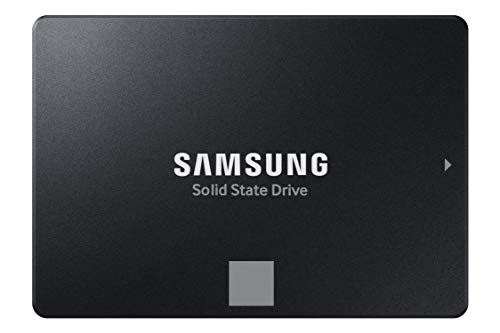
Most products in this comparison use a 2.5-inch enclosure. The Samsung SSD 870 EVO, Western Digital WD Blue SA510, PNY CS900, TEAMGROUP T-Force Vulcan Z, Patriot P220, and Timetec SSD all document this conventional format. Several also specify a 7mm thickness, a common fit for laptops and slim bays. A desktop may need a mounting bracket or a suitable bay, while a laptop can require a spacer if its original drive is thicker. The supplied listings do not include a universal installation kit, so verify the mounting arrangement separately.
It is still a SATA III solid-state drive, but it requires a compatible mSATA slot rather than a conventional 2.5-inch bay.
Compare documented transfer speeds
Sequential read and write figures are useful for large-file transfers and indicate how closely a product approaches the practical ceiling of the SATA interface. Samsung SSD 870 EVO and Fikwot FX815 list read speeds up to 560 MB/s. Western Digital WD Blue SA510 reaches 560 MB/s read, while TEAMGROUP T-Force Vulcan Z and Timetec list up to 550 MB/s read. PNY CS900 lists 535 MB/s read and 515 MB/s write, and Patriot P220 lists 550/490 MB/s.
These are manufacturer or listing figures, not independent measurements. Actual results can vary with the computer, operating system, workload, drive capacity, and available free space. Treat the numbers as a specification comparison rather than a promise of a particular transfer rate.
Understand NAND and cache descriptions
NAND and cache details can help distinguish otherwise similar SATA products. Samsung identifies its own DRAM and NAND components. TEAMGROUP T-Force Vulcan Z, SP Silicon Power A55, Timetec, and Fikwot FX815 document SLC cache technology. TEAMGROUP, fanxiang S101, and Fikwot FX815 also identify 3D NAND or TLC-related designs. KingSpec lists 3D NAND and several management functions, including wear leveling and garbage collection.
Cache can help with bursts of writing, but the supplied evidence does not establish sustained performance under a specific workload. Likewise, a NAND label alone does not predict every aspect of drive behavior. Use these details as part of a broader comparison that includes capacity, interface, form factor, and support documentation.
Select an appropriate capacity
Capacity should match the intended role. The 240GB and 256GB class is suited to a compact system drive when the computer stores most large files elsewhere. Patriot P220 provides 256GB. PNY CS900, TEAMGROUP T-Force Vulcan Z, fanxiang S101, KingSpec, Timetec, and Fikwot FX815 provide 1TB configurations, giving more room for applications and personal files. Western Digital WD Blue SA510 provides 500GB. SP Silicon Power A55 is the high-capacity option at 4TB.
Usable space will be lower than the number printed on the package because formatting and drive-management functions consume part of the raw capacity. Maintain current backups when migrating an operating system or personal files; an SSD is not a substitute for a separate backup.
Review support and protection features
Warranty periods in the supplied listings range from three to five years for the selected products. Samsung lists a five-year limited warranty and up to 600 TBW. Fikwot FX815 lists three years or 320 TBW. The other selected models generally list three-year coverage, while Western Digital lists five years. Warranty terms can have conditions, so consult the manufacturer documentation for the exact coverage.
Some products identify useful management or protection features. Samsung lists S.M.A.R.T. support and AES 256-bit encryption, while KingSpec and Timetec document S.M.A.R.T., TRIM, garbage collection, wear leveling, and ECC-related functions. These features support drive maintenance or data handling, but the listing evidence does not establish identical implementation across brands.
Final Recommendation
Samsung SSD 870 EVO 1TB ranks first overall in this specification-based comparison under the published weighted criteria.
Samsung SSD 870 EVO is the highest-scoring returned product and the first overall specification-based choice among these best sata iii internal ssds. Its 2.5-inch fit, 560/530 MB/s sequential figures, 600 TBW specification, broad compatibility testing, and five-year warranty create the most complete evidence profile.
Choose Western Digital WD Blue SA510 when its clearly documented 2.5-inch format and five-year warranty fit your system. Choose SP Silicon Power A55 for its 4TB capacity, or Fikwot FX815 when the 560/510 MB/s figures, SLC cache, and 320 TBW specification are more relevant. The TEAMGROUP and Timetec models are also compelling when cache and NAND details matter. Together, these are the top sata iii internal ssds for comparing conventional SATA upgrades by documented specifications rather than unsupported assumptions.
Frequently Asked Questions
Are the best sata iii internal ssds compatible with older SATA computers?
Many are. The computer may limit the drive to the older interface speed. Confirm the connector, bay dimensions, and operating-system requirements before installation.
Is a 2.5-inch SATA SSD the same as an M.2 SSD?
No. The selected 2.5-inch models use a drive enclosure and cable connection suited to a conventional SATA bay. M.2 is a separate physical format, and some M.2 drives use NVMe rather than SATA.
What capacity is suitable for a system drive?
A 240GB or 256GB model such as Patriot P220 can serve a compact operating-system role, but available space will be reduced after formatting and software installation. A 500GB or 1TB model provides more room for applications and personal files. SP Silicon Power A55 documents 4TB for users managing a much larger local library.
Do listed read and write speeds apply to every computer?
No. They are supplied listing figures, generally maximum sequential values. The host interface, workload, operating system, drive capacity, free space, and other hardware can affect actual results. Use them to compare the published specifications, not as independent test results.
Should I check warranty and endurance details before installing?
Yes. Samsung SSD 870 EVO documents up to 600 TBW and a five-year limited warranty, while Fikwot FX815 lists 320 TBW and three years or that endurance limit. Other selected drives list warranty periods without a specific TBW figure. Review the manufacturer’s current terms and keep a separate backup of important data.