Buying Guide
The best retractable usb flash drives are defined first by the connector they expose and how that connector is stored. A retractable body slides or pushes the plug into the housing, so there is no separate cap to misplace. That design is documented across every selected product here, but the mechanisms and connector layouts differ. Before choosing, match the drive to the ports on the devices that will actually read and write your files.
Choose USB-A, USB-C, or both
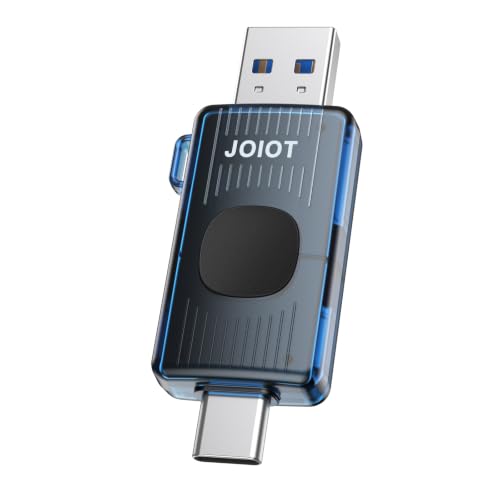
USB-A remains common on desktop computers, older laptops, televisions, game consoles, printers, and car audio systems. The Amazon Basics, KOOTION, JUANWE, Transcend, LinkMore, K&ZZ, and Verbatim selections document USB-A-oriented use. USB-C is more useful for newer phones, tablets, and laptops. SanDisk Ultra Slider uses a retractable USB-C connector, while JOIOT and Aiibe provide both USB-C and USB-A connectors in one body.
A dual-connector drive is the most flexible design when files need to move between a phone and a computer with different ports. JOIOT specifically lists USB-C iPhone 15/16/17 series, smartphones, tablets, laptops, and USB-A devices. Aiibe also describes use with USB-C phones, iPhones, tablets, laptops, car audio systems, and gaming consoles. Compatibility still depends on the host device and its file-system support, so a dual connector does not automatically make every device compatible.
Compare interface standards and stated speeds
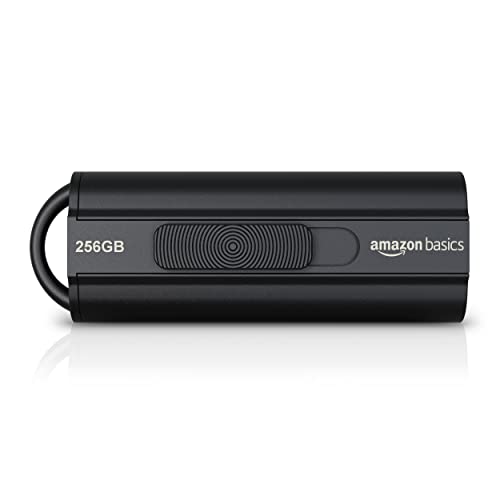
USB 3.x models are the more suitable choices for large photo, video, and document transfers when the host device has a matching port. SanDisk lists USB 3.2 Gen 1 and read speeds up to 400MB/s. Amazon Basics and JUANWE list read speeds up to 130MB/s, while JOIOT lists up to 110MB/s.
KOOTION identifies USB 3.0 and describes five-times USB 2.0 transfer performance, while K&ZZ states a minimum read speed of 70MB/s. Transcend identifies USB 3.2 compatibility but does not supply a comparable headline speed in the provided listing.
Published speed figures are limits from the listings, not a promise that every host device will reach them. The Amazon Basics listing notes that optimal performance requires a USB 3.1 Gen 1 or USB 3.0 host and that USB 2.0 hosts operate at lower speed. File size, host hardware, drive capacity, and usage conditions can also affect actual transfers.
Match capacity to your files
Capacity should reflect whether the drive is for occasional documents or a larger media library. The 256GB options from SanDisk, Amazon Basics, KOOTION, and JUANWE provide the most room among the selected single-drive products. They are better suited to collections of photos, videos, music, and other large files than the 16GB Transcend or 32GB Verbatim drives.
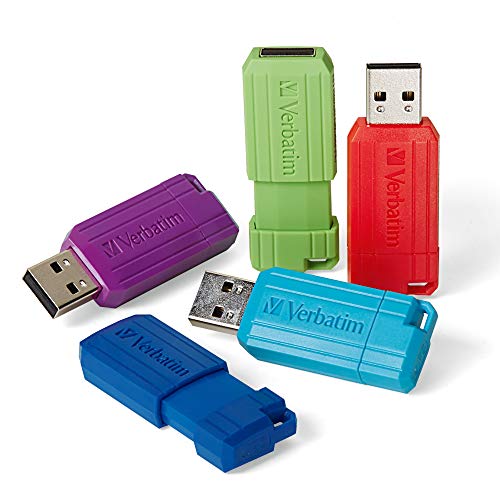
The 64GB JOIOT and Aiibe dual-connector drives offer a middle ground for mobile transfers and routine backups. LinkMore and K&ZZ provide five 64GB drives, which can be more useful than one larger drive when files must be separated among people, projects, or locations. Verbatim provides five 32GB drives for similar organization, while its USB 2.0 interface is better aligned with basic transfers than frequent large-file movement.
Remember that advertised capacity and usable capacity are not identical. Several listings explain that formatting and measurement conventions reduce the space shown by the operating system. Amazon Basics also specifies that files larger than 4GB may require reformatting from FAT32 to exFAT or NTFS.
Look for carrying and status features
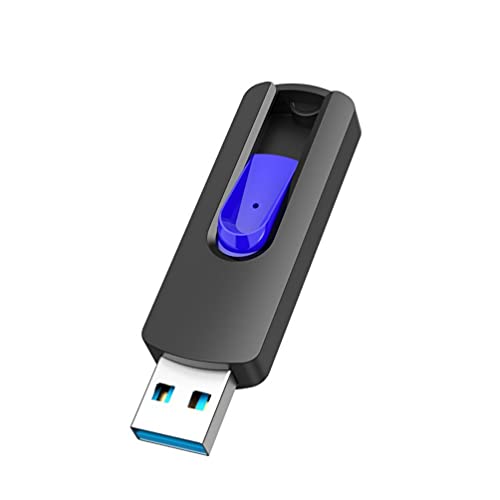
A lanyard hole, keyring loop, clip, or compact enclosure makes a retractable drive easier to keep with a laptop bag or key set. SanDisk, KOOTION, JUANWE, Transcend, LinkMore, and Aiibe document attachment or portability features. The five-drive packs add organizational convenience through multiple units, and K&ZZ and Verbatim use different colors to help distinguish their contents.
An LED is useful when you want a visible indication that the drive is active. KOOTION and Transcend document LED indicators. The Amazon Basics listing specifically notes that it does not include an integrated LED, so that model is less suitable if activity visibility matters. A retractable mechanism protects the connector while stored, but it does not replace safe ejection or a separate backup of important data.
Plug-and-play support is documented for KOOTION, JOIOT, Aiibe, JUANWE, K&ZZ, and the multipack options. Listed operating systems vary, but Windows, Mac or macOS, Linux, and Android appear across the selected products. exFAT is the default format for KOOTION, JOIOT, Aiibe, and JUANWE, while Amazon Basics uses FAT32 by default. Formatting can affect compatibility and maximum file size, so check the drive’s factory format before transferring large files.
Final Recommendation
SanDisk Ultra Slider 256GB USB-C ranks first overall in this specification-based comparison under the published weighted criteria.
SanDisk Ultra Slider is the first overall specification-based choice among these best retractable usb flash drives because it combines 256GB capacity, USB-C connectivity, USB 3.2 Gen 1, and a stated read speed up to 400MB/s. It is the clearest fit for users whose main device uses USB-C and who want a large single-drive format.
For mixed USB-C and USB-A equipment, JOIOT and Aiibe provide the most direct connector flexibility. JOIOT has the clearer stated speed figure, while Aiibe supplies more detailed enclosure-protection claims. For USB-A systems, Amazon Basics, KOOTION, and JUANWE offer 256GB choices with documented USB 3.x performance. KOOTION is especially useful when an LED matters, and JUANWE lists write speeds up to 35MB/s.
The top retractable usb flash drives also include multipacks for practical distribution. LinkMore offers five 64GB USB 3.2 Gen 1 drives, K&ZZ emphasizes five colors and USB 3.0, and Verbatim provides five color-coded 32GB USB 2.0 drives. Transcend remains a compact smaller-capacity option with an LED and a carrying loop. Choose by port type first, then capacity, interface, and any carrying or status feature that fits your routine.
Frequently Asked Questions
What makes the best retractable usb flash drives different from capped drives?
A retractable drive stores its USB connector inside the body through a sliding or push-pull mechanism. This removes the need for a separate cap and can help keep the connector covered when it is not connected. SanDisk, Amazon Basics, KOOTION, JOIOT, Aiibe, LinkMore, K&ZZ, Transcend, Verbatim, and JUANWE all document retractable or capless connector designs.
Should I choose a USB-C retractable drive or a USB-A model?
Choose USB-C when the primary host is a newer phone, tablet, or laptop with a USB-C port. Choose USB-A for equipment that lists USB-A support, such as many desktop computers, televisions, and car audio systems. If both types are important, JOIOT and Aiibe document dual USB-C and USB-A connectors in one drive.
Is a 256GB retractable drive better for video files?
A 256GB model provides more documented storage space than the 16GB, 32GB, or 64GB selections, so it can accommodate more files before the drive is full. SanDisk, Amazon Basics, KOOTION, and JUANWE each list 256GB versions. Actual usable capacity is lower than the labeled figure, and the host device, file system, and interface still affect how the drive works.
Do USB 3.x drives work with USB 2.0 ports?
Several selected USB 3.x drives document backward compatibility with USB 2.0, including Amazon Basics, KOOTION, and Transcend. The host port can limit transfer performance, so a USB 3.x drive connected to a USB 2.0 port may operate at the lower interface’s capability. Verify the port type and the device’s supported file systems before use.
When is a multipack useful?
A multipack is useful when separate drives are needed for different people, projects, backups, or locations. LinkMore provides five 64GB drives, K&ZZ provides five 64GB drives in different colors, and Verbatim provides five 32GB color-coded drives. The separate units can simplify organization, but each drive has its own stated capacity and interface limits.