Buying Guide
Choosing among the best car weather stripping seal kits starts with the location that needs sealing. A door edge, a window channel, a windshield perimeter, a hardtop joint, and a hood gap do not necessarily use the same cross-section. The selected products include pre-cut multi-zone kits, adhesive-backed rolls, push-on edge trim, model-specific sets, and hardtop systems. Treat the profile and mounting method as primary fit checks rather than assuming that a longer strip will work everywhere.
Match the seal design to the vehicle location
A multi-zone replacement is different from a continuous universal roll. The AKWDSL kit documents A-, B-, and C-pillar pieces along with hood/trunk and dashboard seals. Its B-pillar piece uses a U-shaped steel clip, while other sections use adhesive or an insert-style fit. That makes it a useful choice when several sealing positions need different attachment methods.
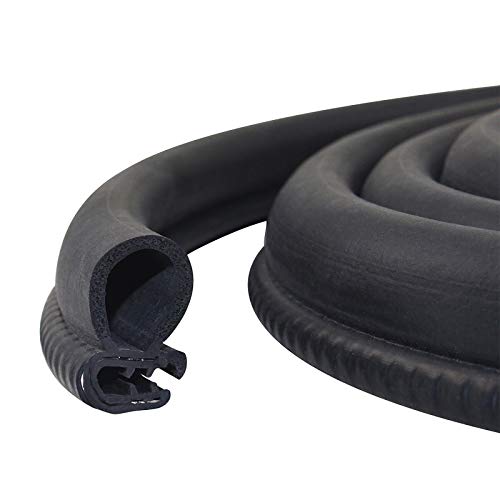
For an edge-mounted door or compartment, the Storystore side-bulb seal uses a reinforced U-channel and internal metal clips. The supplied fit range is approximately 1/16 to 2/25 inch, or about 1.6 to 2.0 mm. Measure the edge thickness, bulb clearance, and seal direction before choosing this format. Because it is push-on, it is not interchangeable with an adhesive strip intended for a flat mounting surface.
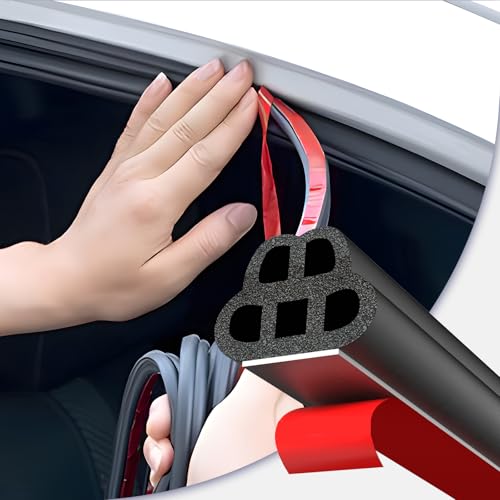
A D-shaped profile, such as the HOTSYSTEM strip, should be compared with the cross-section of the existing seal. The listing gives a 10 mm by 10 mm profile and specifically advises checking the original shape. Similarly, the alophoty strip uses a double-layer, five-hole design, while the NAJIESUN option uses a three-layer, six-hole pyramid structure. These profiles may address different gap shapes, so measuring the opening is more useful than relying on the product name alone.
Compare material and construction
EPDM appears across several selected kits and is described in the supplied listings as flexible or resistant to weather-related stress. The AKWDSL set identifies EPDM and explains that its elastic construction provides cushioning and vibration absorption. The Hooke Road kit describes automotive-grade rubber with elasticity, toughness, and temperature resistance. These details support choosing rubber-based construction for a seal exposed to changing temperatures, repeated movement, or outdoor conditions.
Construction also affects how the seal occupies a gap. Hollow or multi-hole designs appear in the Stacool, FengleAuto, alophoty, and NAJIESUN products. The Stacool and FengleAuto listings describe three-hole structures, while alophoty specifies five holes and NAJIESUN specifies six holes across three layers. The listings connect these designs with gap adjustment, noise reduction, or multi-stage absorption, but they do not establish a universal fit. Confirm the available space so the installed strip does not interfere with door or hood movement.
Decide between a continuous roll and a pre-cut kit
Continuous rolls offer flexibility because they can be measured and cut for a particular outline. FengleAuto lists 68.88 feet, Stacool lists 52.5 feet, alophoty lists 34 feet, HOTSYSTEM lists 26.25 feet, and NAJIESUN lists 16.4 feet. More length can help with several areas, but it also means the installer must plan joints, corners, and excess material. The strip’s width, thickness, and profile still determine whether that length is usable.
Pre-cut kits reduce some layout work when the vehicle and positions match. BIOOICH identifies a Toyota RAV4 2019–2025 application and names the front trunk, pillars, front doors, rear doors, and rear trunk. Hooke Road identifies Jeep Wrangler and Gladiator hardtop applications and gives separate lengths for the windshield frame, freedom top panels, and rear cargo-area sides. ItranMc provides a six-piece set for specific Ford F-Series and Bronco years, including window felt belts, glass run-channel seals, and front door-to-body seals.
Check adhesive, clip, or insert installation
Adhesive-backed products generally require a clean, dry mounting surface and careful alignment. The Stacool, FengleAuto, alophoty, NAJIESUN, and HOTSYSTEM listings all describe adhesive-backed installation, though the preparation instructions vary. NAJIESUN mentions an adhesion promoter and gives guidance for warming the tape and surface in cooler conditions.
The AKWDSL kit is more varied: some pieces are taped, some insert into a gap, and one uses a steel clip. Storystore’s internal clips create another adhesive-free option. Select the mounting method that matches the vehicle’s existing edge or channel, and avoid forcing an incompatible profile into place.
Verify vehicle-specific coverage
Universal language does not mean universal fit. Stacool, FengleAuto, alophoty, and NAJIESUN list broad vehicle categories, but their strips still require a profile and gap check. Model-specific products provide narrower but clearer application boundaries. BIOOICH names Toyota RAV4 model years, Hooke Road names Jeep platforms, and ItranMc lists Ford truck and Bronco years plus replacement numbers.
For a replacement set, compare the original seal’s position, shape, length, and attachment method. ItranMc specifically recommends checking its replacement numbers, while HOTSYSTEM advises comparing the original cross-section. This step is important for window sweeps and run channels because those components interact with moving glass. For hardtop kits, verify the body style and roof configuration before considering the listed sections.
Plan the installation sequence
Measure each section before cutting a roll, and keep track of inside and outside corners. Clean the surface as directed, allow it to dry, and press adhesive-backed sections down progressively rather than stretching the rubber. For push-on trim, confirm that the edge enters the channel fully and that the bulb has room to compress. For pre-cut kits, lay out the pieces before removing backing so each section can be matched to its documented position.
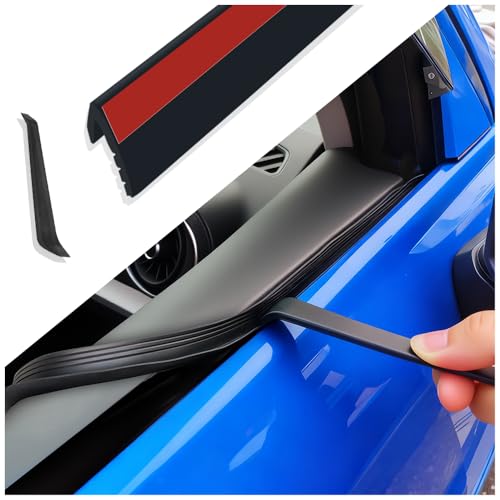
Do not assume that every strip should be placed on a movable seal or in a window track. A windshield or sunroof strip may have a specialized T-shaped or edge profile, while a door edge seal may use a U-channel. The selected comparison includes multiple designs, but each product’s stated dimensions and application notes remain the controlling evidence.
Final Recommendation
AKWDSL 8-Piece 5-in-1 Seal Kit ranks first overall in this specification-based comparison under the published weighted criteria.
AKWDSL 8-Piece 5-in-1 Seal Kit is the highest-scoring returned product and the first overall specification-based choice among the best car weather stripping seal kits. Its documented pre-cut coverage spans pillars, hood/trunk, and dashboard positions, and its EPDM construction is paired with adhesive, insert, and steel-clip installation formats. That breadth makes it the most complete option when the vehicle’s sealing needs extend beyond one continuous door edge.
For a hardtop, Hooke Road is the more focused selection because its compatibility range and sealing zones are explicitly identified. BIOOICH is the clearer choice for the listed Toyota RAV4 years, while ItranMc is tailored to older Ford truck and Bronco window components. Among universal rolls, FengleAuto supplies the most length, Stacool offers another long three-hole format, and alophoty provides a documented double-layer profile. Storystore stands apart with push-on edge installation, while HOTSYSTEM is the simpler D-shaped adhesive option.
The top car weather stripping seal kits are not interchangeable solely because they are labeled universal. Match the profile, mounting surface, edge thickness, vehicle application, and available clearance before ordering. That process is more reliable than selecting by length alone and helps distinguish a multi-zone kit from a roll intended for one particular gap.
Frequently Asked Questions
How do I choose among the best car weather stripping seal kits?
Start by identifying the location and measuring the existing profile. Check whether the original seal is D-shaped, hollow, multi-hole, T-shaped, an edge-mounted U-channel, or a window-specific sweep or run channel. Then compare the product’s listed dimensions, vehicle range, and installation method. Model-specific options such as the BIOOICH RAV4 kit or ItranMc Ford set require especially careful year and part-number verification.
Is a push-on seal different from an adhesive weatherstrip?
Yes. The Storystore product uses a U-channel with internal metal clips that grip a compatible edge, while HOTSYSTEM, Stacool, FengleAuto, alophoty, and NAJIESUN use adhesive-backed formats. A push-on seal depends on edge thickness and compression clearance. An adhesive seal depends on a clean, dry surface and accurate placement. Neither method is automatically suitable for every door or body seam.
Are longer rolls better for a full vehicle?
A longer roll can provide more material for several sections, but it does not guarantee compatibility. FengleAuto lists 68.88 feet and Stacool lists 52.5 feet, yet each still requires profile, width, thickness, and gap checks. Longer continuous strips also require more measuring and cutting. A pre-cut kit may be more suitable when its vehicle and sealing positions match the application.
When should I choose a vehicle-specific kit?
Choose one when the listing documents your exact vehicle range and the seal locations correspond to the areas you need to replace. Hooke Road is aimed at specified Jeep hardtops, BIOOICH at Toyota RAV4 models from 2019–2025, and ItranMc at listed Ford trucks and Bronco years. Confirm the body style, model year, original seal shape, and any supplied replacement numbers before installation.
What should I check before installing an adhesive strip?
Clean and dry the mounting surface, compare the profile with the original seal, and test the placement before removing the backing. Follow any temperature guidance supplied with the product. NAJIESUN specifically mentions warming the tape and surface in cooler conditions, while the adhesive-backed universal strips require careful alignment and trimming. Avoid stretching the rubber, and check that doors, hoods, windows, or roof panels still move as intended.