Buying Guide
Choosing the best rubber weather stripping starts with the gap, not the brand name. A strip that is too thin may not bridge the opening, while one that is too thick can interfere with a door, hatch, window, or vehicle panel. The products above include several profiles and sizes, so measure the gap and available clearance before selecting a roll.
Match the profile to the gap
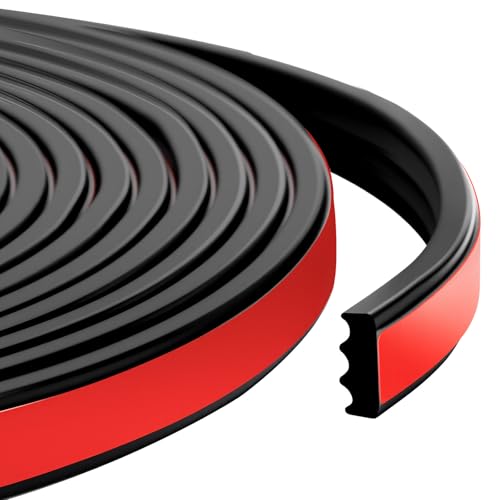
D-shaped strips are common for door and window frames because the rounded section can compress against a closing surface. The Fingwerk extra-thick model is specified for 4- to 9-millimeter gaps, making it the clearest choice when the opening is relatively large. The Frost King V27WA and M-D Building Products weatherseal also document wider-gap applications, although their listed dimensions differ.
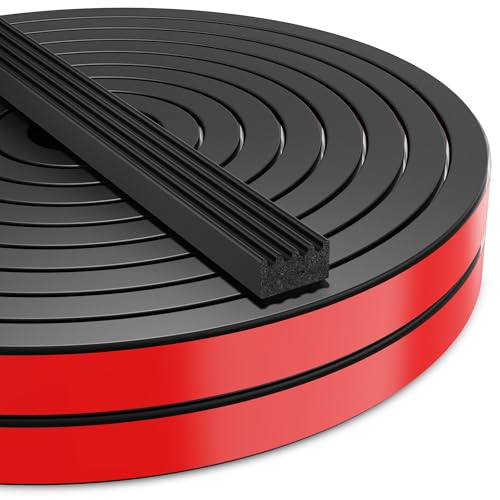
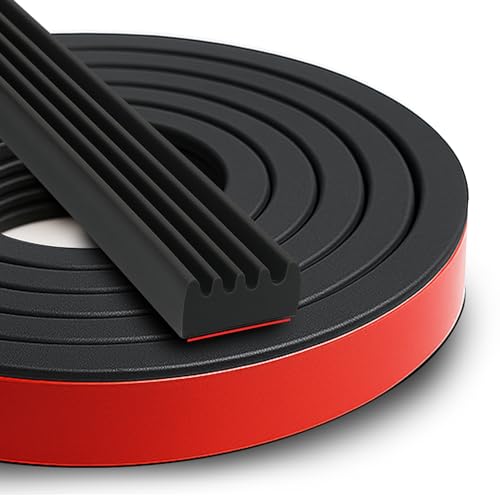
A ribbed or porous profile adds internal structure. LEWEREST uses longitudinal grooves described as multiple sealing barriers, while the CMILAI listing identifies a ribbed EPDM foam design for sealing and vibration reduction. These designs may suit garage doors, vehicle edges, and marine hatches where the surface may be exposed to movement or vibration. The PACIXU double-hole strip is another distinct option when a hollow profile is appropriate.
A rectangular strip has flatter sides and may suit an edge or surface where a rounded D shape is not the best match. Tintvent documents a solid rectangle design, but the supplied listing does not give a supported gap range. That makes careful measurement particularly important.
Compare materials and exposure
EPDM appears across most selected products and is documented with resistance to temperature changes, weather, moisture, aging, or ultraviolet exposure depending on the listing. The UIOCSSC RV door seal specifically identifies rain, moisture, heat, and cold resistance. The alophoty and M-D Building Products options also use EPDM for automotive or marine-oriented sealing.
Frost King V27WA is an EPDM D-section seal with specific cold-weather claims, including retaining its shape after freezing. LEWEREST uses EPDM sponge rubber and documents resistance to water absorption, ozone, sunlight aging, and low temperatures. These claims describe the supplied product listings; they are not independent test results.
Not every listing uses EPDM. Material terminology should therefore be read alongside the actual application and dimensions. Match documented resistance and flexibility to the location rather than assume every rubber-like strip has identical behavior.
Every selected product here uses an adhesive-backed format. Clean, dry surfaces are a recurring requirement in the supplied installation instructions. Apply the strip only after confirming that it is aligned and that the door or panel can close without excessive compression.
Adhesive weather stripping is intended for flat or moderately curved surfaces, but the bond depends on surface preparation and conditions. Several listings advise pressing the strip into place after removing the backing. The Fingwerk listing notes that low temperatures may reduce adhesive performance, so installation conditions deserve attention.
Consider coverage and cutting
Roll length determines whether one package can cover the project. The selected range runs from 10 feet for Frost King V27WA, M-D Building Products, and alophoty to 40 feet for the extra-thick Fingwerk strip. Twenty-six-foot rolls from UIOCSSC, CMILAI, and Tintvent sit in the middle and may suit several doors, windows, or vehicle sections.
Most selected listings say the material can be cut with scissors or a utility knife. Measure each section separately, allow for corners, and avoid stretching the strip while applying it. A longer roll can reduce seams, but a larger profile is not automatically better if the closing surface has limited room.
Check the application before ordering
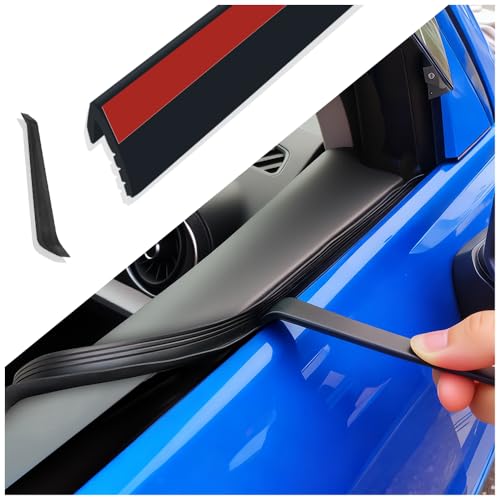
Some designs are broad household weather seals, while others are more specialized. LEWEREST, PACIXU, and UIOCSSC specifically list marine or RV applications. The alophoty strip emphasizes car doors, trunks, hoods, SUVs, and trucks. M-D Building Products covers auto and marine uses while also identifying doors and windows.
For a home door or window, prioritize the measured gap and profile. For a vehicle, RV, boat, or trailer, also consider curves, vibration, moisture, and the length of the edge. For garage work, compare the selected strip’s profile with the door or frame geometry rather than relying only on the word garage in a product title.
Final recommendation
LEWEREST Ribbed EPDM Foam Rubber Seal ranks first overall as the specification-based choice.
It is the best rubber weather stripping first choice for buyers who want a documented gap range, ribbed sealing structure, and broad resistance claims. Its 25-foot roll and acrylic foam tape make it a versatile option for marine hatches, RVs, garage doors, and similar projects.
For larger gaps, choose Fingwerk 40 Feet Extra-Thick D-Shape Seal after confirming the 4- to 9-millimeter fit. UIOCSSC 26Ft EPDM Foam Rubber Seal is suited to exterior and vehicle applications, while Frost King V27WA stands out for its documented cold-weather shape retention. Among the top rubber weather stripping options, the correct profile and dimensions matter more than simply choosing the longest roll.
Frequently Asked Questions
How do I measure for the best rubber weather stripping?
Measure the gap when the door, window, hatch, or panel is closed, then check the available clearance around the frame. Compare those measurements with the product’s listed width, thickness, height, or supported gap range. The Fingwerk strip provides an explicit 4- to 9-millimeter range; several other products provide dimensions without a precise gap range, so fit testing against the opening is especially important.
Is EPDM rubber suitable for outdoor weather stripping?
The supplied listings commonly specify EPDM for temperature, moisture, weather, aging, or ultraviolet resistance. LEWEREST, UIOCSSC, CMILAI, Tintvent, and M-D Building Products all document outdoor or vehicle-oriented uses. Suitability still depends on the profile, adhesive surface, and installation conditions, so match the product to the particular door, vehicle, boat, or window.
Are adhesive-backed strips easy to cut?
The selected listings generally describe cutting with scissors or a utility knife. Measure the section first, cut cleanly, and follow the supplied surface-preparation instructions. Avoid stretching the strip during application, particularly around corners or curved vehicle contours.
Which selected strip is best for a cold climate?
Frost King V27WA has the most specific cold-weather evidence in this comparison: its listing says the EPDM seal will not harden, crack, or freeze even at 40 below zero and will retain its shape after freezing. Confirm the white strip’s dimensions and the frame clearance before installation.
Can one weather strip work on a home and a vehicle?
Several selected products list both household and vehicle applications, including the alophoty, M-D Building Products, LEWEREST, CMILAI, and UIOCSSC strips. However, a shared application list does not mean every profile fits every location. Compare gap size, curvature, exposure, and closing pressure before using one roll across different projects.