Buying Guide
The best adhesive weather stripping is the product whose profile matches the opening without preventing the door or window from closing. A strip that is too thin may leave a leak, while one that is too thick can create pressure, interfere with movement, or place extra stress on the adhesive. Start by measuring the gap at several points, because an opening may not be uniform from one end to the other. Then compare the documented width, thickness, recommended gap range, material, and roll length.
Match the profile to the gap
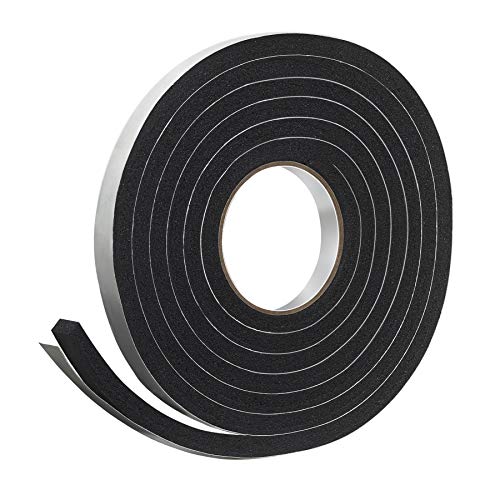
Narrow foam tape is a practical choice for relatively even gaps around door frames, windows, cabinets, and equipment. Kikerike, Ninsula, Storystore, and Trisiki all use a 1/2-by-1/4-inch class profile, although their materials and coverage differ. These dimensions can work well when the gap is consistent and the mounting surface is reasonably smooth. They are also easy to cut into sections, which helps when sealing several short edges.
D-shaped seals are better suited to applications where a rounded compressible profile is useful. VITAM AMO provides a stated gap range of 5/16 to 15/32 inch, while Fingwerk gives a metric range of 2.5 to 5.5 mm. Bantie’s silicone D-shaped seal is recommended for smaller 1/8- to 1/4-inch gaps. These ranges are not interchangeable, so measure before ordering rather than selecting by appearance alone.
For a broad opening at the bottom of a door or around a threshold, a wide strip may be more appropriate than narrow tape. PackYard documents a 45-mm width and suitability for gaps up to 30 mm. That design is materially different from the frame tapes in this comparison and needs enough flat mounting area for the adhesive to contact the surface.
Compare foam, rubber, and silicone
Foam strips are commonly selected for general insulation and cushioning. Closed-cell or high-density descriptions appear on several products, including Storystore and Trisiki. Foam can be convenient for straight frame runs because it is easy to cut and compress. However, the listing data does not establish identical longevity for every foam product, so material descriptions should be treated as specifications rather than proof of equal real-world service.
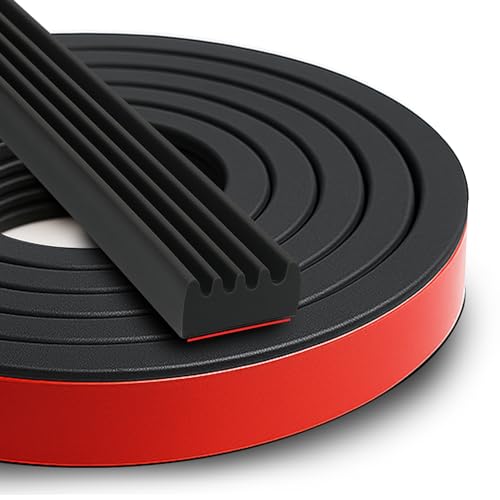
Rubber profiles offer another route for door, window, garage, and vehicle projects. VITAM AMO uses EPDM, Fingwerk describes a rubber D shape, and CMILAI lists ribbed EPDM rubber foam. EPDM is particularly relevant when the application includes outdoor, automotive, or temperature-exposed areas because the supplied listings specifically describe weather or temperature resistance. Check the width carefully: CMILAI’s 0.63-inch width is more substantial than many household frame tapes.
Silicone is represented by Bantie and PackYard. Bantie is a narrow D-shaped frame seal with an explicit small-gap recommendation. PackYard is much wider and is aimed at bottom, threshold, window, bathroom, and shower-gap uses. Selecting silicone should therefore involve both the material and the shape. A narrow D seal and a wide bottom strip solve different fit problems.
Evaluate the adhesive and surface
Adhesive weather stripping depends heavily on surface preparation. The supplied listings repeatedly instruct users to clean and dry the mounting area before application. Remove dust, grease, loose paint, and moisture where appropriate, then allow the surface to dry. Apply the strip in a controlled line rather than stretching it, and press it firmly along the full length.
Several products provide additional adhesive details. Ninsula describes an upgraded adhesive, Kikerike describes stronger adhesive backing, Trisiki specifies a grid adhesive, and Bantie’s silicone model includes an adhesive promoter for smooth surfaces. These instructions are useful because a strong-sounding adhesive still needs a suitable, clean mounting surface and appropriate installation conditions.
Before covering the entire frame, test a short section if the surface is painted, textured, damp, unusually cold, or made from a material not named in the listing. Also confirm that the seal does not block latches, hinges, tracks, drainage paths, or moving components. Adhesive-backed products are convenient, but repositioning after contact may be difficult and can reduce bonding consistency.
Plan coverage and seams
Roll length matters more than it first appears. Measure each side of the opening, add the lengths together, and allow extra material for corners, trimming, and mistakes. Fingwerk provides 50 feet, Kikerike provides 42 feet, and Ninsula, Bantie’s foam model, and Storystore provide 33 feet. VITAM AMO offers 18 feet, Bantie’s silicone D seal offers 20 feet, and PackYard provides 5 m. A shorter roll can still be suitable for one opening, while a longer roll may be more practical for several frames.
Try to keep each run continuous where possible. If a seam is unavoidable, place it at a corner or another less exposed point and make clean, square cuts. Do not assume that two different profiles will compress or meet neatly at a corner. For vehicle, garage, or marine uses, CMILAI and Fingwerk provide relevant application descriptions, but the exact surface condition and movement pattern still need to be considered.
Choose by project type
For a measured large door gap, VITAM AMO is compelling because its stated gap range is clear. For long household runs, Kikerike and Fingwerk offer substantial coverage. Ninsula and Storystore are straightforward general-purpose foam choices, while Trisiki adds a grid adhesive description and deformation-resistance claims. CMILAI is the more application-focused choice for mixed home and vehicle work. Bantie’s silicone D seal suits smaller frame gaps, and PackYard addresses wide bottom or threshold gaps.
The top adhesive weather stripping is not necessarily the widest or longest roll. The correct choice depends on the opening, the surface, and whether the seal must handle a door frame, a threshold, a vehicle edge, or a damp area. Treat the published dimensions as the starting point, and avoid selecting solely by a general claim such as soundproofing or energy savings.
Final Recommendation
Kikerike 42-Foot EVA Foam Tape ranks first overall in this specification-based comparison under the published weighted criteria.
The final choice among the best adhesive weather stripping depends on the documented features that match your intended use.
VITAM AMO is the highest-scoring returned product and the first overall specification-based choice. Its stated 5/16- to 15/32-inch gap range, EPDM construction, self-adhesive backing, 18-foot length, and multi-hole design give shoppers more concrete selection information than many competing listings. It is especially suitable when the opening is measured and falls within that documented range.
Choose Kikerike when coverage is the priority and a 1/2-by-1/4-inch EVA foam profile fits the opening. Select Ninsula or Storystore for familiar household foam dimensions, or Trisiki when the grid adhesive and CR foam/neoprene details are useful. Fingwerk is a strong long-run option with a stated metric gap range and included scissors. CMILAI is better aligned with garage, RV, truck, boat, and mixed-surface projects.
For a small, measured frame gap, Bantie’s silicone D-shaped seal offers a more targeted profile. For an unusually wide bottom or threshold opening, PackYard’s 45-mm strip is the more relevant design. In short, the top adhesive weather stripping choice should be based on measured clearance and mounting surface first, with material, adhesive details, and coverage used to refine the decision.
Frequently Asked Questions
How do I measure for the best adhesive weather stripping?
Close the door or window and measure the gap at several points with a ruler or gauge. Record both the widest and narrowest sections. Compare those measurements with the product’s stated profile or recommended range. VITAM AMO, Fingwerk, Bantie’s silicone D seal, and PackYard provide especially useful fit information in their listings.
Should I choose foam, EPDM rubber, or silicone?
Choose based on the application and profile rather than material alone. Foam is represented by Ninsula, Kikerike, Storystore, and Trisiki and is commonly positioned for household insulation and cushioning. EPDM appears in VITAM AMO and CMILAI listings for weather-oriented and vehicle-related uses. Silicone is documented in Bantie’s D seal and PackYard’s wide strip for different gap shapes and locations.
How should I prepare the surface before applying a strip?
Clean and dry the surface first, removing dust, grease, and loose residue. Apply the strip without stretching it and press along its full length.
Can adhesive weather stripping be used on vehicles?
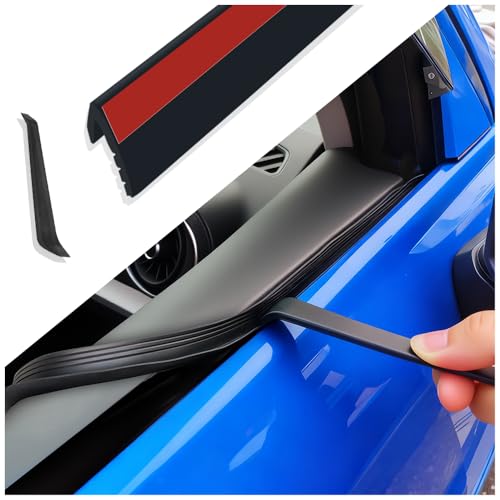
Some selected products explicitly list vehicle applications. CMILAI names RVs, trucks, boats, and automotive uses; Fingwerk lists automotive, furniture, and equipment uses; and VITAM AMO includes vehicles among its applications. Confirm that the profile, width, temperature exposure, and mounting surface suit the specific vehicle location before installation.
How much roll length should I buy?
Add the lengths of all edges to be sealed and include extra material for corners, seams, and trimming. Fingwerk’s 50-foot roll and Kikerike’s 42 feet suit larger projects, while shorter rolls such as VITAM AMO’s 18 feet or Bantie’s 20-foot silicone seal may be enough for one opening. Avoid joining strips across moving or heavily exposed sections when a continuous run is practical.